
Home › Blog › Bouquet workshop
Bouquet Making Class in Hanoi & HCMC – Learn Hand-Tied Florals
By the Vietnam Flower Workshop team · 2026-11-06
Bouquet making classes are hands-on sessions where you design and assemble a complete hand-tied arrangement under a florist's guidance, then take it home. At Vietnam Flower Workshop by Hoa Lang Thang in Hanoi and Ho Chi Minh City, we teach spiral stem-wrapping, condition fresh flowers, balance color and texture, and guide you through every step. A typical session runs 90–120 minutes with a mix of real imported roses, dahlias, carnations, and local blooms chosen for the season. You'll work at your own pace; beginners don't struggle with technique alone—we show you exactly how to hold and rotate stems. All materials and your finished bouquet are included; cost varies by flower selection and group size. Ask for a quote on WhatsApp to confirm availability and pricing for your preferred date and location. Ask for workshop dates on WhatsApp
What happens during a bouquet making class step by step?
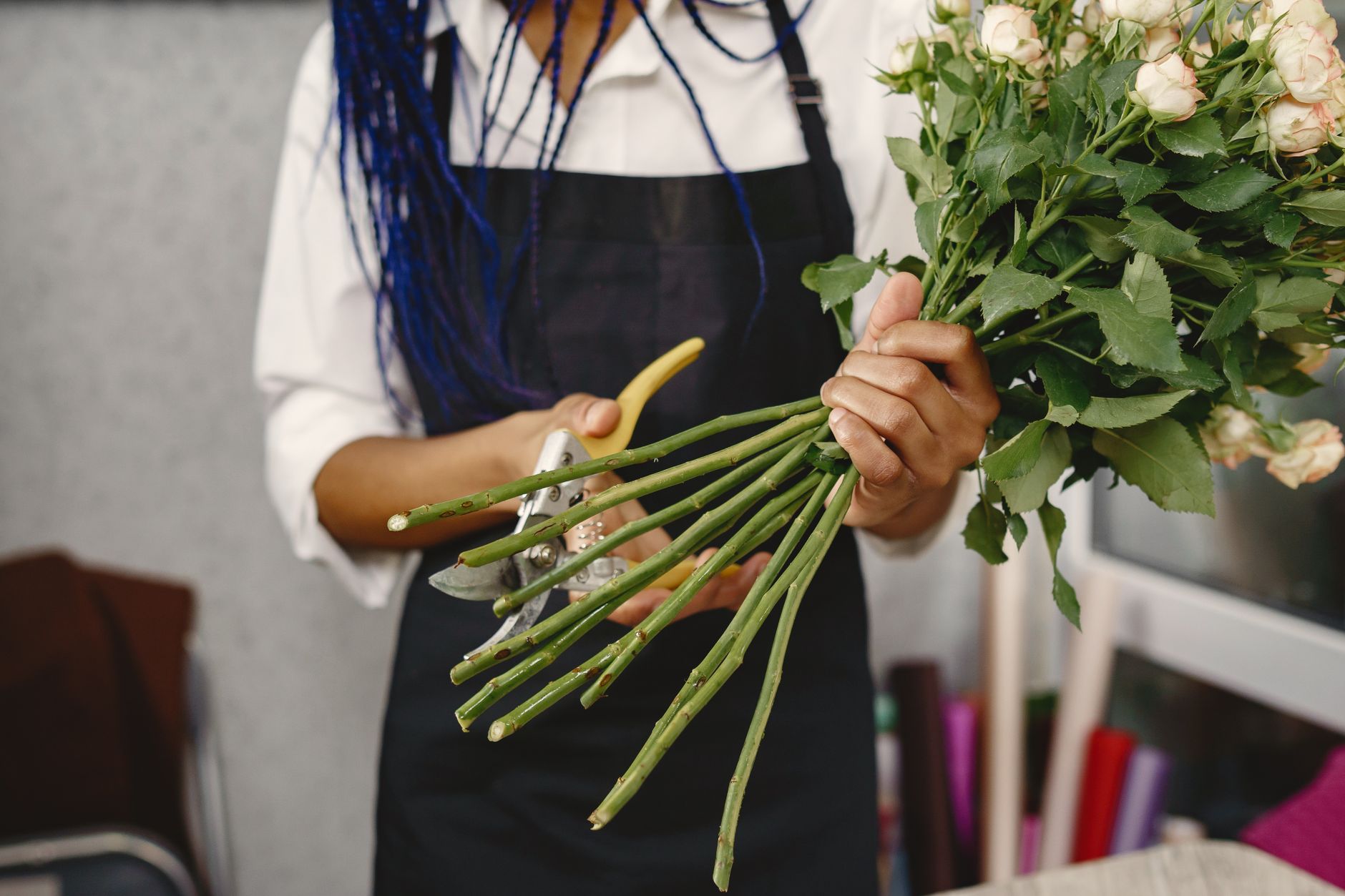
We run each session in a sequence designed so you see each technique before you apply it. You arrive, receive a floral apron, and gather at a wet work station with stems in conditioning buckets. First, we show you how to strip leaves, cut stems at a 45-degree angle under running water, and crush the last inch with a mallet—this stops air pockets that block water uptake. Then we demonstrate the spiral hand-tie: hold the focal flower (usually a rose) in your left hand at chest height, add secondary blooms at an angle, rotate the bouquet slowly, and layer in texture and filler. You then repeat this yourself with the same flowers and guidance. Finally, we teach wrapping: floral paper, ribbon placement, and a neat finish that locks all stems together. From unboxing flowers to tying off your bouquet takes 90–120 minutes; most people finish with a gift-ready arrangement and a real understanding of why each step matters.

Why do flowers wilt so fast in Vietnam's heat?
Vietnam's tropical climate—high humidity, 28–35°C temperatures, and direct sunlight—accelerates transpiration (water loss through leaves) and bacterial growth in stems. Cut flowers dehydrate faster here than in cooler climates because warm water moves through the stem more quickly, and ethylene (a ripening gas) spreads faster in heat. The moment a flower is cut, it stops water uptake from the plant, and heat makes that race worse. We combat this by keeping all stems in cooled, conditioned water until the moment you work with them, teaching you to recondition stems every time you recut them, and showing you how to store your finished bouquet in a cool spot away from direct sun. At home, place your bouquet in the coolest room, away from air-conditioner vents (which dry petals), and refresh water every two days with a clean bucket. Local blooms (chrysanthemums, gladiolus, celosia) tolerate heat better than imported roses; we often blend both for longevity in tropical conditions.
How should you prepare your home before the flowers arrive?
Before you attend or after your bouquet comes home, a few steps extend freshness. Clear a cool, clean spot away from ripening fruit (which releases ethylene gas that speeds aging), direct sun, and air-conditioner drafts. Prepare a tall vase or container (at least 15–20 cm deep) with room-temperature water; avoid metal vases because they can react with stems. Have sharp scissors or a clean knife ready—dull blades crush stems and slow water uptake. Keep paper towels nearby to blot stems and catch leaves. If you're receiving flowers that have traveled, let them sit in a cool room for 30–60 minutes before arranging; this stabilizes them after transport shock. Our private and couple sessions include storage tips tailored to your kitchen setup, and we often advise travelers to keep bouquets in their hotel room's coldest spot.
Who is a bouquet making class right for?
| Profile | Best fit | Class type | Why it works |
|---|---|---|---|
| Solo traveler, 1–2 weeks in Hanoi/HCMC | Yes | Tourist/traveler workshop | Small international groups, flexible booking, no commitment, flowers go home in luggage. |
| Couple on vacation or anniversary | Yes | Private and couple sessions | Intimate pace, learn together, romantic setting, take home a shared creation. |
| Team of 6–12 colleagues | Yes | Team building workshop | Breaks hierarchy, hands-on fun, no experience needed, all leave with a gift for their desk. |
| Parent with child (8+) | Yes | Kids and family workshop | Adapted tools, shorter session, child-friendly flowers, less pressure, focus on color play. |
| Hen or birthday group (8–15) | Yes | Hen and birthday parties | Themed blooms, group energy, Instagram moments, each guest takes home a keepsake. |
| Aspiring floral designer (4+ weeks) | No—try instead | Floral design course | Deeper theory, seasonal design, multiple arrangements, business skills, portfolio building. |
Choose based on time in-country, group size, and whether you want a one-off memory or ongoing skill-building.
What are the most common beginner mistakes and how do we fix them?
Beginners make four predictable mistakes. First: holding the bouquet too low. Many people cradle stems at waist level; this creates a flat, horizontal spiral instead of a dynamic cone. We teach you to hold your focal flower at chest height (sternum level), so your eye and wrist angle correctly, and secondary blooms naturally radiate outward and upward. Second: not removing enough foliage. Leaves below the water line rot, cloud the water, and kill flowers. We show you to strip all leaves in the lower third of each stem; it feels drastic, but it doubles vase life. Third: cutting stems straight instead of at an angle. A flat cut seals the stem surface too quickly; a 45-degree angle gives more surface area for water uptake. We hand you a test stem and let you feel the difference. Fourth: forgetting to recondition. After you've held a stem for 10 minutes in air, the cut end has sealed slightly. Before you place it in water at home, recut at 45 degrees. We drill this step during the class so you remember at home.
How do we run sessions for kids, groups, and rainy days?
We adapt every session to the group and weather. For kids (ages 6–12): We use shorter, thicker stems (chrysanthemums, celosia, sunflowers) that are easier to grip. We provide child-safe scissors and floral foam blocks instead of hand-tie technique, so they focus on color and placement, not spiral wrapping. A session is 60–75 minutes instead of 90–120. We use bright, bold flowers and let them design without strict rules—the goal is joy and ownership, not floral perfection. For groups (8+): We set up multiple wet stations (one per 3–4 people) so no one waits. We demonstrate once, circulate to answer questions, and encourage group members to help each other—this builds team connection. If morale is high, we inject humor: "Whose bouquet looks like a explosion? Let's fix it together." For birthday or hen parties, we sometimes add props (glitter, ribbon, small cards) for photos. For rainy days: Our workshop in both Hanoi and Ho Chi Minh City have covered indoor wet stations and access to natural light; we've never cancelled a class due to rain. However, we advise guests not to carry finished bouquets on uncovered motorbikes or in open taxis immediately after—we wrap them in sturdy floral paper and tie a plastic bag as rain shield. Most guests wait 15–30 minutes indoors for rain to lighten before leaving.
What should you check before booking a bouquet making class?
Dates and availability: WhatsApp us with your preferred dates; we confirm availability and time slots in real-time. Do not assume specific hours; availability varies by season and group bookings. Location: We operate in Hanoi and Ho Chi Minh City only—confirm which city suits you. Group size: Individual bookings work, but small groups (2–4 people) are common. Larger groups (8+) may need separate sessions or a split schedule. Flowers: Ask if the season offers imported roses or if we're using local blooms that week—quality and color range vary. Mention any allergies or preferences. What's included: Your finished bouquet, all materials, water-conditioning setup, and takeaway care instructions are standard. Ask if refreshments are included—this varies. Transport home: If traveling by motorbike in heat or rain, arrange for a cooler bag or ask about delivery options within Hanoi and Ho Chi Minh City. Same-day delivery is available; confirm on WhatsApp. Cost basis: Quote varies by flower type, season, and group size; we provide this on WhatsApp after you specify your preferences. Never assume a price or discount without asking. Photography: Let us know if you want photos of your process; we can accommodate this or keep things low-key.
Ask for workshop dates on WhatsApp
How does our teaching style differ from online tutorials?
Online flower videos show you the motion, but they don't let you feel the stem resistance, feel how a spiral builds, or see light and shadow on your specific blooms. In a live bouquet making class, we stand beside you, watch your hand angle, and adjust your grip in real-time. You also work with real, unpredictable flowers—some stems are woody, some are soft, some leaves bruise easily—and we teach you to adapt. The moment you hit a snag (a stem won't spiral, a flower leans too far), we're there to troubleshoot. You also leave with a gift-ready bouquet you made yourself, not a video to watch later. For travelers and busy professionals in Hanoi and Ho Chi Minh City, this real-time feedback is irreplaceable; you don't need years of practice to walk out with a skill and a bouquet. We also adapt our language (English for expats and tourists, Vietnamese for local guests) and pace to your comfort level.
Can you do a bouquet making class if you've never arranged flowers?
Absolutely—zero experience is required and expected. We designed our bouquet workshop sessions to assume you've never held floral scissors. We teach conditioning from the first step, so you understand why we cut stems before you how to cut them. We start the spiral wrapping with a demo using your flowers, talk you through the hold, then place stems in your hands and guide the rotation. Many guests tell us they've killed houseplants or thought they had no creative talent; by the end, they're surprised they made something beautiful and functional. The real barrier is not skill—it's confidence that you're allowed to try. We remove that barrier by normalizing mistakes, laughing when a stem goes the wrong direction, and showing you how to fix it. Beginners often worry they'll "ruin" expensive flowers, but cuts and practice are how floristry works. At the end of a session, you've made mistakes, learned, and created a finished piece. That's mastery for a beginner.
FAQ
What flowers do we use in a bouquet making class?
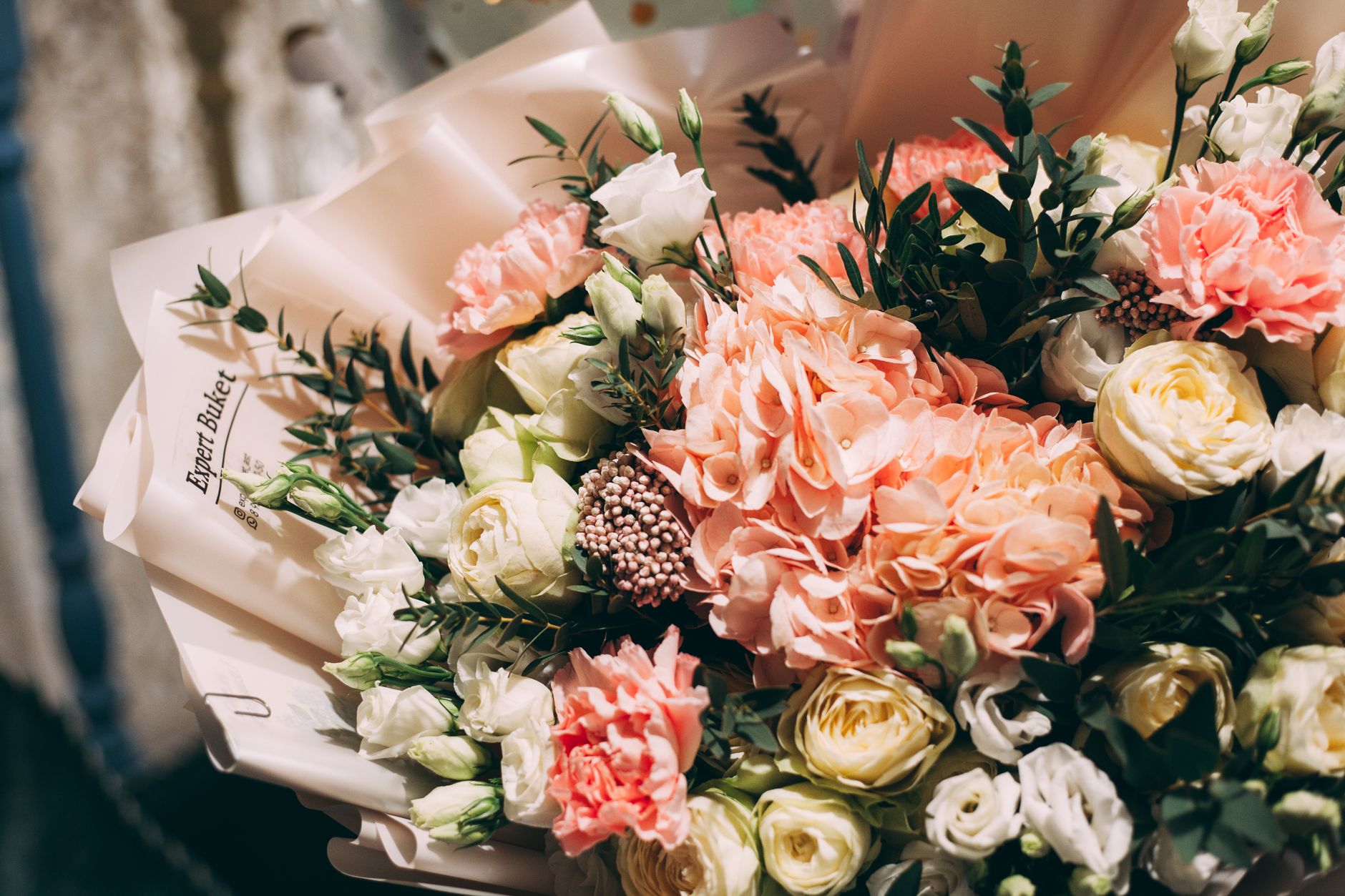
We use a seasonal mix of imported and local blooms—typically roses, dahlias, carnations, chrysanthemums, celosia, and eucalyptus. Specific flowers depend on the week and availability. WhatsApp us before booking to ask about current options.
Can I book a private or couple session instead of a group class?
Yes. Private and couple sessions run on a flexible schedule with one-on-one or two-person pace. Ask on WhatsApp for dates and details tailored to your group size.
Is the bouquet making class suitable for a 5-year-old?
Our kids and family workshop starts at age 6–7 and adapts tools and techniques. For younger children, we recommend waiting or booking a private session to assess comfort. WhatsApp us to discuss your child's age and interests.
Will my bouquet survive the flight home in my luggage?
Yes, if packed well. We wrap bouquets in sturdy floral paper and tie a plastic rain shield. Keep the bouquet upright in your carry-on, not checked baggage. Avoid crushing it, and place it in a cool hotel room or cooler bag until departure. Recondition stems and recut before placing in water at home.
What's the difference between a bouquet making class and a floral design course?
A bouquet class is a one-session hands-on workshop (90–120 minutes). A floral design course is a longer commitment (multiple weeks) covering color theory, seasonal trends, design styles, and business skills. Choose a class for a vacation experience or skill demo; choose a course if you want to deepen your practice or build a portfolio.
How far in advance do I need to book?
Availability varies by season. WhatsApp us with your preferred dates; we'll confirm same-day or within a few days if slots are open. Booking earlier (1–2 weeks) increases flexibility, but last-minute sessions often work too.
Can I bring a friend to share the cost?
Yes. Group bookings (2–4 people) are common. Each person creates their own bouquet. Ask for a group quote on WhatsApp.
Do you offer delivery of the finished bouquet, or does the client take it home?
Clients take their finished bouquets home at the end of the session. Same-day delivery is available in Hanoi and Ho Chi Minh City if you prefer not to carry it; confirm this on WhatsApp when you book. --- Ask for workshop dates on WhatsApp
Ask for dates
Tell us the city, the date and how many people. We reply on WhatsApp in English with workshop options and a quote.
FAQ
What flowers do we use in a bouquet making class?
We use a seasonal mix of imported and local blooms—typically roses, dahlias, carnations, chrysanthemums, celosia, and eucalyptus. Specific flowers depend on the week and availability. WhatsApp us before booking to ask about current options.
Can I book a private or couple session instead of a group class?
Yes. [Private and couple sessions](/private-and-couples) run on a flexible schedule with one-on-one or two-person pace. Ask on WhatsApp for dates and details tailored to your group size.
Is the bouquet making class suitable for a 5-year-old?
Our [kids and family workshop](/kids-and-family) starts at age 6–7 and adapts tools and techniques. For younger children, we recommend waiting or booking a private session to assess comfort. WhatsApp us to discuss your child's age and interests.
Will my bouquet survive the flight home in my luggage?
Yes, if packed well. We wrap bouquets in sturdy floral paper and tie a plastic rain shield. Keep the bouquet upright in your carry-on, not checked baggage. Avoid crushing it, and place it in a cool hotel room or cooler bag until departure. Recondition stems and recut before placing in water at home.
What's the difference between a bouquet making class and a floral design course?
A bouquet class is a one-session hands-on workshop (90–120 minutes). A [floral design course](/floral-design-course) is a longer commitment (multiple weeks) covering color theory, seasonal trends, design styles, and business skills. Choose a class for a vacation experience or skill demo; choose a course if you want to deepen your practice or build a portfolio.
How far in advance do I need to book?
Availability varies by season. WhatsApp us with your preferred dates; we'll confirm same-day or within a few days if slots are open. Booking earlier (1–2 weeks) increases flexibility, but last-minute sessions often work too.
Can I bring a friend to share the cost?
Yes. Group bookings (2–4 people) are common. Each person creates their own bouquet. Ask for a group quote on WhatsApp.
Do you offer delivery of the finished bouquet, or does the client take it home?
Clients take their finished bouquets home at the end of the session. Same-day delivery is available in Hanoi and Ho Chi Minh City if you prefer not to carry it; confirm this on WhatsApp when you book. --- [🌸 Ask for workshop dates on WhatsApp](https://wa.me/84969293894)
More like this
Bouquet workshop
Hand Tied Bouquet Workshop: What to Wear & Why It Matters
Flower arranging is a tactile, messy craft—your outfit shapes your comfort and confidence. We share what our students actually wear and why certain fabrics and shoes fail in tropical humidity.
Bouquet workshop
Hand-Tied Bouquet Workshop: A Rainy Day Activity in Hanoi & HCMC
Rain doesn't cancel a hands-on flower workshop—it makes it better. Our indoor hand-tied bouquet sessions turn wet afternoons into creative, keepsake moments across Hanoi and Ho Chi Minh City.
Bouquet workshop
Hand-Tied Bouquet Workshop in Ho Chi Minh City
A hand-tied bouquet workshop teaches you how to condition stems, build a spiral grip, and balance color in minutes—not hours of theory.