
Home › Blog › Bouquet workshop
Hand-Tied Bouquet Workshop: A Rainy Day Activity in Hanoi & HCMC
By the Vietnam Flower Workshop team · 2026-11-06
A hand-tied bouquet workshop is a 2–3 hour indoor class where you learn spiral stem conditioning, color balance, and wrapping technique while crafting a bouquet to take home. We run sessions year-round in Hanoi and Ho Chi Minh City at Vietnam Flower Workshop by Hoa Lang Thang, using real imported and local flowers. Rainy days are ideal—no outdoor pressure, soft natural light indoors, and humidity actually slows flower dehydration. Beginners struggle most with stem angle (holding at 45°, not vertical) and over-tightening the spiral grip, which cuts stems. We guide you through conditioning (removing lower leaves, re-cutting stems underwater), then build your bouquet hand-over-hand. Cost varies by flower selection and group size; ask us for a quote on WhatsApp. Avoid workshop days if you have thick-skinned flower allergies—pollen exposure is real. Best suit: couples seeking a shared skill, travelers wanting a tangible memory, or anyone seeking calm focus indoors. Ask for workshop dates on WhatsApp
Why a rainy day is actually the best time for a bouquet workshop
Rain keeps humidity high, which slows water loss from cut flowers. In Hanoi and Ho Chi Minh City heat—even at 28–32°C on dry days—imported roses and hydrangeas wilt fast indoors. A rainy afternoon means stems stay plump longer, so your bouquet structure holds firm while you learn. You also avoid glare on the work table, making it easier to judge color balance between pink, white, and green foliage. Indoor workshops mean no wind damage to petals, no direct sun stress, and no rescheduling due to weather. The calm, quiet environment lets beginners focus on hand position and spiral angle without distraction.
What happens step-by-step in a 2–3 hour session
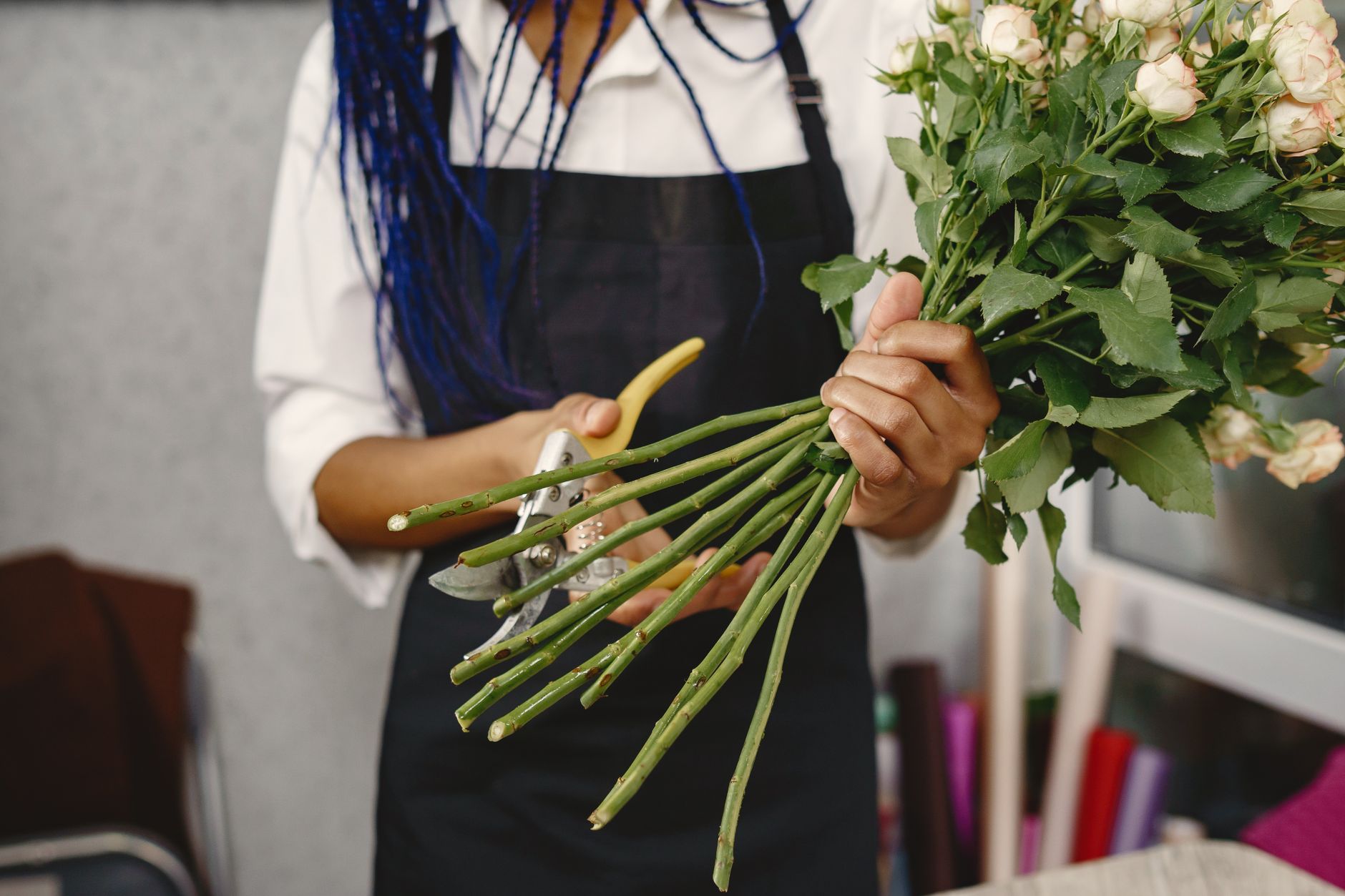
We start with a 10–15 minute introduction: flower types (roses, spray chrysanthemums, eucalyptus, solidago), seasonal availability, and why conditioning matters. You then strip lower leaves from each stem at the prep table—this is hands-on within two minutes. Next comes the core skill: holding stems at a 45° angle and rotating your hand to build a spiral, adding stems one at a time so they cross and create a tight dome shape. Most beginners grip too hard; we show the "light pinch" technique to avoid crushing vascular tissue. You'll then wrap the spiral with floral tape and add a decorative wrapping—usually kraft paper or silk ribbon—which we provide. The whole build takes 60–90 minutes with guidance. Finally, you trim the stem base underwater (this is crucial for water uptake) and receive aftercare tips before you leave with your finished bouquet. Private and couple sessions allow you to slow down and repeat each step; group classes keep energy high and let you compare color choices with others.
How do imported flowers survive the Hanoi and HCMC heat?
Imported roses, peonies, and dahlias arrive in Hanoi and Ho Chi Minh City in cool boxes within 24 hours of harvest. We store them in a temperature-controlled fridge (12–15°C) with floral foam kept moist. The moment you work with a stem in the workshop, we re-cut it 1–2 cm at a 45° angle, then immediately stand it in a bucket of room-temperature water with cut-flower food (a sachet we provide or mix from powder). This re-hydration fills the stem's vascular tubes after shipping stress. At home, you repeat this: re-cut every 2–3 days, change water daily, and keep the bouquet away from direct sun, heating vents, and fruit bowls (ethylene gas from ripening fruit triggers petal drop). In tropical heat, even conditioned flowers last 5–7 days indoors if you follow these steps; without them, expect 2–3 days. Local flowers—like locally grown chrysanthemums and celosia—tolerate heat better and last 7–10 days because they've adapted to the climate and travel less distance.
Common mistakes beginners make (and how we fix them)
| Mistake | Why it happens | What we show | Result |
|---|---|---|---|
| Vertical stem insertion | Habit from vases; feels stable | 45° angle, spiral rotation | Denser, rounder dome shape |
| Leaves left on lower stems | Rushing; not understanding purpose | Why submerged leaves rot, cause bacteria | Bouquet stays fresh longer |
| Wrapping too tight | Fear of falling apart | "Light tension" demo with actual stems | No crushed vascular tissue |
| No re-cut before water | Don't know stems dry during transport | Underwater cut at 45° right after | Proper water absorption |
| Ignoring flower food | Think it's optional | Show water uptake difference in 2 hours | Blooms visibly fresher |
Beginners also hesitate at color balance—they worry about "matching" instead of "contrasting." We encourage three-color palettes: a dominant color (60% of stems), a secondary (30%), and accent or filler (10%). For rainy-day morale, soft palettes (cream, blush, sage) feel calming indoors; jewel tones (deep burgundy, navy foliage) photograph well if you want to share your work.
Can kids and families join a rainy-day bouquet workshop?
Yes. Kids and family workshops adapt the technique for ages 7+. Children hold stems at the same 45° angle but with both hands at first—no spiral yet—just learning to layer flowers without crushing petals. A parent or sibling guides the spiral rotation while the child turns their wrist. By age 10–12, most kids build a full spiral alone with verbal cues. Younger children (5–7) can participate as "petal helpers": removing lower leaves, choosing flowers, and arranging filler foliage while an adult handles the spiral structure. Families love rainy workshops because there's no pressure to rush outdoors; everyone works at their own pace. The takeaway—a bouquet each person helped build—creates a keepsake moment, especially on a quiet, wet afternoon.
️ Learn more about family sessions
How group and team sessions handle rainy days
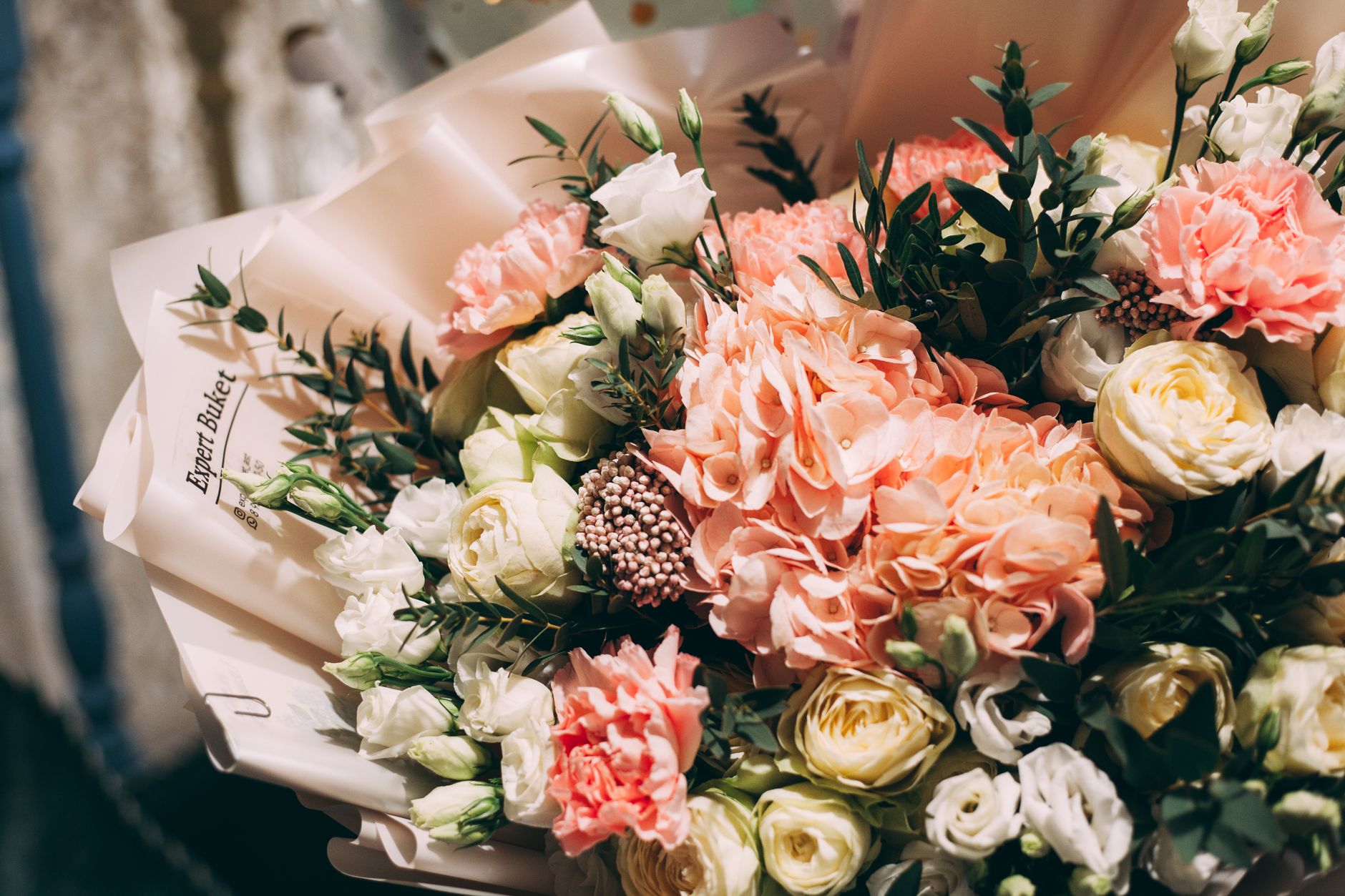
Team building workshops and hen and birthday parties move seamlessly indoors when it rains. Groups of 6–15 people work at long tables under bright indoor lights. We prep all flowers in advance (stems cut, leaves stripped, sorted by color) so no one waits. Each participant builds their own bouquet while instructors circulate—this takes 45–60 minutes. Rainy days actually boost group energy: everyone's focused indoors, conversations flow freely between bouquet-making phases, and laughter is louder without outdoor wind. For birthday or hen events, we can theme the color palette—blush and gold for feminine celebrations, or bold reds and blacks for bolder moods. Teams often compete gently on bouquet height or symmetry, turning the rain into bonus bonding time. Parties also feature a group photo at the end, which photographers say looks sharper indoors on rainy days because soft, even light eliminates harsh shadows.
What to check before you book a rainy-day workshop
- Does the venue have climate control? Our workshops in Hanoi and Ho Chi Minh City are indoors with stable temperature (20–24°C), so flowers don't shock when you leave into the heat.
- Are flowers pre-conditioned, or do we condition them in class? We show you how to condition stems as part of the learning—you'll do it once or twice so you know the technique for bouquets at home.
- What happens if I'm allergic to pollen? Tell us in advance. Some workshops focus on pollen-light flowers (roses, hydrangeas) or can offer antihistamines recommendations.
- Can I take my bouquet on public transport? Yes—we provide sturdy wrapping and a tip: rest it on your lap or a seat, not dangling from a hand where humidity and movement stress petals.
- Do you offer a beginner-only session, or are mixed-skill groups common? We run both. Beginner-only workshops let you ask more questions; mixed groups expose you to styles from slightly more experienced participants.
Why rainy days work better for travelers and expats
If you're visiting Hanoi or Ho Chi Minh City and the forecast shows rain, don't cancel plans—book a workshop instead. Flower workshops for travelers are designed around this reality: rainy weather is common in the monsoon season, and staying indoors with an English-speaking instructor beats waiting in a hotel. You'll meet other travelers, learn a skill that translates to any kitchen-sink arrangement at home, and leave with a bouquet as a physical memory—far more meaningful than a souvenir bought in a shop. We reply as soon as we can on WhatsApp to confirm availability on your preferred rainy afternoon.
Ask for workshop dates on WhatsApp
The one technique you can practice at home right now
The 45° spiral grip: Gather 5–6 stems (even grocery-store roses). Hold them loosely in your left hand (if right-handed), pinching gently between thumb and forefinger. Take a fresh stem and insert it at a 45° angle, crossing the existing bundle. Rotate your hand clockwise; add another stem at the same 45° angle, rotating again. Repeat 3–4 times. You'll feel the stems lock into a tight spiral—no glue, no tape, just geometry and slight tension. This one technique is 70% of a hand-tied bouquet. Practice this 2–3 times; you'll arrive at a workshop already confident.
Book your rainy-day session now

FAQ
Will my bouquet last longer if I make it on a rainy day versus a sunny day?
Not the bouquet itself, but the conditions make learning easier. Humidity slows water loss, and soft light helps you see color balance clearly. The bouquet's lifespan depends entirely on your aftercare: daily water changes, re-cuts every 2–3 days, cool placement away from sun. A bouquet made on a rainy day and neglected will wilt as fast as one made in sunshine.
What if the workshop gets rescheduled last-minute due to flooding or extreme weather?
We confirm dates on WhatsApp before you arrive. If flooding or unsafe conditions affect access to our Hanoi or Ho Chi Mihn City locations, we'll notify you immediately and discuss rescheduling. This is rare, but we prioritize your safety over session schedules.
Can I bring an umbrella and flowers home on public transport in the rain?
Yes, but carefully. We wrap your bouquet in sturdy kraft or cellophane paper. Hold it upright on your lap or rest it against a seat, not dangling from your arm. The wrapping shields petals from rain and physical pressure. If your commute is long (45+ minutes), ask us for a tip sheet on temporary hydration for the journey.
Do I need any prior flower experience, or is a rainy-day workshop truly for beginners?
Truly for beginners. We teach spiral conditioning, stem angle, and color balance from scratch. No prior experience needed. Rainy days often attract first-timers because the forecast gives you permission to try something indoors and low-pressure.
How many people typically attend a rainy-day session, and do groups feel crowded indoors?
Private sessions are 2 people; group workshops cap at 15. Indoor space is spacious—each person gets an arm's width at the work table. Rainy days sometimes see fewer bookings, so you may have a smaller, more intimate group than sunny days. We reply as soon as we can on WhatsApp if you prefer a quieter session.
Ask for dates
Tell us the city, the date and how many people. We reply on WhatsApp in English with workshop options and a quote.
FAQ
Will my bouquet last longer if I make it on a rainy day versus a sunny day?
Not the bouquet itself, but the conditions make learning easier. Humidity slows water loss, and soft light helps you see color balance clearly. The bouquet's lifespan depends entirely on your aftercare: daily water changes, re-cuts every 2–3 days, cool placement away from sun. A bouquet made on a rainy day and neglected will wilt as fast as one made in sunshine.
What if the workshop gets rescheduled last-minute due to flooding or extreme weather?
We confirm dates on WhatsApp before you arrive. If flooding or unsafe conditions affect access to our Hanoi or Ho Chi Mihn City locations, we'll notify you immediately and discuss rescheduling. This is rare, but we prioritize your safety over session schedules.
Can I bring an umbrella and flowers home on public transport in the rain?
Yes, but carefully. We wrap your bouquet in sturdy kraft or cellophane paper. Hold it upright on your lap or rest it against a seat, not dangling from your arm. The wrapping shields petals from rain and physical pressure. If your commute is long (45+ minutes), ask us for a tip sheet on temporary hydration for the journey.
Do I need any prior flower experience, or is a rainy-day workshop truly for beginners?
Truly for beginners. We teach spiral conditioning, stem angle, and color balance from scratch. No prior experience needed. Rainy days often attract first-timers because the forecast gives you permission to try something indoors and low-pressure.
How many people typically attend a rainy-day session, and do groups feel crowded indoors?
Private sessions are 2 people; group workshops cap at 15. Indoor space is spacious—each person gets an arm's width at the work table. Rainy days sometimes see fewer bookings, so you may have a smaller, more intimate group than sunny days. We reply as soon as we can on WhatsApp if you prefer a quieter session.
More like this
Bouquet workshop
Hand Tied Bouquet Workshop: What to Wear & Why It Matters
Flower arranging is a tactile, messy craft—your outfit shapes your comfort and confidence. We share what our students actually wear and why certain fabrics and shoes fail in tropical humidity.
Bouquet workshop
Hand-Tied Bouquet Workshop in Ho Chi Minh City
A hand-tied bouquet workshop teaches you how to condition stems, build a spiral grip, and balance color in minutes—not hours of theory.
Bouquet workshop
Hand-Tied Bouquet Workshop in Hanoi: Learn Spiral Techniques Live
We teach hands-on spiral hand-tie techniques in Hanoi, using real imported and local flowers that you wrap and take home the same day. Sessions run for small groups, couples, and individuals—beginners and experienced arrangers welcome.