
Home › Blog › Bouquet workshop
Hand-Tied Bouquet Workshop in Ho Chi Minh City
By the Vietnam Flower Workshop team · 2026-11-06
A hand-tied bouquet workshop in Ho Chi Minh City at Vietnam Flower Workshop by Hoa Lang Thang is a hands-on session where you learn to condition flower stems, grip them in a spiral, balance color and texture, and wrap a finished bouquet to take home. Sessions run for a set duration with instructor guidance using real imported and local flowers. Beginners typically struggle with stem angle consistency and pressure balance in the hand; we show you how to correct grip mid-build. The workshop is designed for travelers, expats, couples, groups, and anyone wanting a practical floral skill. Ask us for a quote on WhatsApp to confirm availability and pricing—same-day delivery and pickup options are discussed when you inquire. Ask for workshop dates on WhatsApp
What Skills Do You Actually Learn in a Hand-Tied Class?
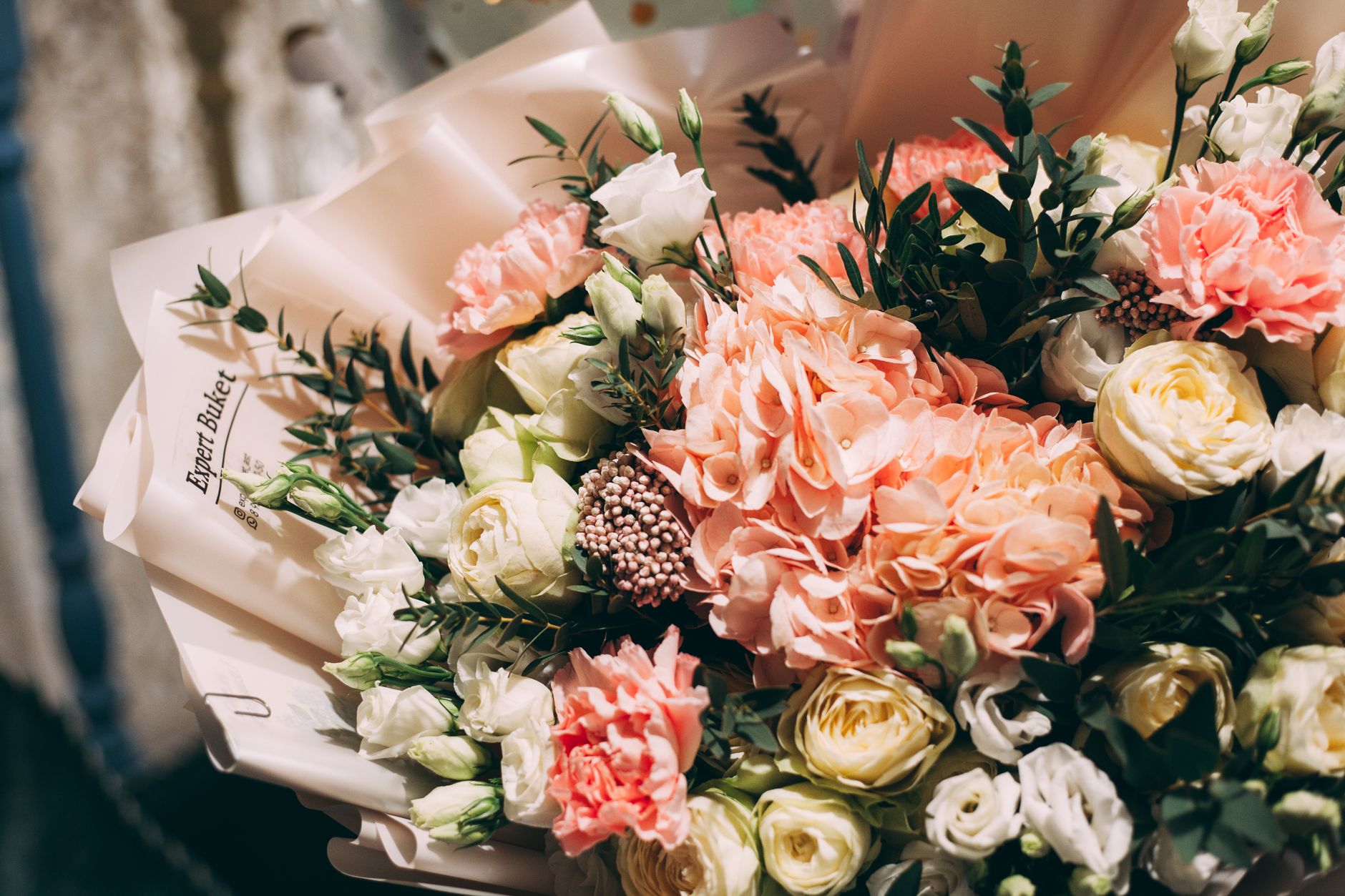
We teach five core techniques during a session: stem conditioning (removing lower leaves, cutting at a 45° angle under running water), spiral hand-tie grip (rotating the stem in your palm to create a conical shape), color blocking (pairing complementary hues so they don't muddy), texture layering (filler flowers that hold larger blooms in place), and wrapping (tying with twine, then wrapping paper or kraft so the bouquet stands upright). Most beginners arrive thinking they'll "arrange" flowers in a vase; they leave understanding that a hand-tied bouquet is constructed in the hand, then placed in water without further fussing. You practice on one bouquet per session, so you leave with something you made and can gift or display. The skill transfers: once you know spiral grip, you can tackle any hand-tied design at home.
Who Should Book a Hand-Tied Bouquet Workshop?
| Profile | Why It Fits | What to Expect |
|---|---|---|
| Traveler or expat (1–6 weeks in city) | No experience needed; takes one session; memorable souvenir | Real imported flowers, English-speaking guide, bouquet to keep or gift |
| Couple or partner date | Romantic, creative, low-pressure | Work side by side, take home matching or paired bouquets, no judgment on skill |
| Group (4–12 people) | Team-building or birthday activity | We adapt pacing, provide all stems and wrapping, each person takes a bouquet home |
| Florist or wedding planner | Want to refine hand-tie speed and grip | Honest feedback, real wedding flowers, a chance to troubleshoot under pressure |
| Parent + child (6+) | Fun, tactile, builds confidence | Shorter session, pre-cut stems, we guide hand placement for safety |
Our flower workshop for travelers page lists session types; for groups, see our team building workshop and hen & birthday parties options.
How Do We Keep Flowers Fresh in Hanoi and Ho Chi Minh City Heat?
Heat stress is the biggest killer of hand-tied bouquets in Southeast Asia. We condition flowers in cool water the evening before, strip all lower foliage (bacteria on stems accelerate decay), and cut at 45° angles to maximize water uptake. During your session, stems sit in a bucket of water until you use them. Once you wrap the bouquet, the paper or cellophane acts as a microclimate—it slows water loss and protects petals from direct sun and air conditioning drafts. We advise you to remove the wrapping at home, place the bouquet in a clean vase with room-temperature water, re-cut the stems every three days, and keep it away from fruit and direct sunlight. Roses, spray roses, and dahlias survive the heat best; delicate ranunculus and certain hydrangeas wilt faster if left in a hot room. In our experience, a well-made hand-tied bouquet in a cool room lasts 7–10 days; in a warm room without water changes, 3–5 days. We tell you upfront which stems are fragile so you can manage expectations.
How Do We Adapt Workshops for Kids, Groups, and Rainy Days?
Kids (ages 6–14): We shorten sessions and use thicker, sturdier stems like roses and carnations—easier to grip than wiry greens. Scissors stay with us; we pre-cut foliage. Hand placement is guided physically, not just verbally. Smaller vases or jars replace full-size vessels so bouquets feel proportional. Parents often join or observe.
Groups (4–12 people): We set up multiple stations, each with water buckets and stem supplies. Pacing slows to match the slowest person, so no one feels rushed. We encourage peer learning—once one person gets spiral grip, their neighbor sees it and adapts faster. Bouquets may vary in finish, which is honest and charming. We prep stems and foliage in advance to save class time.
Rainy days: A covered outdoor space or our indoor workshop keeps things dry. Humidity actually helps—flowers stay hydrated longer and don't wilt as fast. We avoid moving the session outdoors if rain is heavy because petals bruise easily. Our private & couple sessions can be rescheduled on WhatsApp if weather is extreme; we reply as soon as we can.

What Should You Check Before Booking a Hand-Tied Workshop?
Before you inquire, ask yourself:
- What is your goal? A gift for someone, a personal skill, a team bonding day, or a traveler memory?
- How many people? One person, two, or a group? Size affects pacing and flower selection.
- When are you in the city? Availability varies; we confirm on WhatsApp, so mind the time difference.
- Do you have mobility or allergies? Pollen or stem thorns can trigger reactions; let us know upfront.
- Can you take the bouquet home? A hand-tied bouquet needs water within 30 minutes; plan for that.
What to check on our end:
- We use real, fresh flowers—not foam, not silk. Imported stems (roses, spray roses, dahlias, lisianthus) mix with local seasonal blooms.
- All supplies (scissors, twine, wrapping, vases for demo) are included.
- Sessions run in English for expats and travelers; Vietnamese speakers also welcome.
- We explain color balance and texture before you start, so you're not guessing.
- Your bouquet is yours to keep—you don't pay extra to take it.
What to avoid:
- Booking if you cannot commit to the session date—cancellations are managed on WhatsApp case by case.
- Expecting a florist-level finish on your first try; the goal is learning, not perfection.
- Ignoring stem conditioning; rough or bruised flowers won't spiral well.
- Buying a hand-tied bouquet online as a substitute for a workshop; they're different experiences.
For seasonal workshops (Tet, Christmas wreaths, lotus), visit our dedicated page. For longer skill-building, our floral design course offers multi-session programs.
How Does a Hand-Tied Bouquet Differ from a Vase Arrangement?
A hand-tied bouquet is built in your hand with a spiral base, then placed in water; it needs no foam or support structure. A vase arrangement is built in a vessel and often uses floral foam. Hand-tied flowers are tighter, more compact, and last longer because stems are fully submerged and water absorption is uniform. Vase arrangements are looser, easier for beginners, but foam can harbor bacteria and dry out. In a workshop, hand-tied bouquets teach you grip, rotation, and pressure—skills that make you feel like a florist. Vase arrangements teach you space and asymmetry, which is also valuable but less portable. If you're a traveler or want a gift bouquet, hand-tied is the move; if you want to keep something in your home long-term, arrangements in a vase are lower-maintenance. Many of our graduates book both: a hand-tied bouquet workshop first, then a flower box & basket class later.
Common Beginner Mistakes and How We Prevent Them
Mistake 1: Stems at different angles. If you rotate the spiral too fast or grip too loose, stems slip into the center rather than wrapping around it. We stop you mid-build, show you the angle, and guide your hand back. Practice on five stems, not one, before you add filler.
Mistake 2: Color clash. Bright pink next to bright orange looks chaotic, not harmonious. We teach you to group similar tones (pinks with purples, yellows with greens) and separate opposites. A simple rule: if the colors don't look good side by side in nature, they probably won't in a bouquet.
Mistake 3: Pressure too light. Your hand must stay firm or the spiral collapses as you add weight. Many beginners relax their grip; we remind you to imagine holding an egg—firm but not crushing. Pressure = stability.
Mistake 4: Forgetting to condition. Bruised or crushed stems won't drink water and wilt fast. We strip and cut every stem in your presence so you see why it matters.
Mistake 5: Wrapping too tight. If you wrap the paper so tight it crushes the stem spiral, water can't flow to the outer flowers. Snug, not suffocating—that's the feel.
Our flower arranging class guide goes deeper into technique and theory if you want to prepare.
Ask for workshop dates on WhatsApp
Why Book a Hand-Tied Workshop Over Buying a Bouquet?
Buying a hand-tied bouquet is transactional; a workshop is transformative. You learn why flowers last, how to build one yourself, and you leave with a tangible skill. Many guests tell us they've made hand-tied bouquets at home after the session, gifting them to friends and family. A workshop also connects you to local flower culture—we often source blooms from Vietnamese flower culture & market tour partnerships, so you understand seasonality and regional variety. The cost of a workshop is comparable to a premium bouquet; you get the bouquet and the training. If you're in Ho Chi Minh City for a few days, a workshop is a memory; if you're staying longer, it's a skill. We see both kinds of guests, and both leave happy.

FAQ
How long is a typical hand-tied bouquet workshop?
Session length varies; we confirm timing on WhatsApp based on group size and your experience level. Beginner solo or pair sessions are shorter than group sessions. Ask us for specifics when you inquire.
Do I need any flower experience to join?
No. Beginners are our core audience. We teach grip, rotation, and color from scratch. The only assumption is that you can use scissors safely and follow guidance.
What flowers are in the bouquets we make?
A mix of imported blooms (roses, spray roses, dahlias, lisianthus, ranunculus) and local seasonal stems (chrysanthemums, carnations, greenery). We avoid flowers that are too delicate or wilt in heat. Specific stems depend on what's fresh when you book.
Can I bring the bouquet on a plane or long trip?
Yes, but it needs water within 30 minutes of wrapping. After that, it's dormant and can travel 4–6 hours without water loss. Wrap it in damp paper towel inside a box. Unwrap it in your destination and place in water immediately.
What if I'm not happy with my bouquet after the session?
You made it with us guiding you, so it's your creation. Some guests are proud; others wish they'd done it differently. That's normal. You can always make another at home using the techniques we taught, or book another session if you want to refine your grip.
Do you offer workshops in other Vietnamese cities?
We deliver in Hanoi and Ho Chi Minh City only. If you're traveling to other areas, we can suggest resources on WhatsApp, but we don't run sessions outside these two cities.
How do I book and pay?
Ask us for a quote on WhatsApp with your date, group size, and session type. We reply as soon as we can. Payment and booking details are confirmed in that conversation.
Can I book a private session for just two people?
Yes. See our private & couple sessions page for details on one-on-one and pair workshops. ️ See how a class runs ---
Ask for dates
Tell us the city, the date and how many people. We reply on WhatsApp in English with workshop options and a quote.
FAQ
How long is a typical hand-tied bouquet workshop?
Session length varies; we confirm timing on WhatsApp based on group size and your experience level. Beginner solo or pair sessions are shorter than group sessions. Ask us for specifics when you inquire.
Do I need any flower experience to join?
No. Beginners are our core audience. We teach grip, rotation, and color from scratch. The only assumption is that you can use scissors safely and follow guidance.
What flowers are in the bouquets we make?
A mix of imported blooms (roses, spray roses, dahlias, lisianthus, ranunculus) and local seasonal stems (chrysanthemums, carnations, greenery). We avoid flowers that are too delicate or wilt in heat. Specific stems depend on what's fresh when you book.
Can I bring the bouquet on a plane or long trip?
Yes, but it needs water within 30 minutes of wrapping. After that, it's dormant and can travel 4–6 hours without water loss. Wrap it in damp paper towel inside a box. Unwrap it in your destination and place in water immediately.
What if I'm not happy with my bouquet after the session?
You made it with us guiding you, so it's *your* creation. Some guests are proud; others wish they'd done it differently. That's normal. You can always make another at home using the techniques we taught, or book another session if you want to refine your grip.
Do you offer workshops in other Vietnamese cities?
We deliver in Hanoi and Ho Chi Minh City only. If you're traveling to other areas, we can suggest resources on WhatsApp, but we don't run sessions outside these two cities.
How do I book and pay?
Ask us for a quote on WhatsApp with your date, group size, and session type. We reply as soon as we can. Payment and booking details are confirmed in that conversation.
Can I book a private session for just two people?
Yes. See our [private & couple sessions](/private-and-couples) page for details on one-on-one and pair workshops. [✂️ See how a class runs](/flower-arranging-class) ---
More like this
Bouquet workshop
Hand Tied Bouquet Workshop: What to Wear & Why It Matters
Flower arranging is a tactile, messy craft—your outfit shapes your comfort and confidence. We share what our students actually wear and why certain fabrics and shoes fail in tropical humidity.
Bouquet workshop
Hand-Tied Bouquet Workshop: A Rainy Day Activity in Hanoi & HCMC
Rain doesn't cancel a hands-on flower workshop—it makes it better. Our indoor hand-tied bouquet sessions turn wet afternoons into creative, keepsake moments across Hanoi and Ho Chi Minh City.
Bouquet workshop
Hand-Tied Bouquet Workshop in Hanoi: Learn Spiral Techniques Live
We teach hands-on spiral hand-tie techniques in Hanoi, using real imported and local flowers that you wrap and take home the same day. Sessions run for small groups, couples, and individuals—beginners and experienced arrangers welcome.