
Home › Blog › Vietnamese flower culture
Vietnamese Flower Culture Tay Ho for Beginners: Learn & Arrange
By the Vietnam Flower Workshop team · 2026-11-06
Vietnamese flower culture centers on symbolism: red and yellow for luck and fortune, white for respect and mourning, chrysanthemums for longevity. Tay Ho, Hanoi's flower hub, hosts Vietnam Flower Workshop by Hoa Lang Thang, where we guide beginners through hands-on sessions that combine market tours with live arranging. A typical 2–3 hour beginner session includes conditioning techniques, color balance, and taking home a finished piece. You'll learn why lotus blooms during summer festivals, how to spiral-tie bouquets, and which flowers survive Hanoi's humid heat. No prior experience needed—we adapt for absolute beginners, expats, and travelers. Ask us for a quote on WhatsApp for private or group dates. Ask for workshop dates on WhatsApp
Why does Tay Ho matter for flower learners?
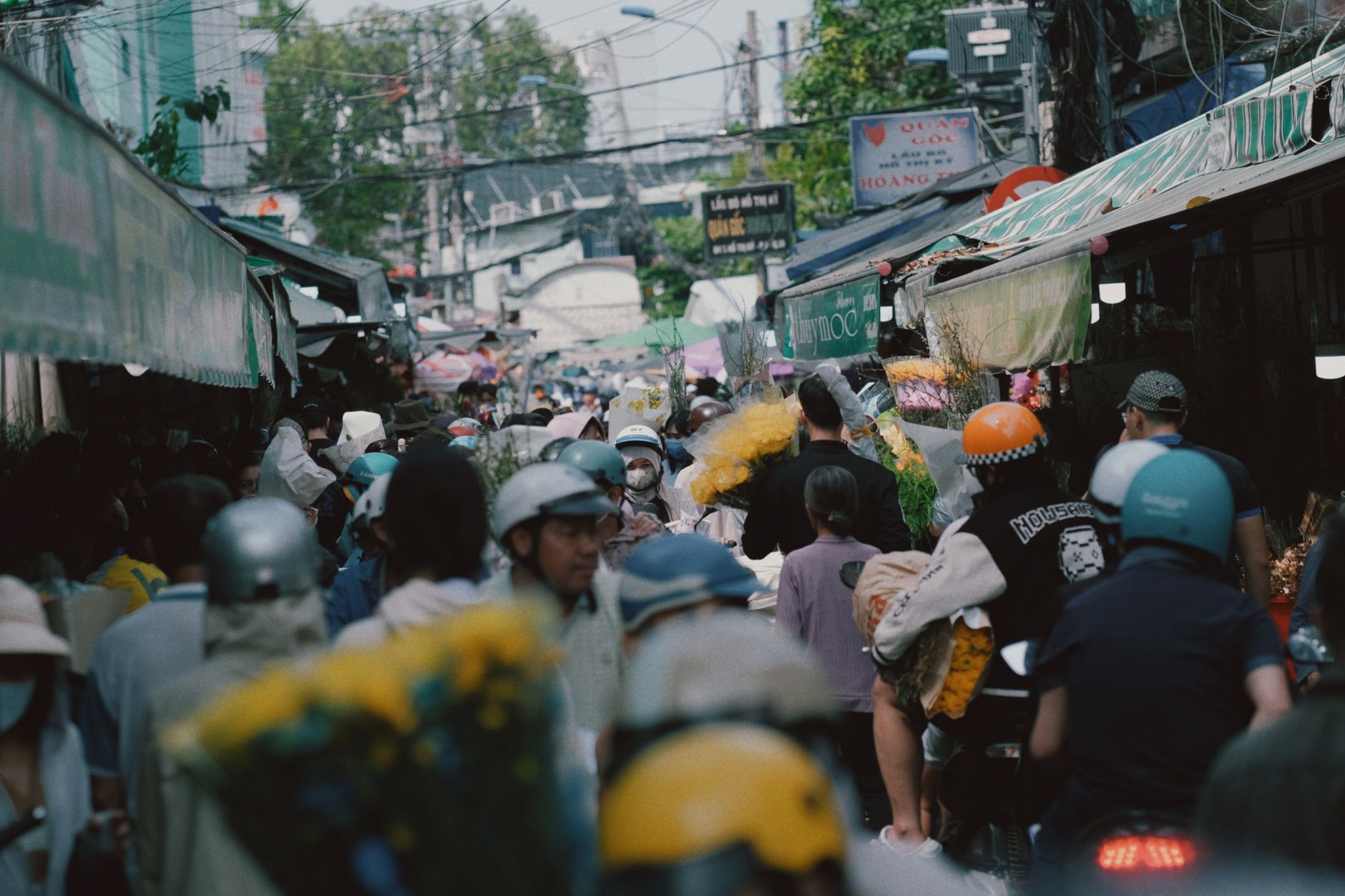
Tay Ho is where 80% of Hanoi's cut flowers arrive before dawn—growers deliver bundles from surrounding provinces every morning. Walking through the market, you see seasonal shifts: lotus in July and August, chrysanthemums in autumn, peonies in spring. This geography matters because beginners learn why certain blooms are available when, and how scarcity shapes design choices. We've built our Vietnamese flower culture & market tour to start in the market at 6 a.m., so you touch real stems before you arrange them indoors. The warmth and noise teach you faster than any classroom photo.
Tay Ho's flower vendors have worked the same stalls for decades—their knowledge of stem quality, water uptake, and which blooms bruise easily is irreplaceable. Beginners often ask, "Why did my bouquet wilt in three days?" The answer lies in conditioning technique, which we teach in the market, using real Tay Ho water and stems. You gain intuition about density, weight, and balance by handling the actual inventory you'd buy yourself.
What does a beginner actually learn in one session?
Our typical 2-hour flower arranging class runs in this sequence:
Minutes 0–15: Conditioning. You strip lower leaves, cut stems at 45° angles under running water, and soak in room-temperature water. We show you why soft-stem flowers (like roses and ranunculus) need gentler handling than woody stems (hypericum, eucalyptus). This step alone prevents 40% of wilting issues.
Minutes 15–45: Symbolism and color theory. We explain why yellow chrysanthemums mean cheerfulness, red carnations mean admiration, and pale pink means grace. Vietnamese Lunar New Year (Tet) traditionally uses apricot blossoms (symbolizing luck) and kumquat branches (symbolizing prosperity). Summer lotus is used in temple offerings and weddings. Understanding this layer transforms arranging from decoration into storytelling—every color choice means something.
Minutes 45–90: Hands-on spiral hand-tie. This is where most beginners struggle. The technique: hold one stem vertically, feed others in at 45° angles, rotating the bunch counterclockwise as you add each stem. The result is a compact, dome-shaped bouquet with no internal mechanics (no vase, no oasis). We start you with 5–7 stems, then scale up. Common mistakes: gripping too tight (crushing stems), rotating the wrong direction (collapsing the spiral), or adding stems at flat angles (making gaps). We walk you through it three times, hand over hand if needed.
Minutes 90–120: Wrapping and take-home care. You wrap the bouquet in kraft paper or waterproof wrap, secure with twine, and we give you a care card: change water daily, recut stems every other day, avoid direct sunlight and heat vents. In Hanoi's climate (28–32°C, high humidity), flowers last 5–7 days indoors with these steps—compared to 2–3 days without conditioning.
How does Vietnamese flower symbolism shape design?
Symbolism is not decoration in Vietnamese tradition—it's communication. A bouquet for a hospital visit must avoid white flowers (associated with funerals) and even numbers (considered unlucky). A Tet arrangement should include apricot blossoms (warm, golden) and peach blossoms (pink), never white chrysanthemums (reserved for grief). A wedding bouquet must use red, pink, or yellow—never purple or dark tones, which carry somber meanings.
Our bouquet making workshop teaches this decision tree:
| Occasion | Safe flowers | Colors to avoid | Symbolism |
|---|---|---|---|
| Tet / Lunar New Year | Apricot, peach, kumquat | White, black, odd arrangements | Prosperity, renewal, luck |
| Hospital or get-well | Bright gerbera, sunflower, rose | White, chrysanthemum | Energy, hope, life |
| Wedding | Roses, peonies, orchids | Purple, wilted, even stems | Love, beauty, unity |
| Funeral or condolence | White chrysanthemum, lily | Red, yellow, festive blooms | Respect, memory, peace |
| Birthday or celebration | Ranunculus, lisianthus, mixed | Black, dark purple | Joy, gratitude, friendship |
Beginners often ask, "Can't I just use what I like?" Yes—but understanding the layer means your gifts land differently. A red rose bouquet from a market stand feels generic; the same bouquet because you chose red for courage and admiration feels intentional. That shift happens in our workshops.
What flowers survive Hanoi's heat, and which wilt fast?
Hanoi's hot, humid climate (April–September especially) wilts sensitive blooms quickly. Beginners buy flowers in an air-conditioned shop, take them outside, and watch them droop. We teach you which blooms are heat-hardy and which are not.
Heat-hardy (7–10 days indoors):
- Chrysanthemum (especially daisy types)
- Celosia (cockscomb)
- Hypericum berries
- Eucalyptus (foliage, not the flower itself)
- Orchids (cymbidium, dendrobium)
Heat-sensitive (3–5 days indoors, wilt in direct sun):
- Roses (especially pale colors)
- Ranunculus (petite, thin petals)
- Lisianthus
- Peonies (only available March–April)
- Gardenias (arrive rare; wilt same day if not conditioned)
Our seasonal workshops align blooms with temperature: March–April is peony and cherry blossom season (cooler, longer vase life); June–August is celosia and orchid dominance (heat-adapted). Summer sessions feature lotus, which students arrange fresh from the market—a once-a-year experience most Hanoi expats never get.
The honest truth: in peak summer heat (32°C+), even conditioned flowers last shorter. Solution—we teach you to arrange in shallow vases (cooler water), mist daily, and place away from windows. We also show you how to re-prep bouquets on day 3 (recut, fresh water)—this doubles vase life in many cases.
Who should book a workshop, and what should you expect first?
Our workshops suit:
- Solo travelers wanting a 2-hour cultural immersion (no prior arranging experience needed). See our tourist workshop for travelers.
- Expats and residents learning Hanoi's floral traditions and where to buy quality stems. Our market tour component is unique.
- Couples looking for a date activity that produces a keepsake. Our private & couple sessions run 2.5–3 hours with personalized pace.
- Small groups and corporate teams (6–12 people) building camaraderie. We run team building workshops with friendly competition (fastest spiral, best color balance, most creative wrapping).
- Families and kids (ages 6+) learning together. Our kids & family workshop uses shorter stems, softer flowers, and 90-minute formats.
- Event hosts and florists deepening their knowledge. Our longer floral design course runs weekly over 4–8 weeks, covering seasonal design, business basics, and Vietnamese market sourcing.
Before you book, ask yourself:
- Do I want market access (sunrise tour) or studio-only arranging? (Affects session length and price.)
- Am I a solo person, couple, or group?
- Do I want to take a bouquet home, or is learning the priority?
- Do I need English instruction? (Yes—all our sessions include English guides.)
- Can I manage a 2–3 hour session, or do I need 90 minutes max?
️ See how a class runs
Answering these questions before contacting us helps us match you to the right date and format.
What mistakes do beginners make, and how do we prevent them?
We've watched hundreds of first-timers. Here are the patterns:
- Overfilling the spiral. Beginners cram too many stems, creating a dense, awkward dome. We teach: "5–7 stems per hand-tie bouquet; 12–15 if you're experienced." Fewer stems mean each bloom shows; the composition breathes.
- Gripping too hard. Crushing the stems inside the spiral breaks capillaries—water can't travel up the stem, and flowers wilt in hours. We say, "Hold firm enough to control rotation, loose enough to slide a finger between stems." Practice with practice stems first.
- Ignoring water immediately. Beginners finish arranging, chat, then put flowers in water 30 minutes later. Every minute out of water, cut stems form air bubbles (embolism). Solution: vase of water sits on your table before you start. Finished bouquet goes into water immediately.
- Using old vases with residue. Bacteria in a "clean-looking" vase can finish off a fresh bouquet in days. We teach: wash vases with hot water and a drop of bleach, then rinse thoroughly. New bouquets deserve clean vessels.
- Cutting at a flat angle. Beginners cut stems at 90°, reducing the water-uptake surface area. 45° angles double the surface. We show this under magnification—it clicks immediately.
- Wrong water temperature. Room temperature (23–25°C) is ideal; hot water shocks delicate stems, cold water slows uptake in warm air. This matters less in temperate climates but in Hanoi's heat, cold water on a hot stem can cause wilting.
Our instructors catch these in real time. We stop you mid-spiral and adjust grip, demonstrate the angle on an extra stem, and remind you: "Vase first, then flowers—never the reverse."
Ask for workshop dates on WhatsApp
What to check before you book
Market tour timing: Tay Ho's peak window is 5–7 a.m. Arriving later means fewer vendors, wilted displays, and fewer learning moments. Ask whether your session includes an early start. If you're not a morning person, opt for studio-only sessions (we have fresh imported and local flowers daily).
Flower source: We use both imported (roses, peonies) and local Vietnamese blooms (lotus, chrysanthemum, celosia). Ask which flowers are in season for your date—this affects price, variety, and take-home quality. Imported flowers cost more but last longer; local flowers feel more authentic to Vietnamese tradition.
Group size: Small groups (2–4 people) let us adjust pacing to each person. Larger groups (8+) mean less one-on-one guidance and shared stems—some people feel rushed. Know what you're signing up for.
Language and pace: All our instructors speak English. If you're complete beginner, say so—we'll slow down and repeat technique. If you're confident, you'll move faster.
Take-home care: We provide a care card in English. Flowers last 5–7 days with daily water changes and recuts. In peak summer heat (32°C+), expect 3–5 days. This is honest, not a shortcoming—Hanoi's climate is challenging for all florists.
Rainy-season sessions: June–September, Hanoi has afternoon downpours. We're indoors; your bouquet will be wrapped waterproof. Market tours in heavy rain shift to studio-only sessions or reschedule—we'll let you know 24 hours ahead.

FAQ
Do I need any flower arranging experience to join?
No. Our classes are built for absolute beginners. We teach conditioning, spiral hand-ties, and color theory from scratch. Most first-timers leave with a finished bouquet they're proud of.
Can kids join workshops?
Yes. Our kids & family workshop accepts ages 6+. We use shorter stems, lighter flowers, and 90-minute sessions. Kids love the wrapping and take-home piece—it's a memorable family outing.
Why should I learn Vietnamese flower symbolism if I'm just visiting?
Symbolism transforms your gift-giving. A bouquet becomes a story, not decoration. Locals notice the intention—especially if you're giving a thank-you or congratulations gift. It's a small cultural bridge.
How do I keep my bouquet alive after I take it home?
Strip lower leaves, recut stems at 45°, change water daily, and keep away from direct sun and heat vents. In Hanoi heat, mist the blooms in the evening. Recut every other day. Most bouquets last 5–7 days indoors with this routine.
What if I want to arrange flowers for an event, not just learn?
Book a private & couple sessions or hen & birthday parties workshop. We can custom-design for your occasion, teach you the technique, and help you execute a full floral scheme if you want.
Are your imported flowers from specific countries?
We source from regional growers in Southeast Asia and occasionally beyond, depending on season and availability. Local Vietnamese blooms are always our priority—they're fresher and more sustainable. Ask us about the source when you book.
Ask for dates
Tell us the city, the date and how many people. We reply on WhatsApp in English with workshop options and a quote.
FAQ
Do I need any flower arranging experience to join?
No. Our classes are built for absolute beginners. We teach conditioning, spiral hand-ties, and color theory from scratch. Most first-timers leave with a finished bouquet they're proud of.
Can kids join workshops?
Yes. Our [kids & family workshop](/kids-and-family) accepts ages 6+. We use shorter stems, lighter flowers, and 90-minute sessions. Kids love the wrapping and take-home piece—it's a memorable family outing.
Why should I learn Vietnamese flower symbolism if I'm just visiting?
Symbolism transforms your gift-giving. A bouquet becomes a story, not decoration. Locals notice the intention—especially if you're giving a thank-you or congratulations gift. It's a small cultural bridge.
How do I keep my bouquet alive after I take it home?
Strip lower leaves, recut stems at 45°, change water daily, and keep away from direct sun and heat vents. In Hanoi heat, mist the blooms in the evening. Recut every other day. Most bouquets last 5–7 days indoors with this routine.
What if I want to arrange flowers for an event, not just learn?
Book a [private & couple sessions](/private-and-couples) or [hen & birthday parties](/parties) workshop. We can custom-design for your occasion, teach you the technique, and help you execute a full floral scheme if you want.
Are your imported flowers from specific countries?
We source from regional growers in Southeast Asia and occasionally beyond, depending on season and availability. Local Vietnamese blooms are always our priority—they're fresher and more sustainable. Ask us about the source when you book.
More like this
Vietnamese flower culture
Vietnamese Flower Culture: What to Expect at a Hanoi Workshop
Vietnamese flower culture weaves ancient ritual, seasonal respect, and everyday beauty into a living practice that shapes how people celebrate, mourn, and connect. A workshop in Hanoi or Ho Chi Minh City reveals this firsthand—not as theory, but as skill you can use at home.
Vietnamese flower culture
Vietnamese Flower Culture for Beginners: What to Know
Vietnamese flower culture blends Buddhist symbolism, Lunar New Year tradition, and French colonial influence into a distinct aesthetic that beginners can learn through hands-on practice and market immersion.
Vietnamese flower culture
Vietnamese Flower Culture: Workshops & Traditions in Hanoi & HCMC
Vietnamese flower culture weaves centuries of symbolism—lotus for purity, chrysanthemums for longevity—into celebrations and daily life. We teach this living heritage through arranging workshops where travelers and expats craft authentic pieces using imported and local blooms.