
Home › Blog › Vietnamese flower culture
Vietnamese Flower Culture Near Saigon: Learn & Celebrate Locally
By the Vietnam Flower Workshop team · 2026-11-06
Vietnamese flower culture near Saigon centers on symbolic blooms used in home altars, Tet festivals, and life events. Vietnam Flower Workshop by Hoa Lang Thang in Ho Chi Minh City offers hands-on sessions where you learn conditioning, spiral hand-ties, and color balance while working with both imported and locally grown flowers. Sessions run 90 minutes to 3 hours, suited for travelers, expats, couples, and groups; beginners receive step-by-step guidance in English. You'll take home your finished arrangement or box. Workshop format adapts to weather (rainy days shift to covered designs) and group size. Ask us for a quote on WhatsApp for class dates, group rates, and seasonal (Tet lotus, Christmas wreaths) options. Ask for workshop dates on WhatsApp
What Flowers Matter Most in Vietnamese Tradition?
Vietnamese floral practice honors specific blooms tied to luck, respect, and seasonal timing. Chrysanthemums (hoa cúc) symbolize longevity and joy; peonies (hoa mẫu đơn) represent prosperity; orchids signal elegance and strength; and lilies denote purity and rebirth. Lotus flowers (sen) hold sacred meaning in Buddhism and Tet decorations. During Tet, peach blossoms (hoa đào) in the north and ochna flowers (hoa mai) in the south dominate homes and markets. Each choice reflects intention: an altar receives lilies; a gift includes reds and golds for fortune. Local growers near Ho Chi Minh City cultivate seasonal crops; imported roses and hydrangeas supplement year-round demand. Understanding this symbolic language transforms a simple bouquet into a conversation with Vietnamese values. Our seasonal workshops teach you which blooms to choose for your own celebrations.
How Do Beginners Learn Proper Stem Conditioning?
Beginners often skip stem prep—the single most common mistake—leading to wilting flowers within days. Proper conditioning is non-negotiable: we teach you to cut stems at a 45-degree angle under running water (removes air locks), strip foliage below the waterline (prevents bacterial rot), split woody stems like roses (opens water-absorbing surface), and use flower food or homemade sugar-water solution. In workshops, each participant conditions 8–12 stems hands-on over 10 minutes, with our teachers correcting grip and angle in real time. We show you how to recognize soft vs. woody stems, when to use knives vs. secateurs, and how to test water uptake (fresh cuts should drink visibly within seconds). A beginner at home can practice this right now: buy a single stem rose, cut it at 45 degrees, strip thorns and leaves for 2 inches, split the base 1 inch deep, and place it in fresh water with a teaspoon of sugar. Change water every two days and recut by 1 inch. It should last 7–10 days instead of 3. Our flower arranging class teaches this as foundation before any design work.
️ See how a class runs
Which Workshop Format Fits Travelers, Couples, or Larger Groups?
| Visitor Type | Best Format | Session Length | Group Size | Why It Works |
|---|---|---|---|---|
| Solo travelers | Tourist workshop | 90 min | 2–8 | Scheduled group; no prior skill needed; language support |
| Couples or friends | Private & couples sessions | 2–3 hours | 2–4 | Custom timing; romantic or team-bonding focus; take-home pairs |
| Families with kids | Kids & family workshop | 60–90 min | mixed ages | Simpler designs; safe tools; short attention spans; fun themes |
| Hen parties, birthdays | Parties | 2–3 hours | 6–15 | Playful atmosphere; team challenge; photo ops; souvenir flowers |
| Corporate teams | Team building | 2 hours | 8–30 | Icebreaker activity; collective arrangement; no experience needed |
| Deep learners | Floral design course | 4–12 weeks | 1–6 | Technique progression; theory; market tour; portfolio building |
Travelers often book tourist workshops 1–2 days in advance; we accommodate English-language instruction and arrange pickup from centrally located hotels (describe your hotel type—business, heritage, backpacker—when you inquire). Couples choose private sessions for intimacy and control over design themes (one person might prefer minimalism; the other, drama). Families appreciate kids workshops where younger participants use child-safe tools and create simpler spirals or box arrangements in 60 minutes. Large groups (10+) split into sub-teams for team-building events; each sub-group competes on color balance or symmetry, then votes on the winner. Rainy days push all formats indoors into our fully covered workspace; we adapt designs to work with potted orchids, preserved blooms, and longer-lasting local varieties.
How Do Flowers Survive Saigon's Heat After You Take Them Home?
Saigon's tropical heat (28–35°C year-round) and humidity create a fast-paced enemy: flowers dehydrate rapidly, bacteria multiply in warm water, and buds open within hours instead of days. Our survival strategy: we condition every stem in our cool room before you leave, wrap arrangements in water-absorbing paper with a misting spray, and give you a care card with four rules. First, place the arrangement in a cool room away from direct sunlight and air-conditioning vents (conflicting temperatures stress petals). Second, refresh water daily—drain, scrub the vase, refill with fresh water and flower food sachet (we include one). Third, mist the petals every morning with a spray bottle (mimics morning dew and cools the surface). Fourth, remove any wilting leaves or petals within 6 hours (they release ethylene gas that accelerates decay). Imported roses and hydrangeas last 8–12 days; local tropical varieties (orchids, asters, anthurium) last 14–21 days in these conditions. A beginner's mistake: placing the vase on a sunny windowsill or next to the kitchen stove. Ask us for a copy of our flower care guide when you pick up your arrangement.
What Sets Vietnamese Flower Culture Apart from Other Asian Traditions?
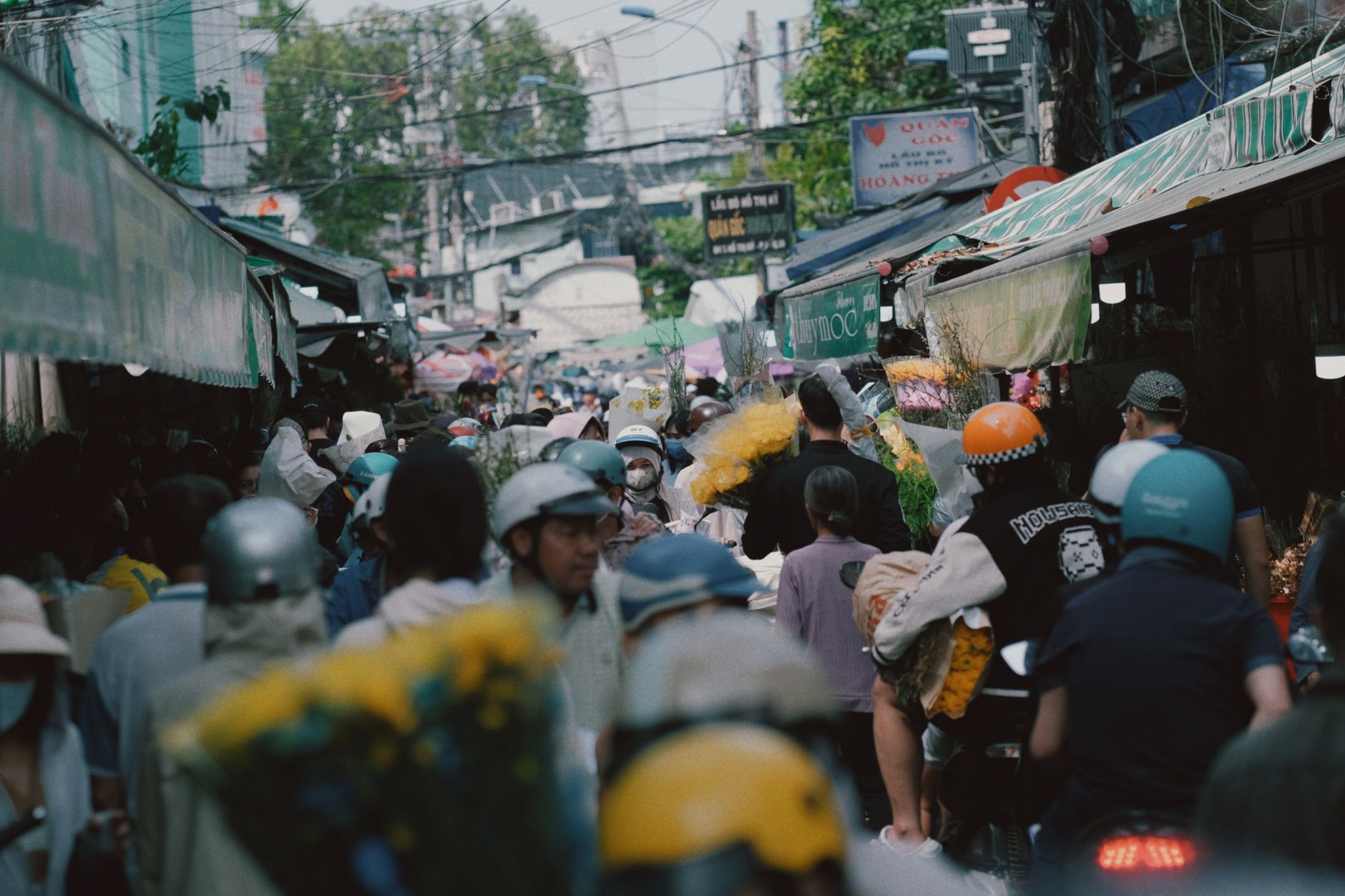
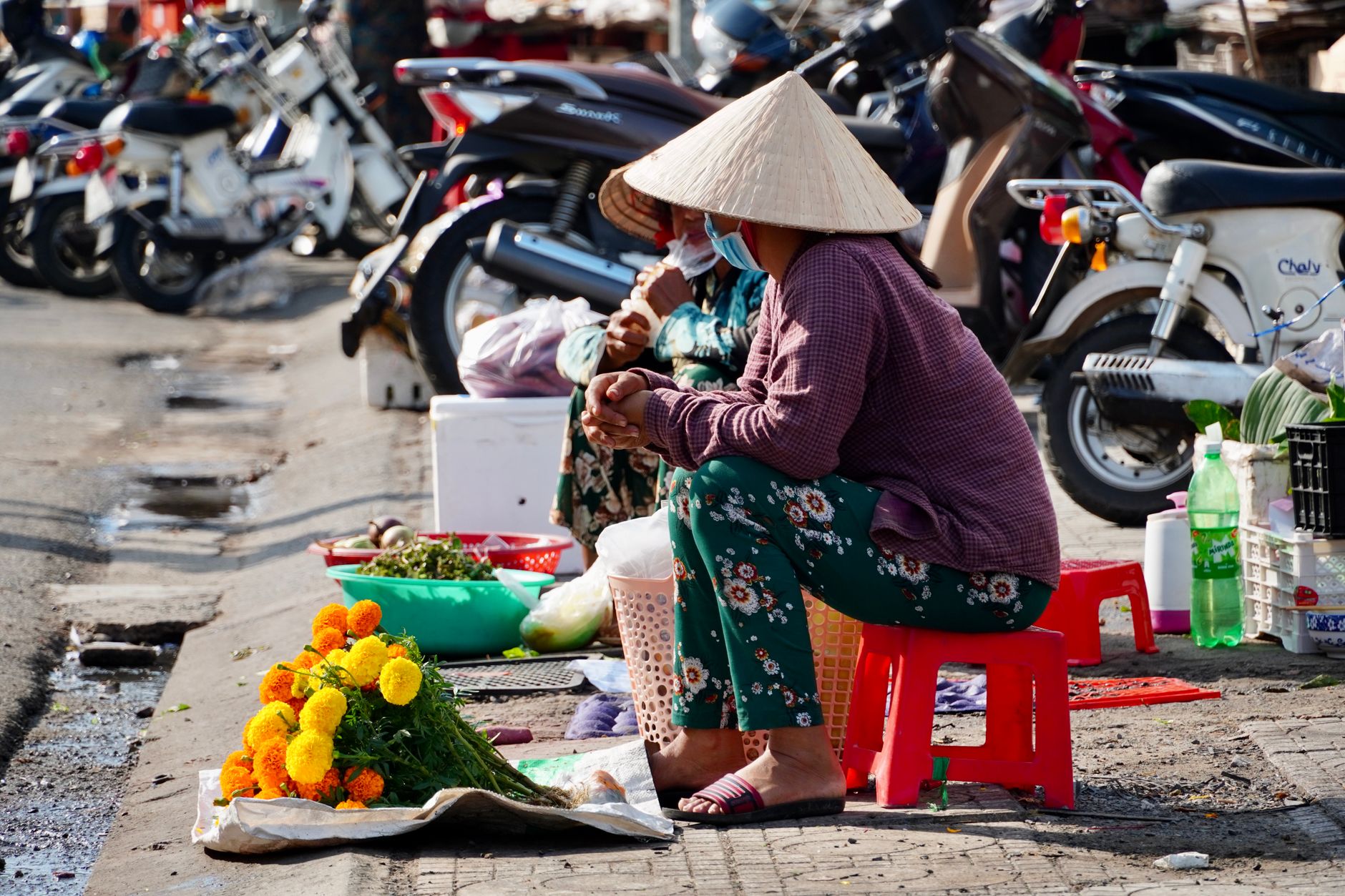
Vietnamese floristry blends Confucian respect symbolism (honoring elders with tall, structured arrangements), Buddhist spiritual intent (lotus in temples and altars), and French colonial influence (formal wrapped bouquets for events). Unlike Japanese ikebana—which minimizes stems and emphasizes negative space—or Chinese New Year color symbolism (which focuses on reds and golds alone), Vietnamese practice values abundance and fullness. An altar arrangement is layered, with flowers at multiple heights; a Tet display brims with blooms. Peach and ochna blossoms are iconic in a way cherry blossoms dominate Japan; they're tethered to geography and season, not just aesthetic purity. Local growers near Ho Chi Minh City produce variants adapted to tropical conditions: peonies bred for humidity resistance, roses with thicker petals, dahlias in local heirloom colors. Our Vietnamese flower culture & market tour takes you to a working wholesale market to meet growers, see how they grade and bunch stems, and handle blooms the way florists do—not consumers. You'll learn why a certain rose batch costs more (water uptake, vase life, petal count), how to spot fresh cut flowers (firm calyx, closed centers, green thorns), and what "local" actually means in a city importing 40% of its flowers. This context turns a workshop into cultural immersion, not just a craft class.
What to Check Before You Book or Order
- Flower sourcing: Ask whether your session uses locally grown or imported blooms (both have merit; imported offers rarity, local offers freshness). Our price reflects sourcing; ask us for details on WhatsApp.
- Language & pacing: Confirm English-language instruction and your group's experience level (we've taught 8-year-olds and 78-year-olds—pacing adjusts, but clarity matters).
- Heat logistics: If you're visiting June–August, mention it when booking; we adjust timing and wrapping to protect flowers during transport to your accommodation.
- Take-home packaging: Confirm you can carry your finished arrangement on public transport or a motorbike (we provide water-stable boxes for this; let us know when you book).
- Group size & dates: Book at least 3 days in advance; same-day bookings depend on class availability. Ask us for upcoming dates on WhatsApp.
Ask for workshop dates on WhatsApp
Why Learn Floral Culture Instead of Just Buying Flowers?
A workshop transforms your relationship with flowers. You move from buyer to maker—you understand why a florist charges what they do, why conditioning matters, how to read a stem's age and water intake. You leave with a skill: the spiral hand-tie, color balance, wrapping technique. You get a souvenir that lasts 10–21 days, not a photo. For Saigon residents, our longer floral design course opens possibilities: event decoration income, side projects, or simply a serious hobby. For travelers, a bouquet-making workshop becomes the trip's highlight—a story you'll tell for years ("I made this arrangement in Ho Chi Minh City, and it lasted until I flew home"). For families, a flower box & basket class teaches kids patience and design logic in a playful 90 minutes. Every format honors Vietnamese flower tradition while building confidence in your own hands.
How Do We Adapt Sessions for Rainy Days or Extreme Heat?
Rainy season (May–September) brings 80%+ humidity and downpours; extreme heat (March–May) pushes temperatures toward 38°C. Our studio is fully covered and climate-controlled, so rain never cancels a session—it only changes what we teach. On rainy days, we emphasize designs that tolerate moisture: potted orchids wrapped with ribbon (water-resistant), preserved flower boxes (humidity-proof), and hand-tied bouquets in sealed water tubes (prevents dripping en route to your hotel). We avoid delicate peonies or anemones on these days; instead, we work with sturdy anthuriums, asters, and chrysanthemums. On extreme-heat days, we start sessions 30 minutes earlier (8:30 a.m. instead of 9:00 a.m.), wrap arrangements in insulated boxes with ice packs, and give you a spray bottle for misting during transport. We also skip white flowers (they bruise visibly in heat stress) and choose deeper reds, purples, and greens that hide minor stress marks. For large groups on humid days, we stagger station use so fewer people crowd the cool room at once. Every tweak is transparent: when you book, tell us the date and we'll confirm how weather might shape your session.
Quick-Start Checklist: Before Your First Workshop
- Confirm your preferred date and group size (we reply within 12 hours on WhatsApp).
- Mention your skill level: absolute beginner, some flower experience, or florist-curious.
- Let us know your hotel type or meeting point (we advise on timing for central locations).
- Ask about seasonal blooms available that week (peach blossoms in Feb; chrysanthemums year-round).
- Bring water shoes or slides (water splashes; you'll stand for 2+ hours).
- Arrive 10 minutes early to meet other participants and see our flower stock.
- Take photos of your finished arrangement; share on social media if you'd like (we love seeing how you display it at home).
Ask for workshop dates on WhatsApp

FAQ
What's the difference between "local" and "imported" flowers at your workshops?
Local blooms (orchids, asters, chrysanthemums from Saigon growers) arrive fresher and last longer in tropical heat; imported flowers (roses, peonies, lilies) offer colors and varieties unavailable locally. Both are used depending on season and design. Ask us which are in stock when you book.
How do I keep my arrangement fresh in a Saigon hotel room without air-conditioning?
Place it in the coolest spot away from sun and heat sources, mist petals every morning, change water daily, and remove wilting leaves immediately. Use the care card we provide. Most arrangements last 8–14 days this way.
Are kids' workshops safe for children under 8?
Yes, but we recommend ages 6+ for hand-tool use. Younger children (3–5) can participate in a family session with a parent; they'll arrange pre-cut stems in shallow containers using only their hands. Ask us about age-appropriate designs when you inquire.
Do you offer private couples' sessions for anniversaries or proposals?
Yes. We customize private sessions for two people with romantic themes, custom colors, and flexible timing (evenings available). You'll make paired arrangements or one large piece together. Ask us for pricing and availability on WhatsApp.
What's included in the longer floral design course for people serious about floristry?
A 4–12 week course covers stem biology, color theory, seasonal sourcing, market tours, arrangement styles (European, Asian, modern), and event design. You'll build a portfolio and learn business basics if you're interested in freelance work. Ask for the course schedule and commitment details on WhatsApp.
Do you ship arrangements to addresses in Saigon if I can't attend a workshop?
We specialize in hands-on workshops, not remote shipping. However, we can recommend local florists for pre-made arrangements. For a custom design experience, a private session or bouquet-making workshop is ideal.
Ask for dates
Tell us the city, the date and how many people. We reply on WhatsApp in English with workshop options and a quote.
FAQ
What's the difference between "local" and "imported" flowers at your workshops?
Local blooms (orchids, asters, chrysanthemums from Saigon growers) arrive fresher and last longer in tropical heat; imported flowers (roses, peonies, lilies) offer colors and varieties unavailable locally. Both are used depending on season and design. Ask us which are in stock when you book.
How do I keep my arrangement fresh in a Saigon hotel room without air-conditioning?
Place it in the coolest spot away from sun and heat sources, mist petals every morning, change water daily, and remove wilting leaves immediately. Use the care card we provide. Most arrangements last 8–14 days this way.
Are kids' workshops safe for children under 8?
Yes, but we recommend ages 6+ for hand-tool use. Younger children (3–5) can participate in a family session with a parent; they'll arrange pre-cut stems in shallow containers using only their hands. Ask us about age-appropriate designs when you inquire.
Do you offer private couples' sessions for anniversaries or proposals?
Yes. We customize private sessions for two people with romantic themes, custom colors, and flexible timing (evenings available). You'll make paired arrangements or one large piece together. Ask us for pricing and availability on WhatsApp.
What's included in the longer floral design course for people serious about floristry?
A 4–12 week course covers stem biology, color theory, seasonal sourcing, market tours, arrangement styles (European, Asian, modern), and event design. You'll build a portfolio and learn business basics if you're interested in freelance work. Ask for the course schedule and commitment details on WhatsApp.
Do you ship arrangements to addresses in Saigon if I can't attend a workshop?
We specialize in hands-on workshops, not remote shipping. However, we can recommend local florists for pre-made arrangements. For a custom design experience, a private session or [bouquet-making workshop](/bouquet-workshop) is ideal.
More like this
Vietnamese flower culture
Quang Ba Flower Market Tour: What to Expect
Quang Ba is Hanoi's oldest wholesale flower market, alive before sunrise with traders, growers and color. A tour teaches you how Vietnamese flowers move from field to home—and why some arrangements last longer than others.
Vietnamese flower culture
Quang Ba Flower Market Tour Vietnam: What to Buy & How
Quang Ba flower market in Hanoi is Vietnam's largest wholesale market, alive before dawn with traders and arrangements. We guide visitors through what to buy, when to visit, and how to handle the tropical heat.
Vietnamese flower culture
Quang Ba Flower Market Tour in English: What to See & Buy
Quang Ba is Hanoi's largest flower market, opening before dawn with thousands of vendors selling fresh seasonal blooms. A guided tour in English teaches you how to spot quality flowers and pairs perfectly with a flower arranging workshop.