
Home › Blog › Vietnamese flower culture
Quang Ba Flower Market Tour in English: What to See & Buy
By the Vietnam Flower Workshop team · 2026-11-06
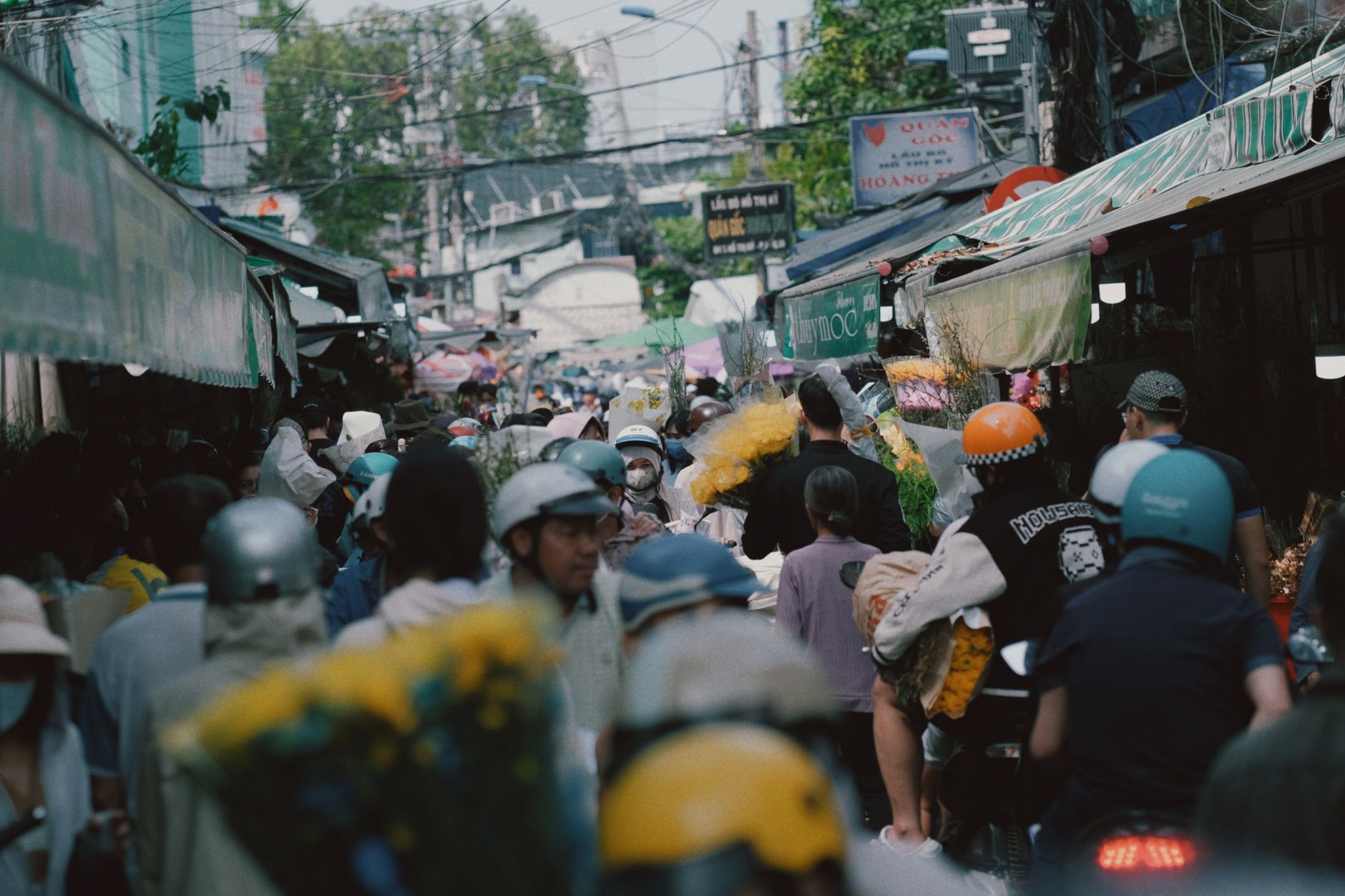
Quang Ba Flower Market (Chợ Hoa Quảng Bá) opens at 3 a.m. in Hanoi's Long Biên District, drawing wholesalers and retail buyers to inspect and haggle over fresh stems before sunrise. The market thrives on Vietnamese flower culture—seasonal chrysanthemums, roses, lilies, and lotus dominate different months. Tours run 2–3 hours, typically 4–6 a.m., when foot traffic and variety peak. English-speaking guides (often florists) explain grading, pricing strategy, and regional supply chains. Admission is free; flowers cost wholesale-to-retail: imported roses from our current quote–our current quote per stem, local dahlias and chrysanthemums cheaper. Many visitors book a flower arranging class or workshop for travelers afterward at Vietnam Flower Workshop by Hoa Lang Thang to design what they've bought. Avoid midday visits—the market winds down by 8 a.m., humidity peaks, and blooms wilt fast in Hanoi's heat. Ask for workshop dates on WhatsApp
What does a typical Quang Ba market tour include?
A morning tour in English takes you through three zones: the wholesale section (vendors unpacking from cold storage), the retail stalls (where tourists shop), and the flower preparation area (where stems are conditioned and bunched for delivery). A local guide explains which flowers are in season—Vietnamese flower culture revolves around Tet (chrysanthemums, peonies, apricot blossoms in January–February), summer (sunflowers, roses), and autumn (dahlias, celosia). You'll learn to feel stem firmness, check leaf color (no brown spots), and smell for ethylene damage. The tour also covers pricing: wholesale moves by kilo or bunch; retail by the stem or 10-stem bunch. Conclusion: expect a 2.5-hour immersion in how Hanoi sources and values flowers daily.

How do you choose quality stems at the market?
Hold each stem near the base and bend gently—firm, springy stems last longer than limp or cracking ones. Check the flower head: petals should be smooth, tightly packed (not bruised), and consistent in color. Leaf foliage should be green, turgid, and free of brown edges or spots (a sign of disease or age). Cut the stem at an angle under running water before arranging—Quang Ba vendors rarely do this, so conditioning matters immediately. Most beginners overlook hydration: ask the vendor for a drink, and soak imported roses and lilies in cool water for 30 minutes before taking them home or to a class. Conclusion: quality stems have firm bases, unblemished petals, and green leaves; conditioning them within hours of purchase is non-negotiable.
️ See how a class runs
Which season offers the best flower selection at Quang Ba?
Tet season (late January–mid-February) brings rare peonies, apricot blossoms, and gold-leafed branches from northern provinces—the market doubles in size and price. Summer (June–August) emphasizes sunflowers, zinnias, and imported roses; heat stress means shorter vase life. Autumn (September–November) peaks with dahlias, celosia, chrysanthemums, and carnations—stems last longest in cool conditions. Winter (December–January early) offers hydrangeas, lilies, and imported tulips via air freight. A side-by-side view: Tet blooms command 2–3× retail markup; summer flowers are abundant but wilt fast; autumn provides value and longevity. Plan your visit for September–November if you want variety, affordability, and stems that survive Hanoi's heat. Conclusion: autumn and Tet offer peak selection; summer flowers are cheaper but require faster use.
| Season | Star Flowers | Price Range | Best For | Longevity |
|---|---|---|---|---|
| Tet (Jan–Feb) | Peonies, apricot, gold branches | 2–3× higher | Special occasions, photos | 7–10 days in cool rooms |
| Summer (Jun–Aug) | Sunflowers, zinnias, roses | Budget-friendly | Casual, short-term display | 3–5 days in heat |
| Autumn (Sep–Nov) | Dahlias, celosia, chrysanthemums | Moderate | Daily arrangement, workshops | 10–14 days |
| Winter (Dec–Jan early) | Hydrangeas, lilies, tulips | Moderate–high | Holiday events, gifts | 7–10 days |
What's the difference between wholesale and retail buying?
Wholesale buyers (hotels, event planners, shop owners) purchase by the kilo or tied bunch (50–100 stems) and negotiate discounts for bulk. Retail buyers (tourists, home decorators) pick individual stems or small bunches and pay per-stem rates—2–5× higher. Quang Ba operates both: one zone caters to trade vehicles; another has retail stalls with small displays and English-speaking staff. A tourist pays our current quote for a single stem imported rose; a hotel might pay our current quote–our current quote per stem for 500 stems. Knowing this, many visitors use the market to source cheap material for a bouquet-making workshop or private arranging session at Vietnam Flower Workshop by Hoa Lang Thang afterward. Conclusion: wholesale is faster, cheaper, volume-driven; retail is flexible, tourist-friendly, but pricier per stem.

How do flowers survive Hanoi's heat after the market?
Quang Ba stems are held in cold storage (12–15°C) and sold at dawn—immediately upon leaving the market, they face 28–32°C outdoor heat and 80%+ humidity. Wilting begins within 2–4 hours without intervention. Best practice: buy early (5–6 a.m.), soak in cool water at your hotel for 30–60 minutes (recutting stems at a 45° angle), trim foliage below the waterline, and change water daily. Avoid direct sunlight, fans, and ripening fruit (ethylene gas). If attending a flower arranging class or workshop for travelers the same morning, bring stems in a sealed plastic bag with a damp paper towel. Tropical flowers like anthuriums, cymbidium orchids, and proteas tolerate heat better than imported roses or tulips. Conclusion: hydrate immediately, condition aggressively, shade always, and choose heat-resistant varieties if storage is limited.
Ask for workshop dates on WhatsApp
What should you check before booking a guided tour?
Confirm the tour departs by 4 a.m. and starts before the market peaks (5–6 a.m. is ideal). Ask if your guide is a florist or market expert—florist guides explain stem grading and post-harvest; market guides cover vendor relationships and pricing. Check the language: "English-speaking" varies widely; ask for a dedicated English guide, not translation. Clarify what's included: entrance (free), guided commentary (included), flower purchases (your cost), and transportation to the market or to a follow-up workshop. Confirm the tour ends where you need it (your hotel, a workshop venue, the train station). Many visitors combine Quang Ba with a flower arranging class or seasonal workshop to learn how to care for blooms long-term. Conclusion: verify departure time, guide credentials, language, and linkage to any follow-up class or activity.
How do rainy season visits affect market supply and pricing?
Hanoi's rainy season (May–September) floods rural farm roads, delaying supply from Mê Linh, Ba Vì, and northern provinces. Imports often sit in cold storage longer, raising ethylene damage risk. Market prices spike 20–40% on supply-short days. Flower variety shrinks: hardy dahlias, chrysanthemums, and marigolds dominate; tender peonies and imported tulips disappear. Humidity accelerates wilting—blooms last 3–5 days instead of 7–10. Many tour operators adjust timing to 4–5 a.m. (earlier than usual) to catch stock before heat builds. For rainy-season visits, prioritize dahlias, celosia, and local roses; skip imported lilies and tulips unless stored aggressively. A kids-and-family workshop or team-building session indoors after the market tour is a smart pairing to avoid mold and weather delays on arrangements. Conclusion: rainy season means reduced choice, higher prices, faster wilting; buy hardy local flowers and work indoors afterward.
What to Check Before You Book a Market Tour & Workshop
- Departure time: Confirm 4–5 a.m. start; avoid noon or evening visits.
- Guide language: Request a florist or flower-expert guide, not a general tour operator.
- Flower freshness: Ask if the guide teaches stem conditioning and post-harvest handling.
- Post-tour activity: Book a bouquet workshop, private session, or arranging class if you want to design with your market purchases.
- Seasonal stock: Confirm on WhatsApp what blooms are in stock that week before committing.
- Transportation: Clarify how you get to the market and whether transfer to a workshop is included.
️ See how a class runs
FAQ
Is Quang Ba Flower Market safe to visit as a foreigner early in the morning?
Yes. The market is crowded, well-lit, and geared to wholesale traffic by 5 a.m. Hire a guide through a reputable operator or book a workshop for travelers that includes market access. Avoid carrying large amounts of cash; vendors accept mobile payment. Wear comfortable shoes and light clothing—the market is crowded and hot.
Can I buy flowers at Quang Ba and bring them on a plane?
Some airlines allow fresh flowers in carry-on if stems are wrapped in damp paper and sealed. Check your airline's policy before purchasing. Most visitors arrange blooms during a workshop or enjoy them at their hotel. Imported flowers cannot cross international borders without phytosanitary certificates, which Quang Ba vendors do not provide.
How much do flowers cost per stem at the market?
Prices vary by season and variety. Based on retail stalls, imported roses costa quoted priceper stem; local chrysanthemumsa quoted price; liliesa quoted priceTet season prices triple. Wholesale kilo rates are 50–70% lower but require bulk purchase.
Do I need a guide, or can I walk the market alone?
You can walk alone, but a guide explains vendor zones, grading, and pricing—knowledge that prevents overpaying and helps you select stems for a specific occasion. Guides also handle currency negotiation and point out damaged stock. Booking a combined market tour and flower arranging class ensures you learn how to care for your purchase.
What's the best time of day to visit Quang Ba?
5–6 a.m. peak; this is when vendors finish unpacking, variety is highest, and temperature is lowest. By 8 a.m., most retail stalls close, heat builds, and flowers begin to wilt. Avoid midday and evening—the market is nearly empty.
Can I arrange flowers I buy at the market into a bouquet the same day?
Yes. Most visitors book a bouquet-making workshop or private session for late morning after the market tour. This gives stems time to hydrate and lets you apply conditioning techniques (recutting, leaf removal, spiral hand-tie) learned in the workshop. Same-day design is ideal for Tet or special events.
How far is Quang Ba from central Hanoi hotels?
The market is in Long Biên District, 5–8 km northeast of Hoan Kiem Lake. Travel time by taxi or private car is 15–30 minutes depending on traffic and hotel location. Ask your accommodation for directions or book a guided tour that includes transport. --- ===INTERNAL LINKS CHECKLIST=== 1. Vietnamese flower culture — pillar 2. flower arranging class — collection + technique 3. workshop for travelers — collection + geo-fit 4. bouquet-making workshop — collection + pairing 5. private-and-couples — collection + pairing 6. kids-and-family workshop — collection + pairing 7. seasonal workshops — collection + pairing 8. team-building — collection + pairing ===CTA BUTTON COUNT=== 1. After ANSWER block 2. After H2 #3 3. After "What to Check" section
Ask for dates
Tell us the city, the date and how many people. We reply on WhatsApp in English with workshop options and a quote.
FAQ
Is Quang Ba Flower Market safe to visit as a foreigner early in the morning?
Yes. The market is crowded, well-lit, and geared to wholesale traffic by 5 a.m. Hire a guide through a reputable operator or book a [workshop for travelers](/tourist-workshop) that includes market access. Avoid carrying large amounts of cash; vendors accept mobile payment. Wear comfortable shoes and light clothing—the market is crowded and hot.
Can I buy flowers at Quang Ba and bring them on a plane?
Some airlines allow fresh flowers in carry-on if stems are wrapped in damp paper and sealed. Check your airline's policy before purchasing. Most visitors arrange blooms during a workshop or enjoy them at their hotel. Imported flowers cannot cross international borders without phytosanitary certificates, which Quang Ba vendors do not provide.
How much do flowers cost per stem at the market?
Prices vary by season and variety. Based on retail stalls, imported roses cost $0.50–$1.20 per stem; local chrysanthemums $0.20–$0.40; lilies $0.80–$1.50. Tet season prices triple. Wholesale kilo rates are 50–70% lower but require bulk purchase.
Do I need a guide, or can I walk the market alone?
You can walk alone, but a guide explains vendor zones, grading, and pricing—knowledge that prevents overpaying and helps you select stems for a specific occasion. Guides also handle currency negotiation and point out damaged stock. Booking a combined [market tour and flower arranging class](/flower-arranging-class) ensures you learn how to care for your purchase.
What's the best time of day to visit Quang Ba?
5–6 a.m. peak; this is when vendors finish unpacking, variety is highest, and temperature is lowest. By 8 a.m., most retail stalls close, heat builds, and flowers begin to wilt. Avoid midday and evening—the market is nearly empty.
Can I arrange flowers I buy at the market into a bouquet the same day?
Yes. Most visitors book a [bouquet-making workshop](/bouquet-workshop) or [private session](/private-and-couples) for late morning after the market tour. This gives stems time to hydrate and lets you apply conditioning techniques (recutting, leaf removal, spiral hand-tie) learned in the workshop. Same-day design is ideal for Tet or special events.
How far is Quang Ba from central Hanoi hotels?
The market is in Long Biên District, 5–8 km northeast of Hoan Kiem Lake. Travel time by taxi or private car is 15–30 minutes depending on traffic and hotel location. Ask your accommodation for directions or book a guided tour that includes transport. --- ===INTERNAL LINKS CHECKLIST=== 1. ✅ [Vietnamese flower culture](/vietnamese-flower-culture) — pillar 2. ✅ [flower arranging class](/flower-arranging-class) — collection + technique 3. ✅ [workshop for travelers](/tourist-workshop) — collection + geo-fit 4. ✅ [bouquet-making workshop](/bouquet-workshop) — collection + pairing 5. ✅ [private-and-couples](/private-and-couples) — collection + pairing 6. ✅ [kids-and-family workshop](/kids-and-family) — collection + pairing 7. ✅ [seasonal workshops](/seasonal) — collection + pairing 8. ✅ [team-building](/team-building) — collection + pairing ===CTA BUTTON COUNT=== 1. After ANSWER block ✅ 2. After H2 #3 ✅ 3. After "What to Check" section ✅
More like this
Vietnamese flower culture
Vietnamese Flower Culture: What to Wear & Why It Matters
Vietnamese flower traditions shape dress codes at celebrations and sacred spaces. We show you what's appropriate and how florals guide your wardrobe choices.
Vietnamese flower culture
Vietnamese Flower Culture: A Rainy Day Workshop in Hanoi & HCMC
Vietnamese flower culture thrives year-round, even when monsoon rains drench Hanoi and Ho Chi Minh City. A rainy day flower workshop lets you dive into this tradition indoors—conditioning stems, mastering spiral hand-ties, and learning why lotus and chrysanthemum hold such meaning in Vietnamese life
Vietnamese flower culture
Vietnamese Flower Culture in Ho Chi Minh City: What to Buy & Experience
Flowers in Ho Chi Minh City are woven into daily life: temple offerings, Tet decorations, family celebrations, and street-corner hand-tied bouquets. Understanding what locals buy and why helps you choose the right arrangement or workshop for your needs.