
Home › Blog › Vietnamese flower culture
Quang Ba Flower Market Tour Vietnam: What to Buy & How
By the Vietnam Flower Workshop team · 2026-11-06
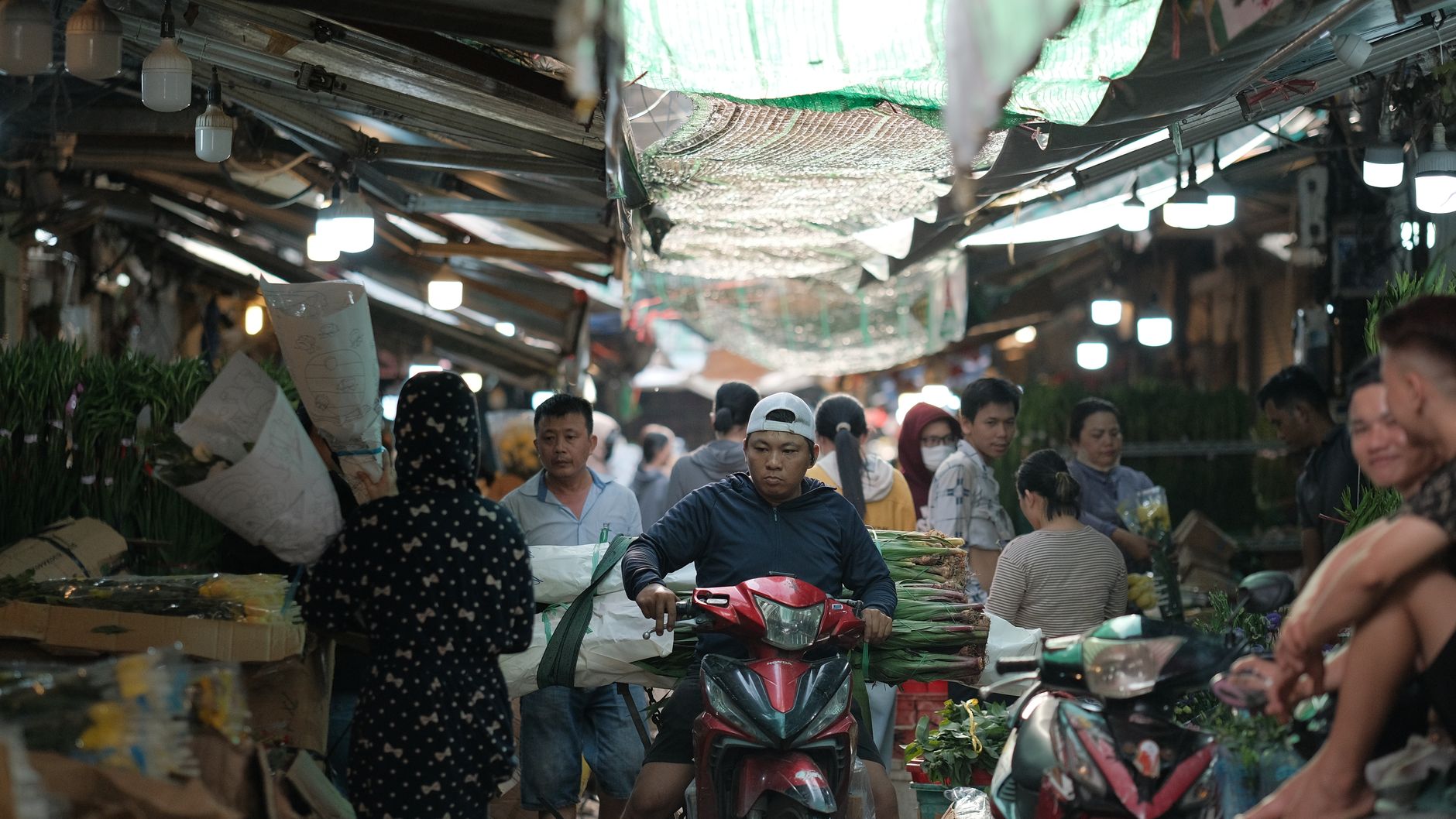
Quang Ba (also written Quảng Bá) is Hanoi's main wholesale flower market, operating year-round in the Old Quarter near the Red River. Most visitors arrive 5–7 a.m. when activity peaks; retail shopping is possible until mid-morning. The market sells cut flowers (roses, chrysanthemums, orchids), potted plants, and dried stems at wholesale prices—lower than retail florists. Vietnam Flower Workshop by Hoa Lang Thang can arrange a private market tour followed by an arranging class, so you learn why sellers choose certain stems and how to condition them for longevity in Hanoi's heat. Come with cash (Vietnamese đồng); expect crowding, noise, and wet floors. Best for photographers, flower enthusiasts, and anyone buying in bulk for an event. Ask for workshop dates on WhatsApp | ️ See how a class runs
What flowers should I actually buy at Quang Ba?
The market stocks what thrives in Southeast Asia's climate: roses (year-round in reds, pinks, whites), orchids (dendrobiums and phalaenopsis), chrysanthemums (cheap, long-lasting), spray mums, carnations, gerbera daisies, sunflowers, and gladiolus. Seasonal arrivals include tuberose (spring), lotus buds (summer and autumn), and chrysanthemums en masse during Lunar New Year (Tet). Most tourists buy what looks exotic—orchids or imported roses—but locals choose chrysanthemums and spray mums because they withstand 30–35°C heat and humidity for 5–7 days without wilting. Dried pampas grass, bleached wheat, and preserved greenery are also available and suit travelers who cannot carry fresh stems on a flight home.
Real beginner mistake: buying the cheapest loose roses without checking stem firmness or leaf yellowing. A soft stem snaps during transport; yellow leaves spread bacterial wilt, killing the whole bunch in a day.
What to check before you buy:
- Stem thickness (pencil-width = mature; toothpick-width = immature, wilts faster)
- Leaf color (green = fresh; yellow or brown = already aging)
- No slime on cut ends (sign of bacterial rot)
- Flower head weight (should feel turgid, not papery)
- Bundle ties (loose, not strangling the stems)
For your own arranging at home, select one type of flower at a time—say, five stems of the same rose cultivar—and learn to strip leaves, re-cut stems at 45°, and place them in deep, clean water immediately. This single habit doubles a bouquet's vase life.

When is the best time to visit Quang Ba?
Early morning (5–7 a.m.) is peak activity: traders unload overnight shipments, prices are lowest, and the selection is fullest. By 9 a.m., many stalls are closing or consolidating stock. Visit on weekdays (Monday–Friday) if you prefer fewer tourists; weekends draw crowds but also family groups and wedding planners, so social energy is high. Avoid Tet week (lunar new year, late January or early February) unless you want chaos and inflated prices—the market overflows with bulk orders for home shrines and reunions. Rainy season (May–September) means slippery floors and mold risk on stems left in humidity; dry season (November–April) keeps flowers fresher longer. Best time overall: October–December, when weather is cool, humidity drops, and fresh blooms arrive for end-of-year celebrations.
How do you keep Quang Ba flowers alive in Hanoi heat?
Tropical heat is the killer. Stems transpire moisture fast, and bacteria colonize the water rapidly. Our flower arranging class teaches conditioning: strip all leaves below the waterline (they rot and release bacteria), re-cut stems at 45° to maximize water uptake, and use cool, clean water in a tall vase—never shallow bowls. Change water every 2–3 days; add a drop of bleach or use flower food (we provide sachets during workshops). Mist flowers lightly in the evening if humidity drops below 60%, but never in direct sun. Place arrangements in the coolest room, away from air-conditioner vents (which desiccate). Orchids, chrysanthemums, and roses last 5–9 days indoors if you follow this protocol; sunflowers and gerberas wilt by day 5 regardless. Dried stems and preserved greenery sidestep the problem entirely and suit travelers packing luggage.
Can I join a Quang Ba tour and learn arranging on the same day?
Yes. We offer private market tours paired with hand-tied bouquet workshops. The sequence works best: 6 a.m. market visit (90 minutes), breakfast nearby, then 10 a.m. class at our studio where you condition your market stems and build a bouquet to take home. This format lets you see why a trader chose certain roses (bud maturity, stem length, leaf health) and how to handle them afterward. Couples often book this as a half-day activity; private and couples sessions can be customized for market lovers. Groups up to eight can join a team-building workshop that starts at the market, then moves to design. We reply as soon as we can on WhatsApp with available dates; availability depends on studio schedule and market access.
️ See how a class runs
What's the price difference between Quang Ba and a retail florist?
Quang Ba is wholesale-only, so per-stem cost is 40–60% lower than Hanoi's retail florists (based on local price comparisons). A bunch of 15 long-stem roses costs our current quote–250,000 wholesale; a retail florist charges our current quote–600,000 for the same 15 stems in a hand-tied arrangement. However, Quang Ba requires:
- Minimum order (usually a full bunch = 25–50 stems, not 5–10)
- Cash only (no card, no transfer at point of sale)
- Bulk transport (stems are heavy, tall, and fragile)
- DIY conditioning and arrangement (no florist labor)
For travelers buying 10–20 stems as a one-time souvenir, a retail workshop often makes more sense: we supply pre-conditioned stems, teach technique, provide all tools and wrap, and you walk out with a finished gift. Ask us for a quote on WhatsApp for a workshop session—cost includes class time, flowers, and supplies.
| Option | Who it's for | Stems per order | Time investment | Best for |
|---|---|---|---|---|
| Quang Ba wholesale | Event planners, bulk buyers, locals | 25–50+ | 1–2 hours total | Large events, wedding prep, local sourcing |
| Retail florist shop | Quick gift, no hassle | 5–15 | 15–30 min | Tourist souvenir, last-minute gift |
| Our workshop | Learners, travelers, couples | 10–20 | 2–3 hours class | Skill-building, Instagram-worthy bouquet, unique gift |
What should I bring to Quang Ba and what should I avoid?
Bring:
- Cash in Vietnamese đồng (small notes; no one has change)
- A sturdy bag or box to carry stems upright (not horizontal—they bruise the flower heads)
- Closed-toe shoes (wet floors, thorns, slippery tiles)
- A small towel or cloth to wipe damp hands
- Phone for photos; the market is photogenic but crowded
Avoid:
- White or light-colored clothes (pollen and leaf stains are hard to wash out)
- Perfume or strong cologne (competes with flower scents and can irritate in a crowded space)
- Haggling aggressively (traders are used to wholesale speed, not individual negotiation)
- Buying single stems (minimum is a bunch; sellers don't break bunches for retail)
- Touching flowers without permission (stalls are stacked tightly and damage costs)
If you're a first-time visitor or traveling solo, a guided market tour takes the stress out. Our workshop for travelers includes market navigation, cultural context, and arranging know-how—and we debrief on Vietnamese flower culture and why certain blooms matter for Tet, weddings, and home shrines.
Ask for workshop dates on WhatsApp
Can kids or families visit Quang Ba with me?
Yes, but with limits. The market is crowded, wet, and early; kids and family workshops suited to ages 5+ teach patience better in a studio setting. If you take children to Quang Ba, go 6–6:30 a.m. before it's packed, keep them close, and make it a 30–45 minute outing, not a long browse. Kids love identifying colors and smells; let them choose 2–3 flowers to take home and arrange. Afterward, a short family class lets them build a small mixed posy—easier than a full bouquet, less intimidating, and memorable. We have low work tables, kid-sized scissors, and simplified techniques for ages 5–12. Families often book private and couples sessions as a trio or group, then add the market tour if interest is high. Weather matters: rainy mornings make floors treacherous for young legs, so plan for dry season or a studio-only session on wet days.
How does Quang Ba fit into Hanoi's flower culture and events?
Quang Ba is the heartbeat of Hanoi's floral economy. Every restaurant, temple, funeral, wedding, and Tet shrine begins here. Traders sort blooms by cultivar, bud stage, and destination—some flowers go to hotels for lobby arrangements, others to families for home altars. Understanding Vietnamese flower culture means knowing that chrysanthemums symbolize death (used for funerals), while red roses and orchids mean luck and prosperity (for Tet and celebrations). The market reflects the season: lotus buds spike in summer (used for Buddhist ceremonies), pampas grass peaks in autumn (weddings and corporate events), and chrysanthemums flood Tet week (every household buys at least a small bunch). A market tour teaches you this layered meaning—why a florist reaches for a specific cultivar, not just "any red rose." When you join our floral design course or a one-off arranging class, you see how market knowledge informs professional choices. Travelers who visit Quang Ba first, then take a workshop, often comment that they finally understand what they were watching—and why it matters.
What's the honest take: is Quang Ba worth a tourist visit?
Yes, if you're a flower lover, photographer, or serious about learning. Expect sensory overload: noise, moisture, fast-talking traders, and sheer scale. It's not Instagram-pretty in a manicured way—it's raw, functional, and alive. You won't get personalized attention; traders are wholesale-focused and move fast. If you want a curated, educational experience, pair a market visit with a class: you'll understand the "why" behind flower choices and leave with a skill, not just photos. For casual tourists on a tight schedule, a retail florist shop or a direct workshop is easier and just as rewarding. The real gain from Quang Ba is cultural insight: you see where Hanoi's flowers come from, how traders value quality, and why certain blooms cost more. That knowledge makes any flower you buy afterward feel less like a commodity and more like a choice.

FAQ
What is Quang Ba flower market?
Quang Ba is Hanoi's largest wholesale flower market, operating daily from pre-dawn. It's the primary supply point for florists, restaurants, temples, and event planners across northern Vietnam. Open to tourists; busiest 5–7 a.m.
Can I buy just a few stems at Quang Ba?
No, the market is wholesale-only; minimum orders are full bunches (25–50 stems per cultivar). For small retail quantities, visit a florist shop or join our workshop—we sell packaged bouquets and teach conditioning in a retail-friendly setting.
How much cheaper is Quang Ba than a florist?
Per-stem cost is 40–60% lower at Quang Ba wholesale compared to retail florist markups. However, you must buy in bulk, transport it yourself, and handle conditioning and arrangement. A workshop combines retail convenience with lower cost and skill-building.
What time should I visit Quang Ba?
Arrive 5–7 a.m. for peak activity and lowest prices. By 9 a.m., many stalls are closing. Weekdays are less crowded than weekends; October–December is the best season (cool, dry, full selection).
Can I arrange a guided market tour with you?
Yes. We offer private market tours, often paired with a hand-tied bouquet workshop or flower arranging class the same morning. Ask us for available dates on WhatsApp; we customize for travelers, couples, groups, and teams.
How do I keep flowers fresh after buying at Quang Ba?
Strip leaves below the waterline, re-cut stems at 45°, use cool clean water, and change it every 2–3 days. Place in the coolest room away from direct sun and AC vents. Chrysanthemums, roses, and orchids last 5–9 days; sunflowers and gerberas wilt sooner in heat.
Is Quang Ba safe for solo travelers?
Yes, but it's crowded and moves fast. Bring cash, wear closed-toe shoes, and keep valuables secure. A guided tour reduces stress and adds cultural context. Arrive early to avoid the densest crowds.
Can I visit Quang Ba with young children?
Yes, but go early (6–6:30 a.m.) before crowds peak, keep visits short (30–45 min), and allow them to choose and handle flowers safely. A follow-up family arranging class lets kids practice arranging in a calmer, supervised setting. --- Ask for workshop dates on WhatsApp | Explore all guides | Book a workshop today
Ask for dates
Tell us the city, the date and how many people. We reply on WhatsApp in English with workshop options and a quote.
FAQ
What is Quang Ba flower market?
Quang Ba is Hanoi's largest wholesale flower market, operating daily from pre-dawn. It's the primary supply point for florists, restaurants, temples, and event planners across northern Vietnam. Open to tourists; busiest 5–7 a.m.
Can I buy just a few stems at Quang Ba?
No, the market is wholesale-only; minimum orders are full bunches (25–50 stems per cultivar). For small retail quantities, visit a florist shop or join our workshop—we sell packaged bouquets and teach conditioning in a retail-friendly setting.
How much cheaper is Quang Ba than a florist?
Per-stem cost is 40–60% lower at Quang Ba wholesale compared to retail florist markups. However, you must buy in bulk, transport it yourself, and handle conditioning and arrangement. A workshop combines retail convenience with lower cost and skill-building.
What time should I visit Quang Ba?
Arrive 5–7 a.m. for peak activity and lowest prices. By 9 a.m., many stalls are closing. Weekdays are less crowded than weekends; October–December is the best season (cool, dry, full selection).
Can I arrange a guided market tour with you?
Yes. We offer private market tours, often paired with a hand-tied bouquet workshop or flower arranging class the same morning. Ask us for available dates on WhatsApp; we customize for travelers, couples, groups, and teams.
How do I keep flowers fresh after buying at Quang Ba?
Strip leaves below the waterline, re-cut stems at 45°, use cool clean water, and change it every 2–3 days. Place in the coolest room away from direct sun and AC vents. Chrysanthemums, roses, and orchids last 5–9 days; sunflowers and gerberas wilt sooner in heat.
Is Quang Ba safe for solo travelers?
Yes, but it's crowded and moves fast. Bring cash, wear closed-toe shoes, and keep valuables secure. A guided tour reduces stress and adds cultural context. Arrive early to avoid the densest crowds.
Can I visit Quang Ba with young children?
Yes, but go early (6–6:30 a.m.) before crowds peak, keep visits short (30–45 min), and allow them to choose and handle flowers safely. A follow-up family arranging class lets kids practice arranging in a calmer, supervised setting. --- [🌸 Ask for workshop dates on WhatsApp](https://wa.me/84969293894) | [📚 Explore all guides](/blog) | [🌸 Book a workshop today](/contact)
More like this
Vietnamese flower culture
Vietnamese Flower Culture: What to Wear & Why It Matters
Vietnamese flower traditions shape dress codes at celebrations and sacred spaces. We show you what's appropriate and how florals guide your wardrobe choices.
Vietnamese flower culture
Vietnamese Flower Culture: A Rainy Day Workshop in Hanoi & HCMC
Vietnamese flower culture thrives year-round, even when monsoon rains drench Hanoi and Ho Chi Minh City. A rainy day flower workshop lets you dive into this tradition indoors—conditioning stems, mastering spiral hand-ties, and learning why lotus and chrysanthemum hold such meaning in Vietnamese life
Vietnamese flower culture
Vietnamese Flower Culture in Ho Chi Minh City: What to Buy & Experience
Flowers in Ho Chi Minh City are woven into daily life: temple offerings, Tet decorations, family celebrations, and street-corner hand-tied bouquets. Understanding what locals buy and why helps you choose the right arrangement or workshop for your needs.