
Home › Blog › Vietnamese flower culture
Vietnamese Flower Culture in Hoan Kiem: Where to Learn, Shop & Experience
By the Vietnam Flower Workshop team · 2026-11-06
Vietnamese flower culture in Hoan Kiem centers on symbolism, seasonal festivals, and hand-tying techniques passed through generations. The district hosts the city's busiest flower markets where traders begin before dawn; many travelers visit to observe but rarely understand the traditions behind stem selection, color pairing, and gift-wrapping etiquette. Vietnam Flower Workshop by Hoa Lang Thang runs 90–150 minute sessions in English where small groups condition real imported and local blooms, learn spiral hand-tie methods, and take home a finished arrangement or bouquet. Sessions suit solo travelers, couples, families, and corporate teams. We operate year-round in both Hanoi and Ho Chi Minh City; ask us for a quote on WhatsApp for private bookings, seasonal workshops (Tet lotus arrangements, Christmas wreaths), or multi-day floral design courses. Most beginners struggle with stem angle, water absorption timing, and wrapping tension—we address each hands-on, correcting as you work. Ask for workshop dates on WhatsApp
What Makes Hoan Kiem's Flower Traditions Unique?
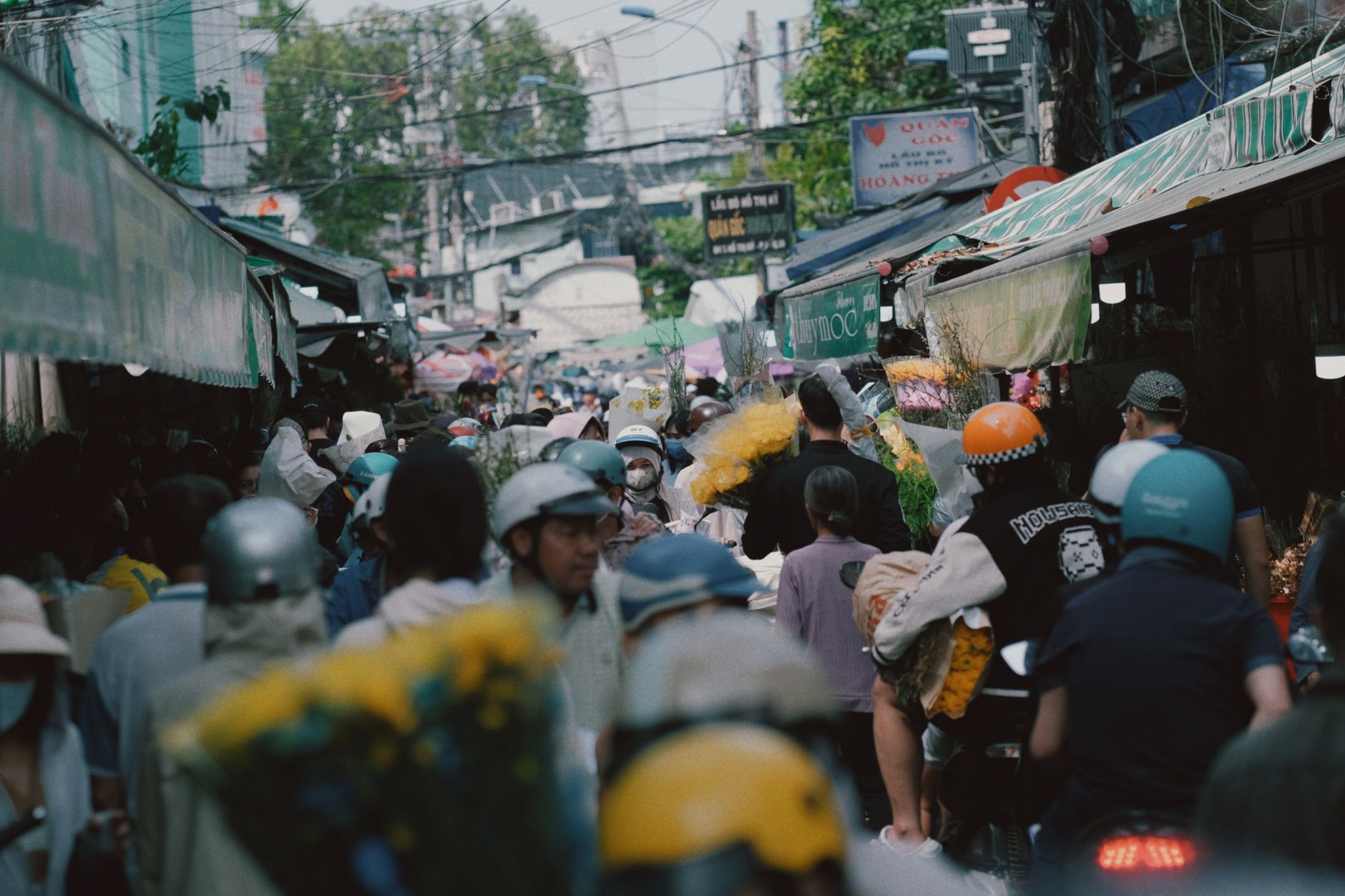
Hoan Kiem sits at the heart of Hanoi's floral heritage, home to the city's largest wholesale and retail markets where both wholesalers and street vendors gather. The lotus—Vietnam's national flower—dominates summer trade; pink and white varieties are conditioned daily for temple offerings and home altars. Chrysanthemums, sunflowers, and imported roses fill stalls year-round, but Tet (lunar new year) transforms the landscape: peach blossoms in the north, kumquat trees in the south, and special gold-wrapped gift boxes signal the holiday rush. The district's location near water—Hoan Kiem Lake—historically linked flower cultivation to flooded rice paddies and delta nurseries; locals say the lake's cool microclimate extends bloom life. What you see in Hoan Kiem's markets isn't decorative excess—it's a system of meaning: yellow and white for funerals, red and gold for prosperity, lotus for purity. When you attend Vietnamese flower culture & market tour, you'll walk the stalls with a guide who translates vendor conversations, stem grades, and seasonal scarcity into actionable knowledge for your own arrangements.

How Do Beginners Learn to Hand-Tie in a Workshop?
A hand-tie bouquet isn't simply flowers bundled—it's a spiral held by tension, wrapping, and stem angle. We condition your stems first: cutting 1–2 inches off the base at 45 degrees, removing lower leaves, soaking in room-temperature water with floral food for 30–60 seconds. Then we demonstrate the spiral: you hold the central stem at an angle (roughly 45 degrees from vertical), add stems one by one at the same angle, rotating the bunch as you build. The first beginner mistake is holding stems too vertical—they won't overlap or lock. The second is adding blooms too fast; slow hand-tie work takes 5–10 minutes, not 2. We watch your thumb position: it anchors the spiral's center while your other fingers guide incoming stems around it. Once the spiral holds without collapsing, you wrap the stem bundle with floral tape, trim stems to length (usually 5–7 inches below the bouquet), and wrap the handle with kraft paper or tissue. By minute 45–60, you'll hold your own finished bouquet; by minute 90, you're confident enough to teach a friend. Bouquet making workshop sessions run small—4–6 people—so every student gets real-time feedback on spiral tightness, color balance, and wrapping neatness. You take the bouquet home the same day; it lasts 7–12 days in a cool room with daily water changes.
What's the Difference Between Market Tours, Workshops, and Design Courses?
| Experience | What You Do | Who It's For | Duration | Why Choose This |
|---|---|---|---|---|
| Market tour + cultural walk | Observe vendors, learn grading, ask translator | Curious travelers, photographers, cultural researchers | 2–3 hours | Understand sourcing; no hands-on. |
| 90-minute arranging class | Condition, arrange, take home one piece | Solo travelers, date couples, first-timers | 90 minutes | Hands-on technique + finished gift. |
| Half-day workshop | Multiple arrangements or large box; deeper technique | Small groups, families, hen parties | 3–4 hours | Master 2–3 methods; leave with 2+ pieces. |
| Multi-day floral design course | Arrangements, boxes, bouquets, seasonal pieces, business basics | Career changers, expats, serious hobbyists | 3–5 days (30+ hours) | Comprehensive skills; portfolio-ready output. |
Each format teaches different skills. Market immersion (via Vietnamese flower culture & market tour) teaches you where blooms come from and why a stem costs what it does; you'll never overpay for wilted stock again. A single flower arranging class teaches technique—hand-tie, color theory, conditioning—fast enough for a 2–3 day visit. A floral design course teaches business logic, seasonal planning, and how to troubleshoot when flowers arrive stressed from heat or poor hydration. Pick based on your stay length, budget, and goal: tourists often book one 90-minute session + a morning market walk. Expats and couples often return monthly to a private and couples session. Corporate teams book team building workshop slots during off-season (April, September). Families with kids choose kids and family workshop sessions that emphasize play, color, and confidence over technical perfection.
How Do Flowers Survive Hanoi's Heat and Humidity?
Hanoi's heat (30–35°C in summer) and humidity (80%+) stress blooms faster than cooler climates. Roses wilt in 3–4 days without air conditioning; lotus closes by mid-afternoon if not misted; imported tulips and hydrangeas are especially fragile. We tackle this three ways. First: we buy stock early morning when it's fresh off the wholesale dock and blooms are fully hydrated. Second: we condition stems in cold water immediately after cutting—room temperature is too warm in summer; we add floral food (which lowers pH and feeds vascular tissue) and remove foliage below the waterline so bacteria don't clog stems. Third: we teach you to mist arrangements daily (lotus especially), change water every 2–3 days, re-cut stems every 5 days, and keep bouquets away from direct sun, air-con vents, and ripening fruit. A hand-tie bouquet you make in a workshop lasts 7–12 days indoors in Hanoi if you follow this routine; in winter (December–February), expect 14–18 days. If you're ordering arrangements for an event, ask us to deliver fresh the morning of; 24-hour pre-made arrangements in heat are risky. Seasonal workshops cover Tet and Christmas pieces specifically—lotus arrangements that stay fresh through Tet week (10+ days), and wrapped boxes designed to ship or travel without a vase. We also run rainy-day sessions indoors, so humidity itself isn't a barrier—it's stagnant air combined with old water that kills blooms.
What Should You Check Before Booking a Workshop or Ordering a Piece?
Your timeline. If you're in Hanoi for 2–3 days, book a single flower arranging class or add a half-day tourist workshop. If you're staying 5+ days or visit regularly, a floral design course or monthly private and couples session makes sense. A bouquet making workshop takes 90 minutes; a flower box and basket class takes 2–3 hours.
Your group size and energy. Solo travelers and couples thrive in private and couples sessions; we adjust pacing and can cover advanced techniques. Families with kids under 12 join kids and family workshop where we use sturdy stems (sunflowers, chrysanthemums), low-cut vases, and loose wrapping that kids can handle safely. Groups of 6+ (hen parties, birthday groups, corporate teams) need parties or team building workshop bookings so we bring enough blooms and space. Mixed groups (travelers + expats + corporate) work in standard flower arranging class sessions where we teach in English and match the pace to the majority.
The heat and delivery. If you're ordering a bouquet or arrangement for delivery in summer, confirm with us: does it need to arrive early morning before heat peaks? Can it travel in an insulated box? Loose hand-ties ship better than rigid arrangements; bouquet making workshop pieces you make and take home same-day last longer than pre-made stock sitting in a delivery truck. For event pieces (weddings, corporate events), book 2–3 weeks ahead so we can order specialty blooms (peonies, spray roses, exotic imported stock).
Seasonal availability. Lotus and peach blossoms are tied to Tet and summer; importing premium blooms costs more in off-season. Chrysanthemums, sunflowers, and standard roses are available year-round. If you have a specific flower in mind, ask us on WhatsApp before booking. Seasonal workshops are designed around what's fresh: Tet lotus arrangements (December–February), Christmas wreaths (November–early December), summer lotus bowls (May–September).
Language and instruction level. All our workshops run in English for travelers and expats. If you're a complete beginner, we start with conditioning and color theory; if you've done arrangements before, we skip basics and go deep into advanced techniques (asymmetrical design, massed color blocking, mechanics). Tell us your experience level when you message us.
Ask for workshop dates on WhatsApp
A Technique You Can Try at Home Today
Hand-tie spiral in three steps (even without a formal class):
- Condition first. Cut 1–2 inches off each stem at 45 degrees. Remove all foliage below where your hand will grip. Soak in room-temperature water with a pinch of sugar for 1 minute.
- Build the spiral. Hold one central stem upright. Add a second stem at 45 degrees around it (not parallel), then rotate the bunch 45 degrees and add a third stem. Keep rotating and adding; the stems will weave, not stack. This takes 5–10 minutes for 5–7 stems.
- Lock and wrap. Once the spiral is tight (it won't collapse if you release one hand), wrap the stem bundle below the flower heads with floral tape or even clear tape. Trim stems to 5–7 inches, wrap the handle with kraft paper, and place in water. The spiral holds; blooms face outward equally.
This single technique is the foundation of every hand-tied bouquet we teach. It feels awkward the first try—your instinct is to hold stems parallel or upright, which fails. The 45-degree angle and rotation are everything. Once you feel the spiral lock, you'll recognize it instantly in professional florists' work.
Why Hoan Kiem Matters Beyond the Market
Hoan Kiem is not just a shopping district—it's where Vietnam's flower rituals are lived and refined daily. Temple-goers buy lotus for altars; families buy peonies for wedding tables; office workers grab sunflowers for desks. The district's markets are a living textbook of color symbolism, seasonal rhythm, and technique. When you learn here—whether in a workshop or a market walk—you're not learning from a textbook or a video; you're learning from the system itself. The vendors know which stems will last; the wholesalers know which varieties will ship; the seasonal florists know exactly when to expect peach blossoms and when they'll vanish. Vietnamese flower culture & market tour connects you to these experts. A 90-minute flower arranging class teaches you the hand-tie that unlocks every bouquet you'll make for the next year. A private and couples session or team building workshop deepens your skill and confidence. Whatever you choose, you'll leave understanding not just how to arrange, but why Vietnamese flowers matter—and why Hoan Kiem is the epicenter of that story.
Ask us for a quote on WhatsApp for your session, pick a date that fits your stay, and bring an open mind. We'll handle the blooms; you'll handle the joy of making something beautiful with your hands.
️ See how a class runs
Pages from our team you may need
- flower workshop for travelers
- bouquet making workshop
- team building workshop
- private & couple sessions
FAQ
Do I need experience to join a workshop in Hoan Kiem?
No. We teach complete beginners through to experienced florists. We adjust pace and depth based on your group's level. Tell us your background when you book, and we'll match the session to your skill.
What flowers are always available for workshops year-round?
Roses, chrysanthemums, sunflowers, and carnations are stocked consistently. Seasonal blooms like lotus (summer) and peach blossoms (Tet) depend on the calendar. Ask us which blooms are fresh the week you plan to visit.
Can I take my finished bouquet on a plane or in a backpack?
Hand-ties you make in workshops travel well wrapped in kraft paper and plastic. Keep them upright, mist them daily, and change water every 2–3 days. Loose arrangements or pieces with delicate foliage are riskier; tight hand-ties are more durable.
How much does a workshop cost?
Ask us for a quote on WhatsApp. Pricing varies by session length (90 minutes vs. 3 hours), group size (private vs. small group), and location (Hanoi or Ho Chi Minh City). We'll send a clear quote before you commit.
Do you run workshops in rainy season?
Yes. We adapt to humidity and occasional rain; all sessions run indoors. Heat and humidity don't stop us—we just condition stems longer and adjust water temperature. Rainy season is actually a great time to visit because blooms last longer in cool, moist air.
Is there a minimum group size for a workshop?
We run private private and couples sessions (1–2 people), small group classes (3–6 people), and team or party bookings (6+). Message us your group size and preferred date; we'll confirm availability.
Ask for dates
Tell us the city, the date and how many people. We reply on WhatsApp in English with workshop options and a quote.
FAQ
Do I need experience to join a workshop in Hoan Kiem?
No. We teach complete beginners through to experienced florists. We adjust pace and depth based on your group's level. Tell us your background when you book, and we'll match the session to your skill.
What flowers are always available for workshops year-round?
Roses, chrysanthemums, sunflowers, and carnations are stocked consistently. Seasonal blooms like lotus (summer) and peach blossoms (Tet) depend on the calendar. Ask us which blooms are fresh the week you plan to visit.
Can I take my finished bouquet on a plane or in a backpack?
Hand-ties you make in workshops travel well wrapped in kraft paper and plastic. Keep them upright, mist them daily, and change water every 2–3 days. Loose arrangements or pieces with delicate foliage are riskier; tight hand-ties are more durable.
How much does a workshop cost?
Ask us for a quote on WhatsApp. Pricing varies by session length (90 minutes vs. 3 hours), group size (private vs. small group), and location (Hanoi or Ho Chi Minh City). We'll send a clear quote before you commit.
Do you run workshops in rainy season?
Yes. We adapt to humidity and occasional rain; all sessions run indoors. Heat and humidity don't stop us—we just condition stems longer and adjust water temperature. Rainy season is actually a great time to visit because blooms last longer in cool, moist air.
Is there a minimum group size for a workshop?
We run private [private and couples](https://vietnamflowerworkshop.com/private-and-couples) sessions (1–2 people), small group classes (3–6 people), and team or party bookings (6+). Message us your group size and preferred date; we'll confirm availability.
More like this
Vietnamese flower culture
Vietnamese Flower Culture: What to Expect at a Hanoi Workshop
Vietnamese flower culture weaves ancient ritual, seasonal respect, and everyday beauty into a living practice that shapes how people celebrate, mourn, and connect. A workshop in Hanoi or Ho Chi Minh City reveals this firsthand—not as theory, but as skill you can use at home.
Vietnamese flower culture
Vietnamese Flower Culture for Beginners: What to Know
Vietnamese flower culture blends Buddhist symbolism, Lunar New Year tradition, and French colonial influence into a distinct aesthetic that beginners can learn through hands-on practice and market immersion.
Vietnamese flower culture
Vietnamese Flower Culture: Workshops & Traditions in Hanoi & HCMC
Vietnamese flower culture weaves centuries of symbolism—lotus for purity, chrysanthemums for longevity—into celebrations and daily life. We teach this living heritage through arranging workshops where travelers and expats craft authentic pieces using imported and local blooms.