
Home › Blog › Vietnamese flower culture
Vietnamese Flower Culture Hoan Kiem for Beginners: A Workshop Guide
By the Vietnam Flower Workshop team · 2026-11-06
Vietnamese flower culture blends Buddhism, Tet traditions, and color symbolism into a living craft. At Vietnam Flower Workshop by Hoa Lang Thang, beginners spend 2–3 hours learning to condition stems, build spiral hand-ties, and balance seasonal blooms like lotus and chrysanthemum. Classes run in Hanoi near Hoan Kiem Lake and in Ho Chi Minh City, taught in English by professional florists who source real imported and local flowers. You take home your finished arrangement. Sessions suit solo travelers, couples, small groups, and families; we adapt for rainy weather and heat. Ask us for a quote on WhatsApp to confirm dates and group size. No prior experience needed—only a willingness to handle fragile stems and work with your hands for 90 minutes straight. Ask for workshop dates on WhatsApp
What is the spiritual meaning behind Vietnamese flower choices?
Every bloom carries symbolism rooted in Buddhism, Confucianism, and folk belief. Lotus represents purity and enlightenment; chrysanthemum means longevity and joy; orchid signals strength and refinement. Apricot and peach blossoms herald Tet renewal. Red flowers invite luck; yellow blooms attract prosperity. White carries mourning, so it appears only at funerals—never at celebrations. Understanding these rules shapes every arrangement Westerners create in Vietnam. Florists choose blooms by occasion, not just aesthetics, so beginners must learn the "why" before selecting stems.

Why does Hoan Kiem's location matter for a flower class?
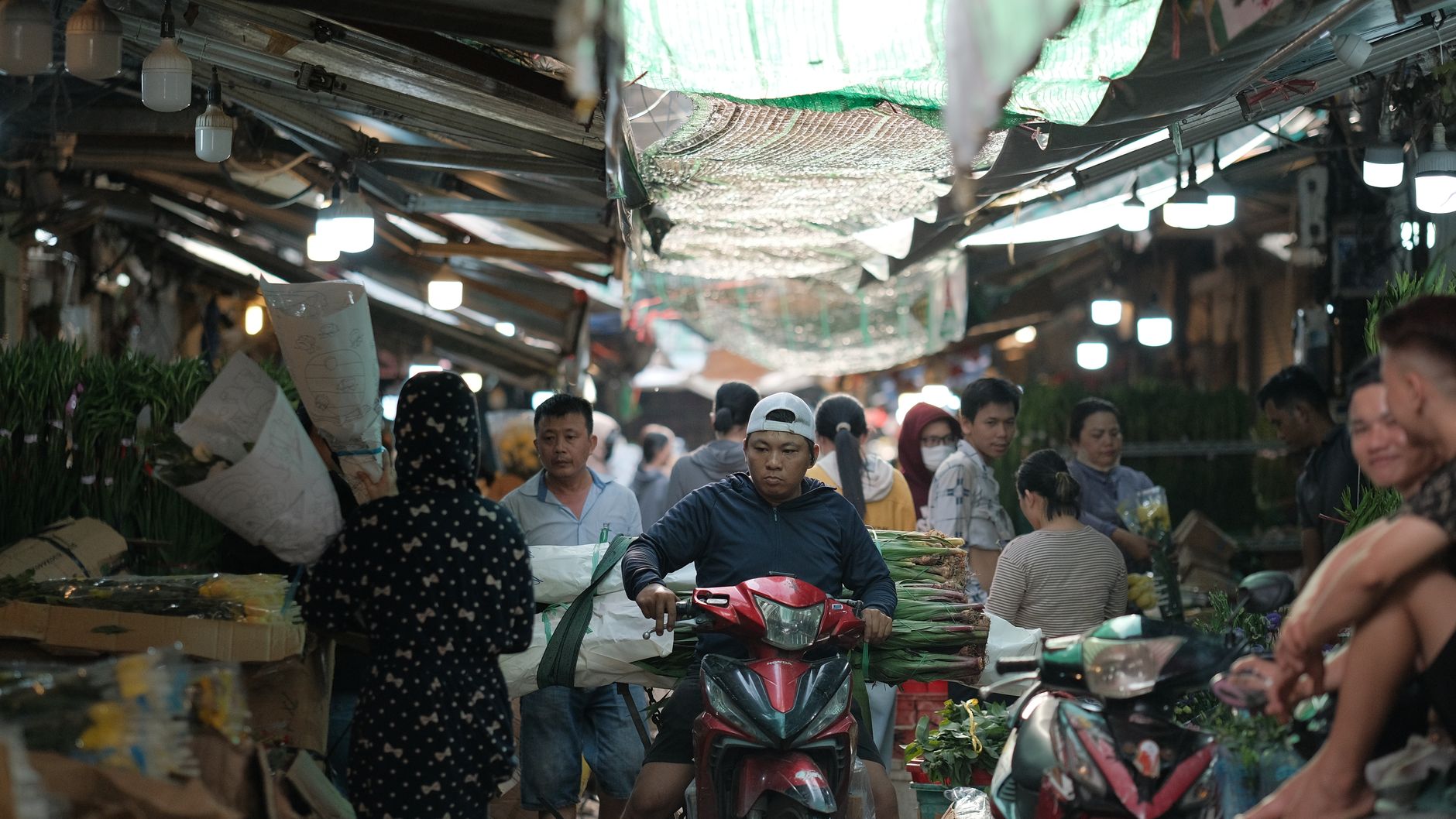
Hoan Kiem Lake sits at Hanoi's cultural heart, steps from the Old Quarter's flower markets and centuries-old temple gardens. Walking distance means you access fresh, seasonal stock daily; vendors know florists by name and hold rare blooms. The area's humid microclimate suits tropical flowers year-round—lotus, orchid, and bird-of-paradise thrive here. Traditional workshops near the lake tap into this ecosystem rather than relying on imports alone. You see where flowers come from before arranging them, anchoring your learning in place and practice.
How do beginners struggle with the spiral hand-tie technique?
Most newcomers grip stems too tightly, crushing water vessels and bruising leaves. Others bunch blooms flat instead of rotating each stem outward to create a domed, three-dimensional dome. Spacing—leaving air between flowers—intimidates people accustomed to "fuller is better." The spiral itself confuses: it's not a twist, but a rotation of your wrist while the stem group turns in your palm. You learn by repeating the motion 5–10 times until muscle memory clicks. Within 90 minutes, even hesitant hands produce a balanced bouquet. Practice at home by gathering grocery-store flowers and mimicking the rotate-and-step-back rhythm your instructor demonstrates.
What techniques help flowers survive Hanoi's heat and humidity?
Conditioning is non-negotiable. We strip leaves below the waterline (they rot in heat), cut stems at 45 degrees under running water, and immediately plunge them into cool flower food. Tropical blooms tolerate 28–32°C, but imported roses and carnations wilt fast unless misted hourly. Stems must sit in deep water, never shallow vases. We teach guests to check water daily, recut stems every 3–4 days, and keep arrangements away from direct sun and air conditioning drafts. A bouquet lasts 7–10 days if you follow these steps; rushed conditioning cuts life to 2–3 days. Take-home cards remind students exactly what to do when they return to their hotel or home.
How do we adapt workshops for kids, groups, and rainy days?
Kids and family sessions run 60–75 minutes with softer stems (hypericum, celosia) and lower tables. We pair each child with an adult; group energy keeps focus high. For hen and birthday parties, we shorten demos, emphasize fun over perfection, and offer team prizes for best color balance. Groups of 4–8 work best; larger cohorts need two instructors. Rain changes venue logistics but not content—we move indoors, ensure good ventilation, and adjust watering schedules (humidity rises, so flowers drink less). Team building workshops benefit from rain because groups bond over problem-solving—"How do we tie spirals with damp hands?"—and leave with a shared achievement. We've hosted groups in drizzle without canceling once. The key is flexibility: flowers are forgiving if you stay calm.
Beginner's Decision Framework: Which Workshop Type Fits You?
| Your Profile | Best Fit | Why It Works | What to Expect |
|---|---|---|---|
| Solo traveler, 2–3 hours free | Tourist workshop | English-taught, no booking pressure, all supplies included | Mix of 4–6 guests, small arrangements to take home |
| Couple on a special trip | Private & couple sessions | One-on-one attention, custom timing, romantic setting | 2-hour class, larger bouquet or box, photo ops |
| Family with kids (6–12) | Kids & family workshop | Age-appropriate stems, shorter class, hands-on games | 60 minutes, vibrant colors, everyone makes something |
| Office team or friend group (4–8) | Team building workshop | Icebreaker activities, shared bouquets, group photo | 90 minutes, bonding focus, take-home arrangements |
| Want to learn deeper skills | Floral design course | Multi-session progression, theory + practice, certificates | 4–8 weeks, advanced techniques, seasonal projects |
What to Check Before You Book a Class
Timing & availability: Confirm dates on WhatsApp; peak seasons (Tet, Christmas) fill fast. Ask if the workshop runs rain-or-shine or indoors.
Language: All our classes are taught in English; staff speak conversational Vietnamese, Mandarin, and occasionally French.
Physical demands: You stand for 90 minutes, hold scissors, and reach arms overhead. Pregnancy, recent surgery, or severe arthritis may need accommodation—message us first.
Flowers & allergies: We use real blooms; if you have pollen allergies, take antihistamines 30 minutes before class. Stem thorns are sharp—bring gloves if your hands are sensitive.
Take-home & transport: Your finished bouquet fits a small box; we provide care cards. If you fly same day, ask about floral preservation spray and cool packing.
Group size: Solo and pairs always run; groups of 4+ need 48 hours' notice to confirm instructors.
How Vietnamese Seasonal Flowers Shape Workshop Themes
Spring (January–March): Tet workshops feature apricot blossoms, peach, and lucky red-and-gold palettes. Seasonal workshops teach symbolic arrangement—how petals unfold like prosperity.
Summer (April–June): Lotus becomes the star; bouquet-making sessions focus entirely on this sacred flower's conditioning and spiral placement. Heat is intense, so morning classes run earlier.
Autumn (July–September): Chrysanthemum and gladiolus dominate. Workshops explore layering and color depth in cooler light.
Winter (October–December): Christmas workshops introduce wreaths and festive non-traditional blooms (roses, carnations) alongside local evergreens. Flower box and basket classes fill quickly in this season.
Learn Vietnamese Symbolism Through Arranging
Every arrangement tells a story. A guest who learns that white flowers are forbidden at celebrations won't accidentally offend a host. Understanding that orchid signals admiration (never love) reshapes how you gift one. When you join a workshop, these lessons stick because you're handling the blooms, hearing the stories, and seeing florists apply rules in real time. That's how culture moves from textbook to hands.
Begin with a single private session if you're nervous. Choose the longer floral design course if you want to apprentice-level depth. Either way, you'll return home knowing why Vietnamese florists choose each stem, and you'll arrange flowers with intention, not just aesthetics.
Ask for workshop dates on WhatsApp
Explore Our Workshop Offerings
Discover Vietnamese flower culture and market tours to see where blooms originate. Book a flower arranging class for hands-on technique. Or browse all guides to deepen your knowledge before you arrive.

FAQ
Do I need to speak Vietnamese to join a workshop?
No. All classes at Vietnam Flower Workshop by Hoa Lang Thang are taught in English by professional florists. You learn through demonstration, hands-on practice, and one-on-one guidance. Simple botanical and cultural terms are explained.
What if I'm allergic to pollen or have sensitive hands?
Take an antihistamine 30 minutes before class. Bring gardening gloves if thorns concern you. We provide aprons and can remove heavy-pollen stamens from lilies beforehand—let us know via WhatsApp before booking.
How long does a finished bouquet last after I take it home?
7–10 days with proper care: deep water, daily misting, stem recuts every 3–4 days, and placement away from direct sun and AC vents. Tropical blooms last longer than imported roses in Hanoi's heat. We send care cards home with you.
Can I book a private session instead of a group class?
Yes. Private and couple sessions are available; you choose the date and time. We'll confirm availability and arrange flowers or wreath types with you in advance.
What if rain cancels my workshop?
We adapt. Indoor venues are ready; we reschedule or offer a refund. Rainy-day classes sometimes run better because humidity keeps stems fresher and groups bond over the cozy atmosphere.
Do you offer kids' workshops, and how young can they be?
Yes. Kids and family sessions suit ages 6 and up. We use softer stems, lower work tables, and pair kids with adults. Classes run 60–75 minutes with shorter attention spans in mind. Bring children's gloves if they prefer them.
Ask for dates
Tell us the city, the date and how many people. We reply on WhatsApp in English with workshop options and a quote.
FAQ
Do I need to speak Vietnamese to join a workshop?
No. All classes at Vietnam Flower Workshop by Hoa Lang Thang are taught in English by professional florists. You learn through demonstration, hands-on practice, and one-on-one guidance. Simple botanical and cultural terms are explained.
What if I'm allergic to pollen or have sensitive hands?
Take an antihistamine 30 minutes before class. Bring gardening gloves if thorns concern you. We provide aprons and can remove heavy-pollen stamens from lilies beforehand—let us know via WhatsApp before booking.
How long does a finished bouquet last after I take it home?
7–10 days with proper care: deep water, daily misting, stem recuts every 3–4 days, and placement away from direct sun and AC vents. Tropical blooms last longer than imported roses in Hanoi's heat. We send care cards home with you.
Can I book a private session instead of a group class?
Yes. [Private and couple sessions](/private-and-couples) are available; you choose the date and time. We'll confirm availability and arrange flowers or wreath types with you in advance.
What if rain cancels my workshop?
We adapt. Indoor venues are ready; we reschedule or offer a refund. Rainy-day classes sometimes run better because humidity keeps stems fresher and groups bond over the cozy atmosphere.
Do you offer kids' workshops, and how young can they be?
Yes. [Kids and family sessions](/kids-and-family) suit ages 6 and up. We use softer stems, lower work tables, and pair kids with adults. Classes run 60–75 minutes with shorter attention spans in mind. Bring children's gloves if they prefer them.
More like this
Vietnamese flower culture
Cultural Workshops Saigon: Flower Classes & Team Building
Saigon's cultural workshop scene includes flower arranging, hand-tied bouquets, and team-building sessions taught in English by real florists. We run sessions for tourists, expats, families, and corporate groups year-round, adapting to the tropical heat and rainy season.
Vietnamese flower culture
Vietnamese Flower Culture Near Saigon: Learn & Celebrate Locally
Vietnamese flower culture near Saigon is alive in daily altars, Tet celebrations, and family gatherings—and you can learn it directly through workshop experiences that connect you to local growers, techniques, and meanings.
Vietnamese flower culture
Vietnamese Flower Culture Near Ho Chi Minh City: Learn & Shop
Vietnamese flower culture thrives in Ho Chi Minh City through centuries-old markets, seasonal rituals, and now accessible workshops where travelers learn to arrange lotus, chrysanthemums, and tropical blooms like locals do.