
Home › Blog › Vietnamese flower culture
Cultural Workshops Saigon: Flower Classes & Team Building
By the Vietnam Flower Workshop team · 2026-11-06
Cultural workshops in Saigon range from one-hour flower-arranging classes to full-day team-building events, with venues scattered across Districts 1, 3, and 7. Vietnam Flower Workshop by Hoa Lang Thang offers hands-on sessions in English using fresh imported and local flowers—guests condition stems, learn spiral hand-tie techniques, and take arrangements home. Workshops suit solo travelers, couples, families, hen parties, and office teams. Sessions run 60–180 minutes depending on format: beginner bouquets, seasonal Tet wreaths, or corporate problem-solving with flowers. Ask us for a quote on WhatsApp; pricing reflects flower type, group size, and duration. Before booking, confirm the workshop includes English instruction, takeaway flowers, and flexibility for rainy-season rescheduling—humidity and afternoon downpours affect both flower conditioning and transportation home. Ask for workshop dates on WhatsApp
What types of cultural workshops does Saigon actually offer?
Saigon's workshop scene splits into two camps: tourist-facing artisan classes and corporate team building. Flower arranging dominates because it requires no Vietnamese language, produces a tangible gift, and adapts to any group size or skill level. You'll also find pottery, cooking, and lacquer workshops, but floristry is fastest-growing because the tropics make fresh flowers available year-round and failures are forgiving—guests laugh off a wonky stem and try again. Flower arranging classes teach the same spiral hand-tie and color-balance principles everywhere, but the honest difference lies in instruction quality, flower freshness, and whether you leave with something you'd actually gift. Most commercial workshops in Saigon run 90 minutes and cost less than a mid-range dinner; the catch is small groups (under 8 people) often feel rushed, and hastily imported flowers wilt within days if you don't condition them correctly at home.
️ See how a class runs
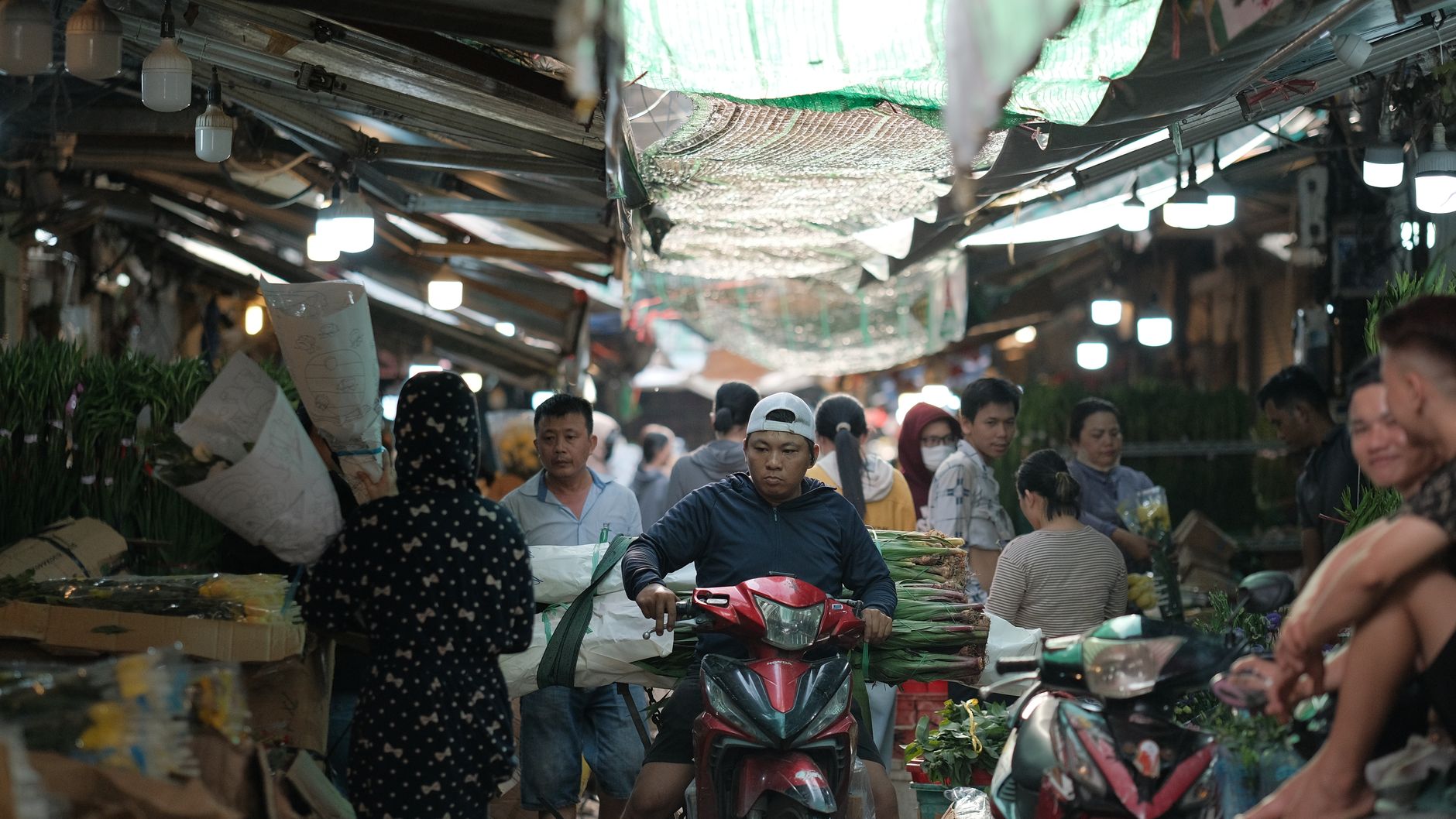
How do beginners struggle in Saigon flower workshops?
New florists in the heat make three mistakes: they grip stems too tight, skip conditioning (stripping lower leaves, angling cuts under water), and rush the spiral without checking their hand angle. Saigon's humidity—80–95% March to October—means flowers absorb water faster than in cooler climates, so stems soften quickly and snap if bent sharply. Beginners also misjudge color balance; they cluster the same hue together instead of spacing complementary tones, so their bouquet looks flat from one side. The second-biggest struggle is transportation: a wrapped bouquet wilts in a taxi or hotel hallway if there's no water access. We teach a "misting trick"—wrapping damp paper towel inside the outer layer—and show guests how to submerge the whole bouquet in a bathtub for 20 minutes upon arrival home, which revives even sad-looking stems. Couples and hen parties often underestimate how long the spiral hand-tie takes; expecting 10 minutes, they discover it's a 25-minute technique, and frustration creeps in around minute 18. We solve this by demonstrating on one practice bouquet first, then letting guests work their own at no time pressure.
Why choose a workshop over a local flower shop in Saigon?
A workshop teaches you why florists make the choices they do; a shop transaction gives you a product. In a flower arranging class you learn that the spiral hand-tie distributes weight so the bouquet stands upright without a vase, why diagonal stem cuts absorb water faster than blunt ones, and how to condition exotics (orchids, anthuriums) that Saigon gets fresh from the highlands. You handle premium imported roses or locally grown dahlias, compare their feel and longevity, and understand why a florist chooses one over the other for a given brief. A workshop also gives you permission to fail without wasting money—you experiment on the same flowers a paying customer would buy. For corporate teams, the team building workshop mimics creative problem-solving: groups must plan a multi-stem arrangement under time pressure, negotiate color choices, and execute as one. That mirrors actual project work better than a talk-and-slides session. Tourists and expats choose workshops for connection—you leave with florist friends, not just a bouquet. Locals choose them to add skill to their Instagram presence or to prep for gifting during Tet or Christmas, when flower prices spike and availability drops.
Which workshop format fits travelers, families, or office teams?
| Format | Who it's for | Duration | Why it works |
|---|---|---|---|
| Tourist drop-in | Solo travelers, backpackers | 60–90 min | No booking stress, English taught, walk-in most days, take flowers same day. |
| Couple or private session | Anniversaries, proposals, date nights | 90–120 min | Personalized pace, photo-friendly, florist remembers your story. |
| Kids & family | Ages 6+, multi-generational | 75 min | Simplified stems, focus on color play, less fiddly spiral work, all leave with a bouquet. |
| Hen or birthday party | Groups 6–15, celebration mood | 120–150 min | Team games (color-match challenges, relay spirals), music, light snacks, photo backdrop. |
| Team building | Corporate, 8–30 people | 120–180 min | Paired or small-group challenges, debrief on collaboration, takeaway bouquets for offices. |
| Seasonal (Tet, Christmas) | Anyone prepping gifts/décor | 90–120 min | Wreath-making, lotus-inspired designs, cultural context, perfect for timing-sensitive gifting. |
Travelers book our tourist drop-in workshop because there's no advance payment, no risk if transport delays happen, and most run daily—Hanoi morning, Saigon afternoon slots suit backpacker routines. Families gravitate toward kids and family sessions that let younger florists take home a genuine arrangement, not a craft project; parents enjoy the calm space and often Instagram the result. Office teams pick team building workshops over trust falls because flowers force real negotiation (whose color choice wins?) and the physical outcome—a cohesive bouquet—is objective proof the team collaborated. Couples book private sessions around sunset for romance; we've hosted dozens of marriage-proposal setups where the florist helps with timing and framing.
How does Saigon's heat and rainy season affect flower durability?
Saigon's March–October heat (35–40°C, 80–95% humidity) means flowers wilt 2–4 days faster than in temperate climates unless kept wet and cool. Imported roses and chrysanthemums, which last 10–12 days in a cooler shop, often drop petals by day 6 in a non-air-conditioned home or office. Rainy season (May–September) complicates delivery: taxis and motorbike taxis lack climate control, so a 20-minute ride in heavy rain and heat can stress flowers badly. We condition all stems before class—angling cuts, stripping leaves below water line, removing guard petals—so guests leave with maximum vase life. We also teach a survival trick specific to Saigon: wrap the finished bouquet in damp paper towel, place it in a plastic bag with a coin of water on the bottom (not touching stems), and submerge the whole thing in a tub for 20 minutes when home before arranging in a vase. For team-building and corporate events in rainy season, we offer indoor layouts (studio or hotel ballroom) or provide take-home hydration kits so bouquets survive the commute to offices.
️ See how a class runs

What should you check before booking a Saigon workshop?
Before you book, verify five things: (1) English instruction: ask explicitly—some workshops run bilingual or in Vietnamese only. (2) Flower freshness: does the workshop buy daily or stock flowers 2–3 days old? (4) Rainy-day contingency: what happens if transport is flooded or the session is outdoor-only? (5) Group size and pacing: is there a maximum, and will the florist go slow for absolute beginners or expect prior experience? Workshops advertising "cultural immersion" but offering only 30 minutes on flower work are padding the class with tourist narratives—ask how much is hands-on versus talk. If a workshop quotes a rock-bottom price but won't specify flower types or supplier, assume older stock or mix of local and imported varieties of uneven quality. Couples should ask if a florist offers a private session or only group slots; hen parties need to confirm whether the florist has a decorated space or a plain studio. Corporate teams should clarify the debrief: some florists simply teach technique, while others will lead a reflection on teamwork using the bouquet as metaphor. Ask us for a quote on WhatsApp and we'll answer all five before you commit.
Ask for workshop dates on WhatsApp
One technique to try at home right now
The angled stem cut under running water. Take any fresh flower stem (or a carrot if you're practicing). Hold it at a 45° angle under cold running water and slice cleanly with a sharp knife. The angle doubles the surface area for water uptake, and cutting under water prevents an air bubble from sealing the stem end. This single move extends vase life by 2–3 days. We teach this in the first five minutes of every flower arranging class because it's the difference between a guest's bouquet lasting a week or wilting by Thursday.
Comparison: what makes Hoa Lang Thang workshops different from generic Saigon classes?
We're florists first, teachers second—we arrange flowers for weddings, corporate events, and daily restaurant décor across Hanoi and Saigon, so every technique we teach is one we use professionally. That's why our classes spend time on the spiral hand-tie, not just cramming as many stems as possible into a vase; the spiral is harder to learn but gives a longer vase life because stems can drink water from all angles. We source flowers fresh each morning or two days before, depending on the flower type and season, and we're honest about which will last 5 days versus 12 days—so guests don't go home expecting a two-week bouquet from a gladiolus that's designed for impact, not longevity. Rainy season doesn't shut us down; we adapt indoor layouts or provide hydration kits. We teach in English for travelers and expats, Vietnamese for locals, and mixed groups speak English so everyone follows the same instruction. We also run private and couple sessions that feel personal, not assembly-line, and team building workshops with actual debrief on collaboration, not just floral mechanics. For families with kids, we scale down to stems a six-year-old can hold without the spiral complexity, so everyone leaves proud.
Why cultural workshops matter in Saigon's tourism and expat scene
Saigon attracts visitors seeking "authentic" experiences, but most flower shops feel transactional and aren't set up for learning. Expats and long-term visitors book regularly because a flower arranging class teaches a skill they'll use for home décor, hostess gifts, and date nights. Corporate teams use team building workshops as an alternative to team lunches or escape rooms because flowers force vulnerability (your arrangement looks like you worked or didn't) and produce something people take to their desks. Hen parties, couples on anniversary trips, and families on school holidays book because the session is short enough (90 minutes) to fit a day itinerary, produces a photo-worthy result, and costs far less than a typical tour. Saigon's cultural workshop market is growing because workshops respect visitors' time and intelligence—you learn a real skill, not a curated narrative.

FAQ
Can I book a workshop same-day in Saigon?
Most drop-in sessions run daily, but availability depends on group size and florist schedule. Couples and private sessions need 2–3 days' notice. Ask us on WhatsApp with your preferred date and group size, and we'll confirm if it's open.
Do I need any experience to join a flower arranging class?
No. We teach absolute beginners the fundamentals—stem conditioning, color theory, spiral hand-tie—at no pace pressure. If you've arranged flowers before, we show advanced techniques like asymmetry and negative space. Everyone leaves with a finished bouquet.
What happens to my flowers if I can't take them home immediately?
We wrap finished bouquets in damp paper and provide a hydration kit (water coin, care card). Most last 4–6 hours without wilting if wrapped properly. For longer delays, ask the florist for a chilled storage option or same-day pickup advice.
Are there workshops for kids under eight?
Kids and family sessions start at age six. Younger children can participate with adult assistance, but focus on color and stem placement rather than technique. We shorten the spiral hand-tie and use softer, pre-conditioned flowers.
What's the difference between a tourist workshop and a private session?
A tourist drop-in is group-based (4–8 people), scheduled daily, and shorter (60–90 min). A private session is just you or your group, customized pacing, often includes music or photography, and lasts 90–120 minutes. Private sessions book fewer days ahead.
Do workshops run during the rainy season (May–September)?
Yes. We adapt indoor layouts or offer makeup dates if heavy downpours make transport unsafe. Always confirm rainy-season timing when you book; seasonal workshops like Tet wreaths are sensitive to humidity and may shift dates.
Can a workshop work for a corporate team-building day?
Yes. Team building workshops for 8–30 people include paired or small-group challenges, debrief on collaboration, and takeaway bouquets. Duration is 120–180 minutes depending on your brief. --- ️ See how a class runs | Ask for workshop dates on WhatsApp Learn more about Vietnamese flower culture & tradition or explore our full range of workshops.
Ask for dates
Tell us the city, the date and how many people. We reply on WhatsApp in English with workshop options and a quote.
FAQ
Can I book a workshop same-day in Saigon?
Most drop-in sessions run daily, but availability depends on group size and florist schedule. Couples and private sessions need 2–3 days' notice. Ask us on WhatsApp with your preferred date and group size, and we'll confirm if it's open.
Do I need any experience to join a flower arranging class?
No. We teach absolute beginners the fundamentals—stem conditioning, color theory, spiral hand-tie—at no pace pressure. If you've arranged flowers before, we show advanced techniques like asymmetry and negative space. Everyone leaves with a finished bouquet.
What happens to my flowers if I can't take them home immediately?
We wrap finished bouquets in damp paper and provide a hydration kit (water coin, care card). Most last 4–6 hours without wilting if wrapped properly. For longer delays, ask the florist for a chilled storage option or same-day pickup advice.
Are there workshops for kids under eight?
Kids and family sessions start at age six. Younger children can participate with adult assistance, but focus on color and stem placement rather than technique. We shorten the spiral hand-tie and use softer, pre-conditioned flowers.
What's the difference between a tourist workshop and a private session?
A tourist drop-in is group-based (4–8 people), scheduled daily, and shorter (60–90 min). A private session is just you or your group, customized pacing, often includes music or photography, and lasts 90–120 minutes. Private sessions book fewer days ahead.
Do workshops run during the rainy season (May–September)?
Yes. We adapt indoor layouts or offer makeup dates if heavy downpours make transport unsafe. Always confirm rainy-season timing when you book; seasonal workshops like Tet wreaths are sensitive to humidity and may shift dates.
Can a workshop work for a corporate team-building day?
Yes. Team building workshops for 8–30 people include paired or small-group challenges, debrief on collaboration, and takeaway bouquets. Duration is 120–180 minutes depending on your brief. --- ✂️ See how a class runs | [🌸 Ask for workshop dates on WhatsApp](https://wa.me/84969293894) Learn more about [Vietnamese flower culture & tradition](/vietnamese-flower-culture) or explore our [full range of workshops](/blog).
More like this
Vietnamese flower culture
Quang Ba Flower Market Tour: What to Expect
Quang Ba is Hanoi's oldest wholesale flower market, alive before sunrise with traders, growers and color. A tour teaches you how Vietnamese flowers move from field to home—and why some arrangements last longer than others.
Vietnamese flower culture
Quang Ba Flower Market Tour Vietnam: What to Buy & How
Quang Ba flower market in Hanoi is Vietnam's largest wholesale market, alive before dawn with traders and arrangements. We guide visitors through what to buy, when to visit, and how to handle the tropical heat.
Vietnamese flower culture
Quang Ba Flower Market Tour in English: What to See & Buy
Quang Ba is Hanoi's largest flower market, opening before dawn with thousands of vendors selling fresh seasonal blooms. A guided tour in English teaches you how to spot quality flowers and pairs perfectly with a flower arranging workshop.