
Home › Blog › Vietnamese flower culture
Quang Ba Flower Market Tour Saigon for Beginners
By the Vietnam Flower Workshop team · 2026-11-06
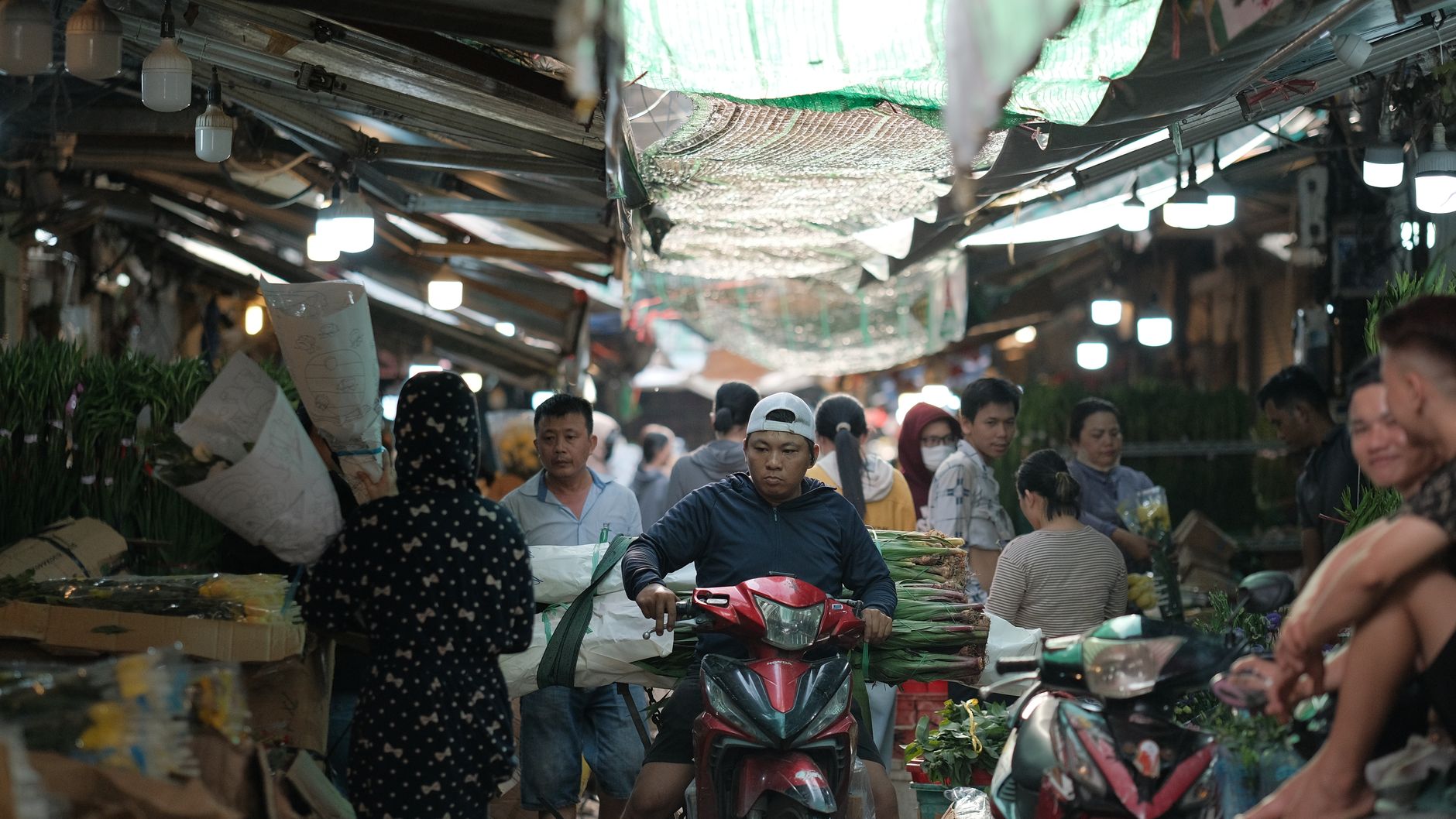
Quang Ba Flower Market in Ho Chi Minh City opens at 04:00–05:00 and winds down by 10:00–12:00, selling cut flowers, potted plants, imported stems and seasonal blooms direct from growers at wholesale prices. Entry is free; you walk through narrow lanes crowded with trucks, carts and traders in a noisy, humid environment. No fixed tour schedule exists—you navigate independently or hire a local guide on-site (negotiate cost beforehand). Beginners struggle with language barriers, no signage, lack of refrigeration, and not knowing which vendors sell retail. We recommend visiting with a purpose: scout seasonal stems for an arrangement class, or combine your visit with a bouquet-making workshop at Vietnam Flower Workshop by Hoa Lang Thang, where we teach you to condition and design the flowers you've chosen. Budget 1–2 hours; wear comfortable shoes, bring cash (Vietnamese đồng), and go early before peak heat. Avoid carrying large purchases in the heat without proper water or wrapping—flowers wilt fast. Ask for workshop dates on WhatsApp
How do you get to Quang Ba Market from central Saigon?
The market sits in District 1 (Quang Ba ward), a 10–15 minute taxi or rideshare ride from the main tourist district. Use a map app to navigate to the address; drivers know the location well. Arrive between 05:00 and 08:00 for the best selection and quieter lanes. Public transport exists but is not tourist-friendly early morning; a private ride is safer for first-timers carrying purchases back to your hotel. Street access is tight—go on foot once you're dropped at the main entrance. Parking is chaotic; don't rent a scooter unless familiar with Saigon traffic.

What flowers are actually in season at Quang Ba right now?
Seasonal availability shifts constantly; in 2026, ask vendors what arrived that morning. Roses, chrysanthemums, and imported orchids are year-round. Vietnamese growers peak with lotus (summer), peonies (spring), and chrysanthemums (autumn). Imported stems (tulips, ranunculus, protea) are pricier and less consistent. Vendors speak limited English—bring photos on your phone of flowers you want, or visit with a local. Seasonal flower workshops at our studio teach you how to work with what's actually available each month, so you learn real design, not just theory.
Why do flowers wilt so fast after you buy them from Quang Ba?
Market flowers receive zero conditioning: no fresh water, no stem cutting, no flower food, often crammed in bags under sun. The 1–2 hour journey back to your hotel without hydration stresses stems severely. Wrapping in wet newspaper helps but doesn't replace water. Once home, flowers need immediate re-cutting (remove 2 cm at a 45° angle under running water), removal of lower leaves, and placement in clean water with flower food. Even then, heat stress shortens vase life by 2–4 days compared to professionally conditioned blooms. This is why we teach stem conditioning as the first skill in every session—it's the difference between wilted stems by day two and flowers that last a week.
Can you negotiate prices with vendors at Quang Ba?
Yes, but margins are thin. Bulk wholesale prices are fixed; retail single-stem or small-bunch prices vary by vendor mood, time of day, and your confidence. Arriving late (after 10:00) or in slow periods may yield 10–20% discounts. Speaking Vietnamese or having a local friend helps. Most vendors want volume, not haggling; if you're buying five stems for a small arrangement, expect to pay more per stem than if you buy fifty roses. Respect opening prices; aggressive negotiation is seen as disrespect. Compare three vendors before committing. Private and couple sessions often include guidance on smart flower sourcing if you're planning frequent visits.

Should beginners take a private tour or go alone?
Go alone first for 30 minutes to observe without commitment. You'll see the chaos, smell the humidity, and gauge comfort level. If overwhelmed, hire a local guide (ask your hotel concierge) or book a workshop that includes market insight. Group tours are rare and expensive; most visitors navigate solo. Beginners struggle most with language, knowing quality roses from tired stock, and carrying flowers safely. A flower arranging class before or after your market visit teaches you how to evaluate stems on the spot—wilting edges, stem softness, leaf discoloration—so you buy only what will last. Many travelers combine a 90-minute morning market walk with an afternoon workshop for travelers to process what they've learned.
What to Check Before You Buy at Quang Ba
- Stem firmness: Bend gently; crisp is healthy; limp is stressed.
- Leaf color: Bright and dry; yellowing or slime means age.
- Cut surface: Fresh green at the base; brown or soft indicates poor storage.
- Flower face: Full petals, no bruising; minor edge curl is normal for roses.
- Packaging: Ask for damp paper, not plastic bags.
- Price per stem: Ask before picking to avoid surprise totals.
- Water source: Bring a bottle or ask vendors for a damp wrap.
| Flower Type | Best For Beginners | Peak Season | Typical Wholesale Price Range | Why Choose It |
|---|---|---|---|---|
| Roses | Hand-tied bouquets, spirals | Year-round | Budget-friendly at Quang Ba | Long vase life, forgiving, color variety |
| Chrysanthemums | Massed designs, texture | Aug–Dec | Very affordable | Hardy, hold water well, easy to condition |
| Orchids (potted) | Display, no arranging | Year-round | Mid-range | Exotic feel, weeks of bloom, low maintenance |
| Gerbera | Single-stem practice | Spring–summer | Moderate | Teaches color theory, forgiving stems |
| Lotus (seasonal) | Cultural learning | Jun–Aug | Budget in-season | Iconic Vietnamese symbol, short vase life, striking form |
How does a market visit connect to a real flower workshop?
A market morning feeds into hands-on learning. You see wholesale volume and speed; then in a bouquet-making workshop or flower box class, we slow down and teach technique: how to spiral stems for balanced weight, how to cut and condition stems to maximize vase life, how to choose colors that calm or excite. Market flowers are raw material; a workshop is where you learn to read them and transform them. Many kids and family sessions include a "market preview" walk (short, supervised, for ages 8+) before studio work, so children understand where flowers come from. Team building groups sometimes request a market segment + workshop combo to build story into their experience.
️ See how a class runs
What's the honest truth about solo travel to Quang Ba as a non-Vietnamese speaker?
You will feel lost. Vendors speak minimal English. Prices are unclear. Flowers will wilt if you don't know conditioning. But the market is safe, free to enter, and genuinely beautiful at dawn—a sensory immersion no tourist brochure captures. Go with low expectations: enjoy the chaos, buy a few stems for fun, and don't stress about perfect choices. If you want to maximize learning and take home something lasting, pair your visit with a flower arranging class where we teach you to condition and design using fresh market flowers or our imported stock. Tourist workshops at Vietnam Flower Workshop by Hoa Lang Thang often attract people who've visited Quang Ba and want to level up their skills in a controlled, English-speaking environment. You'll meet other travelers, learn real technique, and create a bouquet or arrangement you're proud to photograph or give as a gift.
Link to Vietnamese flower culture to understand symbolism and seasonal meaning.
Ask for workshop dates on WhatsApp
FAQ
What time should I arrive at Quang Ba to beat the crowds?
05:30–06:30 is ideal: flowers are fresh, vendors are less rushed, and afternoon heat is still manageable. Before 05:00 is too early for tourists; after 08:00, selection shrinks and prices hold firm. Go with cash and comfortable shoes; expect narrow, wet lanes.
Can I buy wholesale prices as a single customer?
No. Wholesalers sell by the bunch (10–50 stems per variety). Retail single-stem prices are 2–3× higher. Buy small quantities from street vendors or retail stalls at the market's edges, not the wholesale traders at the center.
Do flowers from Quang Ba last longer than supermarket flowers?
Yes, if conditioned immediately. Quang Ba flowers are fresher (picked that morning) but unconditioned. Supermarket flowers are pre-treated and hydrated. Quang Ba stock lasts 7–10 days with proper conditioning; supermarket, 5–7 days. The difference is preparation, not flower age.
Is it safe to visit as a solo female traveler?
Yes. The market is busy, well-used by locals, and police-patrolled. Petty theft is rare. Keep valuables secure, wear comfortable clothes, and stay aware of traffic. Avoid very early hours (before 05:00) alone; 06:00+ is normal tourist time.
Should I take a photo tour or a buying trip?
A photo tour is 45 minutes of wandering and asking permission to photograph. A buying trip is 60–90 minutes of learning vendors, comparing flowers, and negotiating small purchases. Do a buying trip first; it's more memorable and practical.
Can I combine Quang Ba with a same-day flower workshop?
Yes. Visit early (05:30–08:00), return to your accommodation, rest or shower, then join an afternoon workshop. Many travelers do this; we can coordinate timing. Bring your Quang Ba flowers and we'll teach you to condition and design them into an arrangement. ===
Ask for dates
Tell us the city, the date and how many people. We reply on WhatsApp in English with workshop options and a quote.
FAQ
What time should I arrive at Quang Ba to beat the crowds?
05:30–06:30 is ideal: flowers are fresh, vendors are less rushed, and afternoon heat is still manageable. Before 05:00 is too early for tourists; after 08:00, selection shrinks and prices hold firm. Go with cash and comfortable shoes; expect narrow, wet lanes.
Can I buy wholesale prices as a single customer?
No. Wholesalers sell by the bunch (10–50 stems per variety). Retail single-stem prices are 2–3× higher. Buy small quantities from street vendors or retail stalls at the market's edges, not the wholesale traders at the center.
Do flowers from Quang Ba last longer than supermarket flowers?
Yes, if conditioned immediately. Quang Ba flowers are fresher (picked that morning) but unconditioned. Supermarket flowers are pre-treated and hydrated. Quang Ba stock lasts 7–10 days with proper conditioning; supermarket, 5–7 days. The difference is preparation, not flower age.
Is it safe to visit as a solo female traveler?
Yes. The market is busy, well-used by locals, and police-patrolled. Petty theft is rare. Keep valuables secure, wear comfortable clothes, and stay aware of traffic. Avoid very early hours (before 05:00) alone; 06:00+ is normal tourist time.
Should I take a photo tour or a buying trip?
A photo tour is 45 minutes of wandering and asking permission to photograph. A buying trip is 60–90 minutes of learning vendors, comparing flowers, and negotiating small purchases. Do a buying trip first; it's more memorable and practical.
Can I combine Quang Ba with a same-day flower workshop?
Yes. Visit early (05:30–08:00), return to your accommodation, rest or shower, then join an afternoon [workshop](/bouquet-workshop). Many travelers do this; we can coordinate timing. Bring your Quang Ba flowers and we'll teach you to condition and design them into an arrangement. ===
More like this
Vietnamese flower culture
Vietnamese Flower Culture: What to Expect at a Hanoi Workshop
Vietnamese flower culture weaves ancient ritual, seasonal respect, and everyday beauty into a living practice that shapes how people celebrate, mourn, and connect. A workshop in Hanoi or Ho Chi Minh City reveals this firsthand—not as theory, but as skill you can use at home.
Vietnamese flower culture
Vietnamese Flower Culture for Beginners: What to Know
Vietnamese flower culture blends Buddhist symbolism, Lunar New Year tradition, and French colonial influence into a distinct aesthetic that beginners can learn through hands-on practice and market immersion.
Vietnamese flower culture
Vietnamese Flower Culture: Workshops & Traditions in Hanoi & HCMC
Vietnamese flower culture weaves centuries of symbolism—lotus for purity, chrysanthemums for longevity—into celebrations and daily life. We teach this living heritage through arranging workshops where travelers and expats craft authentic pieces using imported and local blooms.