
Home › Blog › Vietnamese flower culture
Quang Ba Flower Market Tour Saigon: English Guide & Workshop
By the Vietnam Flower Workshop team · 2026-11-06
Quang Ba market (also written Quảng Bá) is Ho Chi Minh City's largest flower wholesale hub, operating 3–7 a.m. daily. English-speaking tours depart with Vietnam Flower Workshop by Hoa Lang Thang and show you how vendors grade stems, negotiate bulk orders, and source seasonal blooms like lotus for Tet. Tours typically run 2–3 hours and include walking through covered aisles, tasting vendor tea, and photographing arrangements. Most participants then move to our nearby studio for a half-day flower arranging class where you condition and design with stems bought fresh from the market that morning. Tours suit travelers, corporate groups, and anyone curious about how Vietnamese flowers reach florists and home arrangers. Avoid scheduling on rainy mornings—vendors pack up early and the market floor becomes slippery. Ask us for a quote on WhatsApp to confirm dates and group size. Ask for workshop dates on WhatsApp | ️ See how a class runs
What happens at Quang Ba market in the early morning?
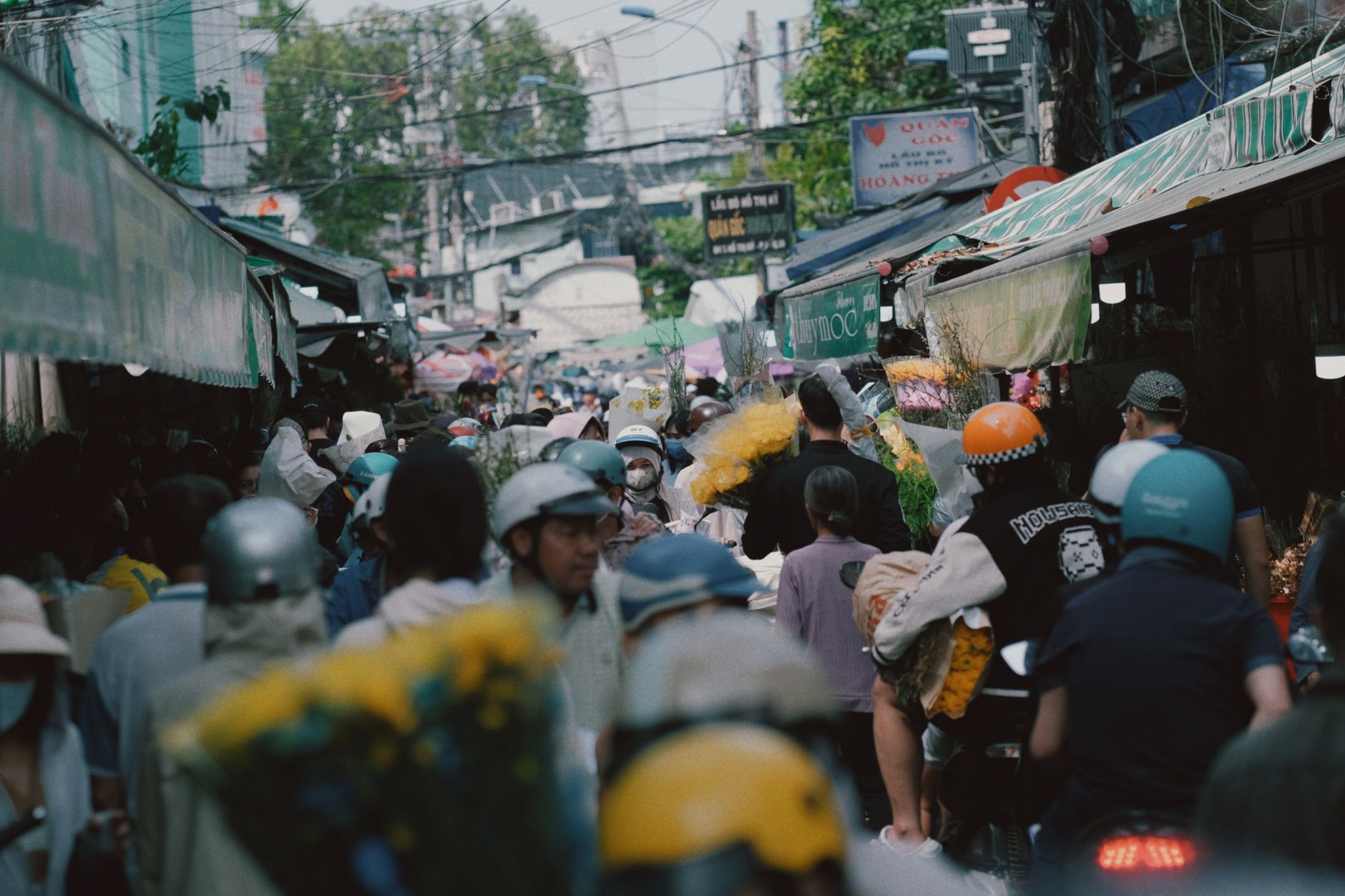
The market fills between 3–4 a.m. as growers and resellers unload flowers from vans and arrange them by species on concrete stalls. By 5 a.m., retail florists and hotel buyers arrive to select bulk orders. Our guides point out how vendors assess quality: checking stem firmness, leaf color, and flower head tightness. By 7 a.m., prices drop sharply as vendors prepare for the day's deliveries. Walking through Quang Ba teaches you why fresh flowers cost less at wholesale and why conditioning matters immediately after purchase.
Can you really buy flowers to take home after a tour?
Yes—the market operates on a cash basis (Vietnamese dong preferred). Most visitors purchase small bundles (5–10 stems per variety) at wholesale rates, roughly one-third of retail shop prices based on daily trading. Our guides advise on seasonal availability: roses and carnations year-round, lotus July–September, and chrysanthemums for Tet (late January–early February). You'll carry blooms in paper wrapping, not a vase, so we provide care tips and recommend heading straight to our flower arranging class or your accommodation to condition them in water. Expect to spend time bargaining politely—vendors appreciate foreigners who engage respectfully.
Who should book a Quang Ba market tour?
| Guest type | Best fit | What they gain |
|---|---|---|
| Solo travelers 18–65 | Early-bird energy + photo ops | Insider access to Vietnamese floral culture, real market dynamics |
| Couples | Shared experience + arranged class | Bonding over hands-on design after seeing flowers sourced live |
| Corporate groups | Team building + cultural immersion | Informal negotiation practice, supply-chain awareness, icebreaker vibe |
| Botany/horticulture students | Educational + research angle | Primary data on variety, shelf-life practices, local grading standards |
| Flower enthusiasts/resellers | Bulk sourcing + networking | Direct vendor relationships, seasonal forecasting, cost benchmarking |
Avoid if you dislike waking before 4 a.m., have mobility issues (concrete floors, narrow aisles), or are sensitive to strong flower scent in humid air.
Ask for workshop dates on WhatsApp
How does a combined market tour + workshop day run?
We typically coordinate a 3-hour market visit (3:30–6:30 a.m. pickup from a central downtown location of your choice), followed by a 2–3 hour break for breakfast and rest. Around 9–10 a.m., you arrive at our studio where we condition your market blooms: stripping lower leaves, recutting stems at 45°, and floating them in room-temperature water for hydration. Instructors then teach the spiral hand-tie technique—rotating each stem as you build the bouquet—and color balance principles using your chosen flowers. By midday, you've arranged a custom bouquet and learned why market-to-design timing prevents wilting. Participants take their finished piece home in a branded box. This sequence works because florals are most turgid (firm, fully hydrated) 6–8 hours post-cutting—exactly when your morning market purchase peaks.
What's the honest reality about Quang Ba in the heat?
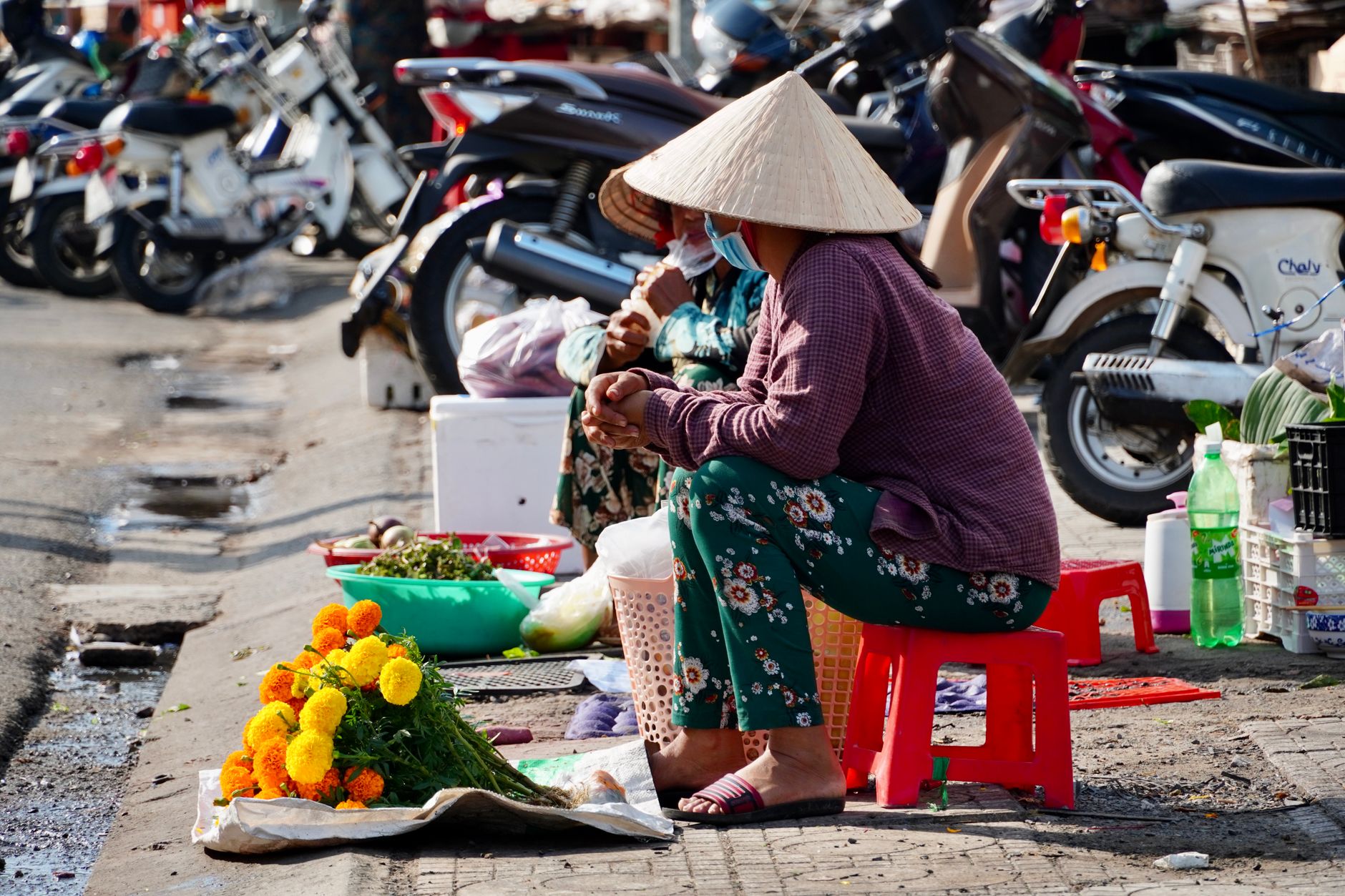
Ho Chi Minh City's humidity (May–September typically 70–90%) stresses cut flowers rapidly. Roses wilt noticeably by noon if not conditioned immediately; lotus lasts longer but demands daily water changes. Vendors mist blooms constantly during peak heat. If you tour in April–May or September–October, avoid the peak 7–9 a.m. window when foot traffic and heat spike together. Our seasonal workshops in December–February offer cooler conditions and longer-lasting blooms. If you're visiting during monsoon season, bring a compact umbrella—wet flowers are harder to arrange, and vendors may close sections of the market. Beginners often assume market prices stay flat; they don't. Arrive later (after 6 a.m.) and you'll see 20–30% discounts as vendors clear stock. Early arrival (before 4:30 a.m.) means premium selection but highest prices.
What's included in the tour—and what costs extra?
Our flower arranging class covers tuition, water, floral foam, wrapping materials, and take-home box. Market-tour pricing includes a local English-speaking guide, transportation to/from a central meet point, and 2–3 hours of narration. You pay separately for flowers you buy at the market (cash, vendor direct); typical bundles range from modest to substantial based on your appetite. Breakfast and refreshments are not included—we recommend a nearby pho or banh mi stall near the market (vendors can point you out). If you need to reschedule or cancel, ask us about our flexibility policy on WhatsApp before booking. Some participants book private couple sessions instead of group tours for a more intimate pace; that rate is separate.
What should you check before booking a Quang Ba tour?
- Confirm your wake-up time and pickup location by WhatsApp 24 hours ahead.
- Verify rainy-day policy: markets operate in light drizzle but close or scale back in heavy rain.
- Ask if the guide speaks English natively or fluently—some tours rely on translation apps, which slow down explanations.
- Check whether the arrangement studio is air-conditioned—non-negotiable in peak heat.
- Confirm the group size cap: solo or couple sessions run differently than 8–10 person groups.
- Ask about flower selection: if you have allergies (e.g., to chrysanthemum pollen), mention this so the guide avoids those stalls.
- Bring cash in Vietnamese dong—market vendors rarely accept cards.
️ See how a class runs | Ask for workshop dates on WhatsApp
How does a Quang Ba tour fit into longer flower education?
If you're visiting for a week or longer, layer the market tour into a progression: start with our tourist workshop to learn basics, then do the market tour mid-week, then return for an advanced floral design course to deepen your eye. Travelers often book a flower box & basket class after the tour because they understand composition better. Corporate groups use the market tour as a team building opener—negotiating with vendors, comparing selections, and designing together breaks down silos and sparks conversation. Parties groups (hen, birthday) sometimes combine a 90-minute market tour with a 3-hour arranging session as a half-day outing. Our blog has other Vietnamese flower culture pieces—market seasonality, lotus symbolism, Tet traditions—that deepen context before you visit.
Real obstacles beginners face at Quang Ba and how to solve them:
Language barrier: Even with an English guide, vendor conversations move fast. Ask the guide to slow down and repeat key words (e.g., "hoa hồng" = rose, "tươi" = fresh). Bring a phrasebook or translation app as backup.
Sensory overwhelm: Thousands of blooms in close quarters at dawn create loud, humid, aromatic intensity. Take breaks, step outside, hydrate often.
Pricing confusion: No two vendors quote identically. Negotiate gently—Vietnamese vendors respect politeness and repeat customers. Don't aim to "win"—aim to understand fair market rates.
Stem selection paralysis: First-time buyers freeze when faced with 20 rose varieties. Guides help, but trust your eye: pick stems that feel firm, leaves look glossy, and colors appeal to you.
Wilting during the tour: Blooms wilt faster if you hold them in direct sun for 2+ hours. Ask vendors for paper wrapping, keep bundles in shade, and head straight to the studio to condition.

FAQ
What time does Quang Ba flower market actually open and close?
The market opens 2–3 a.m. and is busiest 3–6 a.m. By 8–9 a.m., most stalls have sold their stock and vacate. Tours depart 3:30–4 a.m. to catch peak activity and freshest blooms. Arrive after 7 a.m. and you'll see a nearly empty market.
Can I do a market tour without booking a class afterward?
Yes. We offer market tours as standalone 2.5–3 hour experiences. However, most participants add a 2–3 hour flower arranging class the same morning because the blooms are fresher and the learning sticks better when hands-on. Ask us for a quote on WhatsApp.
Is Quang Ba safe for solo travelers, especially women?
Yes. The market is well-lit, crowded, and monitored by vendors and police. Our guides are experienced at spotting scams and steering you to reputable stalls. Dress modestly and avoid displaying large cash bundles. Stay with the group or guide at all times.
What if I'm allergic to certain flowers?
Tell us before booking. Common triggers are chrysanthemum pollen and strong perfume-like scents in carnations. Our guides can steer you toward hypoallergenic varieties like orchids, succulents, and foliage-heavy arrangements. We also offer private & couple sessions indoors with air filtration.
Can I book a market tour for my corporate team?
Absolutely. Groups of 6–15 work best; larger groups split into two shifts. We pair the market tour with a team building arranging session, negotiation debrief, or both. Ask us for a quote on WhatsApp with your group size and dates.
What's the best season to visit Quang Ba?
December–February (cool, dry) is ideal: flowers last longer, the market is less crowded, and humidity is low. June–August sees peak heat and monsoon closures. September–November brings seasonal blooms like chrysanthemums and roses at good prices. Our seasonal workshops align tours with the best availability.
Will my flowers survive the flight home if I buy them at the market?
Cut flowers last 5–7 days when conditioned and placed in water immediately. If you're flying out the same day, condition them at our studio, wrap stems in wet paper towel, seal in a plastic bag, and ask your hotel concierge to refrigerate them overnight. Unpacking and recutting stems on arrival extends life 2–3 days. International flight hold cargo is dry and cold—flowers often arrive stressed.
How much should I expect to spend on blooms at the market?
A modest bundle (5–10 mixed stems) runs roughly one-third to one-half of retail florist prices based on daily trading; ask vendors for an estimate before committing. Most tourists spend modestly on first visits. Our guides can advise on value. Bring Vietnamese dong cash; cards are rarely accepted at stalls.
Do I need photography experience to capture good photos at the market?
No. Lighting is beautiful 4–6 a.m. (pre-dawn and golden hour). Your smartphone or basic camera works fine. Vendors appreciate polite requests to photograph their stalls. Avoid shooting into vendors' faces without permission. Our guides often suggest the best composition angles.
Can kids come on a Quang Ba market tour?
Children 8+ typically enjoy the experience if they can wake early and walk for 2+ hours. Younger kids may find it overstimulating. We offer kids & family workshops indoors afterward with simpler arranging tasks and shorter attention spans in mind. Ask about a discounted family rate on WhatsApp.
Ask for dates
Tell us the city, the date and how many people. We reply on WhatsApp in English with workshop options and a quote.
FAQ
What time does Quang Ba flower market actually open and close?
The market opens 2–3 a.m. and is busiest 3–6 a.m. By 8–9 a.m., most stalls have sold their stock and vacate. Tours depart 3:30–4 a.m. to catch peak activity and freshest blooms. Arrive after 7 a.m. and you'll see a nearly empty market.
Can I do a market tour without booking a class afterward?
Yes. We offer market tours as standalone 2.5–3 hour experiences. However, most participants add a 2–3 hour [flower arranging class](/flower-arranging-class) the same morning because the blooms are fresher and the learning sticks better when hands-on. Ask us for a quote on WhatsApp.
Is Quang Ba safe for solo travelers, especially women?
Yes. The market is well-lit, crowded, and monitored by vendors and police. Our guides are experienced at spotting scams and steering you to reputable stalls. Dress modestly and avoid displaying large cash bundles. Stay with the group or guide at all times.
What if I'm allergic to certain flowers?
Tell us before booking. Common triggers are chrysanthemum pollen and strong perfume-like scents in carnations. Our guides can steer you toward hypoallergenic varieties like orchids, succulents, and foliage-heavy arrangements. We also offer [private & couple sessions](/private-and-couples) indoors with air filtration.
Can I book a market tour for my corporate team?
Absolutely. Groups of 6–15 work best; larger groups split into two shifts. We pair the market tour with a [team building](/team-building) arranging session, negotiation debrief, or both. Ask us for a quote on WhatsApp with your group size and dates.
What's the best season to visit Quang Ba?
December–February (cool, dry) is ideal: flowers last longer, the market is less crowded, and humidity is low. June–August sees peak heat and monsoon closures. September–November brings seasonal blooms like chrysanthemums and roses at good prices. Our [seasonal workshops](/seasonal) align tours with the best availability.
Will my flowers survive the flight home if I buy them at the market?
Cut flowers last 5–7 days when conditioned and placed in water immediately. If you're flying out the same day, condition them at our studio, wrap stems in wet paper towel, seal in a plastic bag, and ask your hotel concierge to refrigerate them overnight. Unpacking and recutting stems on arrival extends life 2–3 days. International flight hold cargo is dry and cold—flowers often arrive stressed.
How much should I expect to spend on blooms at the market?
A modest bundle (5–10 mixed stems) runs roughly one-third to one-half of retail florist prices based on daily trading; ask vendors for an estimate before committing. Most tourists spend modestly on first visits. Our guides can advise on value. Bring Vietnamese dong cash; cards are rarely accepted at stalls.
Do I need photography experience to capture good photos at the market?
No. Lighting is beautiful 4–6 a.m. (pre-dawn and golden hour). Your smartphone or basic camera works fine. Vendors appreciate polite requests to photograph their stalls. Avoid shooting into vendors' faces without permission. Our guides often suggest the best composition angles.
Can kids come on a Quang Ba market tour?
Children 8+ typically enjoy the experience if they can wake early and walk for 2+ hours. Younger kids may find it overstimulating. We offer [kids & family workshops](/kids-and-family) indoors afterward with simpler arranging tasks and shorter attention spans in mind. Ask about a discounted family rate on WhatsApp.
More like this
Vietnamese flower culture
Vietnamese Flower Culture: What to Expect at a Hanoi Workshop
Vietnamese flower culture weaves ancient ritual, seasonal respect, and everyday beauty into a living practice that shapes how people celebrate, mourn, and connect. A workshop in Hanoi or Ho Chi Minh City reveals this firsthand—not as theory, but as skill you can use at home.
Vietnamese flower culture
Vietnamese Flower Culture for Beginners: What to Know
Vietnamese flower culture blends Buddhist symbolism, Lunar New Year tradition, and French colonial influence into a distinct aesthetic that beginners can learn through hands-on practice and market immersion.
Vietnamese flower culture
Vietnamese Flower Culture: Workshops & Traditions in Hanoi & HCMC
Vietnamese flower culture weaves centuries of symbolism—lotus for purity, chrysanthemums for longevity—into celebrations and daily life. We teach this living heritage through arranging workshops where travelers and expats craft authentic pieces using imported and local blooms.