
Home › Blog › Vietnamese flower culture
Quang Ba Flower Market Tour Near Tay Ho: What to Buy
By the Vietnam Flower Workshop team · 2026-11-06
Quang Ba Flower Market sits near Tay Ho district in northern Hanoi, busiest before 6 a.m. when wholesalers and florists select stock for the day. A typical visit lasts 2–3 hours: we arrive early, walk the stalls with an interpreter, teach you to read stem freshness and color saturation, then return to our workshop to arrange your purchases into a bouquet or box you take home. The market trades in volume—roses, chrysanthemums, carnations, orchids, seasonal blooms—and prices drop 40–60% from retail by noon. We show you how to condition stems properly, negotiate vendor pricing, and understand seasonal peaks. This suits travelers wanting authentic Hanoi culture, expats learning flower basics, or groups seeking a hands-on morning. Cost varies by group size and flowers selected; ask us for a quote on WhatsApp. Ask for workshop dates on WhatsApp | ️ See how a class runs
Why does Quang Ba peak at dawn, and what do you actually see?
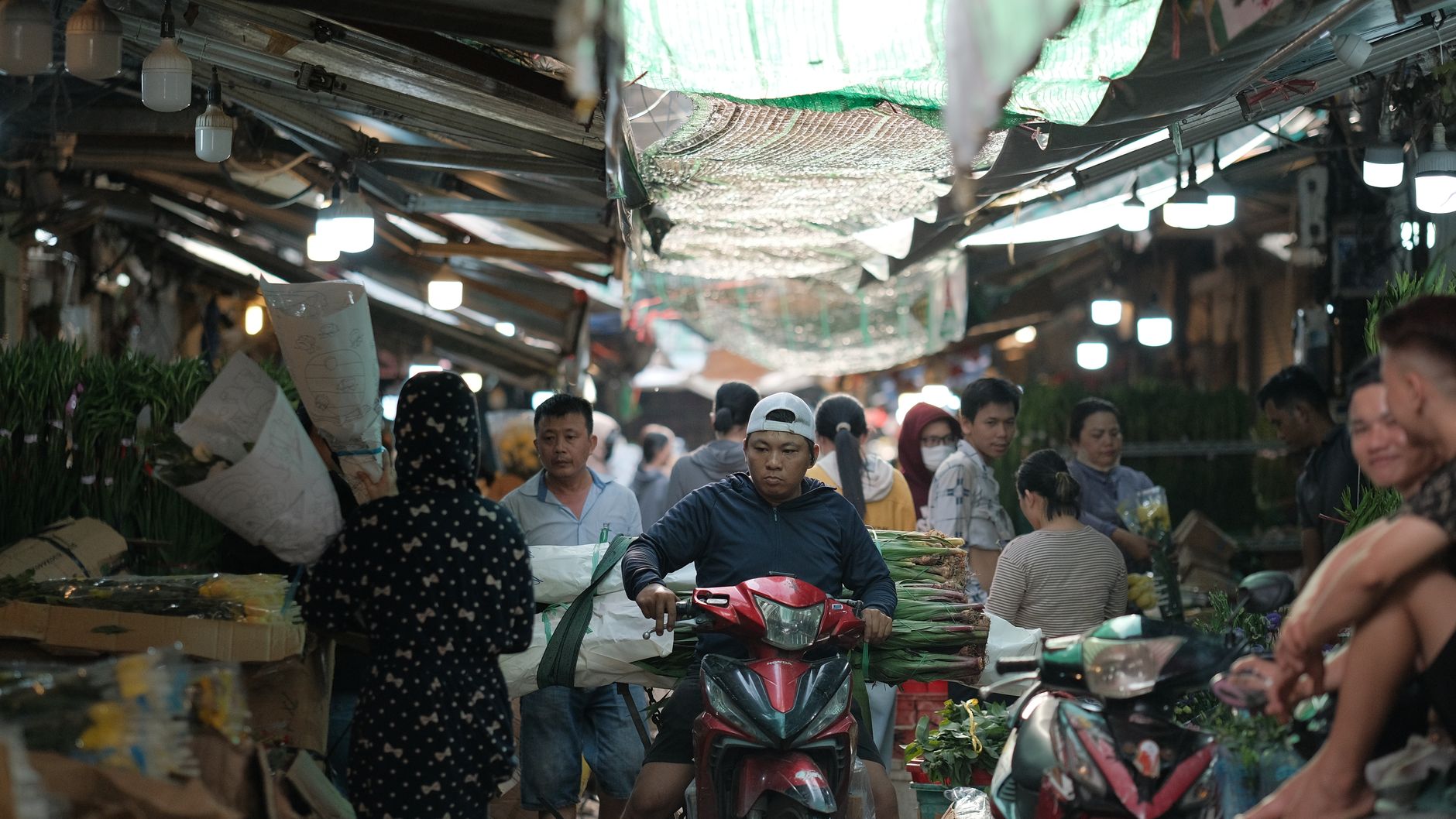
Quang Ba operates on a wholesale rhythm: growers deliver overnight, vendors arrange stock by 5 a.m., and retailers buy stock for their shops by 8 a.m. After 10 a.m., selection shrinks and prices plateau. You'll see tiered flower beds under yellow lights, vendors in aprons sorting stems by length and color, traders on motorcycles loading boxes, and the smell of roses and wet soil filling narrow alleys. The market is controlled chaos—vendors know repeat buyers and reserve premium bunches. Most tourists miss this energy because they sleep in; joining our Vietnamese flower culture & market tour means you experience the real rhythm, not the picked-over afternoon dregs.
By visiting early, you see growers' direct stock and learn how freshness is gauged on the spot.

What flowers should you buy at Quang Ba in 2026, and when?
| Flower | Peak Months | Signs of Freshness | Wholesale Price Point | Retail Mark-up | Best for |
|---|---|---|---|---|---|
| Premium roses | Year-round (best Jan–Feb) | Tight petals, firm thorns, no browning | Lowest (bulk sales) | 2–3× | Hand-tied bouquets, wedding prep |
| Chrysanthemums | Sep–Nov, Feb–Apr | Crisp leaves, petals not shattered | 30–50% of rose | 2× | Group arrangements, gifts |
| Orchids | Nov–Feb (imported) | Waxy texture, upright flowers | 50% higher than roses | 3–4× | Premium boxes, special orders |
| Carnations | Mar–Nov | No wilting edges, fully opened | Cheapest (filler role) | 2–3× | Volume arrangements, practice |
| Sunflowers (local) | Jun–Aug | Heavy head, green stem, pollen intact | 40–60% of roses | 1.5–2× | Summer workshops, casual designs |
| Tet specialties (apricot, kumquat) | Dec–Jan | Tight blooms, branches unwilted | 20–30% premium | 2.5–3× | Seasonal workshops only |
We guide you to seasonal picks so you buy what's abundant—cheaper, fresher, lasts longer. Off-season imported flowers cost 3–4× more and often arrive tired from air freight. Our seasonal workshops teach you what peaks when and how to design accordingly.
Buying in-season means quality trumps your budget.
How do you negotiate prices at Quang Ba without looking like a tourist?
Vendors expect haggling—it's the market's language. Start by asking the per-stem or per-dozen price in Vietnamese (we teach a few phrases). Never open with "How much?" Say "Bao nhiêu cho một chục?" (How much per ten?). Vendors quote retail; a 30% counter-offer is normal for large bunches. If a vendor refuses, walk—three stalls over, the same rose bunch costs 20% less. The real trick: buy offcuts or broken stems (still usable for workshops); vendors call these "broken pieces" and sell them for 50% discount. We negotiate on your behalf during tours, and you learn the rhythm. Avoid peak hours (5–6 a.m.) if you're new; 6:30–7 a.m. is calmer, still early, still full stock.
Haggling signals respect for the trade; vendors honor repeat buyers.
What happens after you buy flowers at Quang Ba?
Flowers wilt fast in Hanoi's heat (32°C+, 80% humidity April–September). Conditioning is non-negotiable. We teach you at the market: cut stems at a 45° angle with a sharp knife, strip leaves below the waterline (bacteria cause rot), and plunge into cool water immediately—never leave flowers in a plastic bag in the sun. Back at our workshop, we show you how to arrange your haul into a hand-tied bouquet or flower box using the spiral technique: rotate the bouquet as you add each stem at a consistent angle, creating a dome shape that lasts 5–7 days in a cool room. Beginners struggle with stem length consistency (all outer stems should reach the same height) and water absorption (soft stems rot if kept too wet). We provide pruning shears, floral foam, wrapping, and ribbon so your creation is gift-ready. If it's raining (June–August), we work indoors with a projector showing real market footage so you still learn the buy, even if today's harvest came from our cooler.
Conditioning and spiral technique transform market flowers into heirloom-quality arrangements.
️ See how a class runs
Who is a Quang Ba market tour best for, and what should you check before booking?
| Visitor Type | What They Want | How We Adapt | Duration | Ideal Session |
|---|---|---|---|---|
| Solo traveler/couple | Authentic culture + DIY bouquet | 1-on-1 pacing, full technique teaching, no waiting | 3 hours | Private & couple sessions |
| Small group (3–8) | Shared energy, camaraderie, photos | Group negotiation at stalls, workshop social setup, shared cost | 3–4 hours | Flower arranging class |
| Families with kids (6+) | Market buzz, hands-on learning, keep-it | Shorter stall time, prep simple stems beforehand, kids design in pairs | 2.5 hours | Kids & family workshop |
| Hen/birthday party (8–20) | Memorable outing + gift to take home | Early start (6 a.m.), stall storytelling, personalized ribbon/tags, photo ops | 4 hours | Hen & birthday parties |
| Corporate team (10–40) | Bonding, creative break, soft skills (observation, negotiation) | Divided into small squads, stall challenges (find the best rose under $X), group arrangement finale | 4–5 hours | Team building workshop |
Before you book, check: Do you prefer dawn or are you not a morning person? (Dawn access is the whole point; late tours miss the market vibe.) How many people? (We cap groups at 20 per guide so everyone sees the stalls and has workshop space.) Rain or heat sensitivity? (We tour year-round; summer is hot and crowded, winter is cool and still busy. Rainy days shift to indoor market footage + real flowers from our cooler.) Language? (All tours are English-led with local interpreter; Hanoi-based travelers fluent in Vietnamese can join cheaper local group tours elsewhere.) Budget for flowers? (Budget separately from class cost; ask us for a quote on WhatsApp so you know combined spend.)
A Quang Ba tour suits anyone wanting to see how Hanoi's flowers move, not just a photo stop.

What do most first-time Quang Ba buyers get wrong?
Waiting until flowers are "cheaper" later in the day. Prices drop by noon, but so does freshness. A cheap rose at 10 a.m. dies in 4 days; a full-price rose at 6 a.m. lasts a week. Work backward: if you want flowers for Saturday evening, buy Thursday dawn.
Overloading on imported orchids. Orchids are gorgeous but expensive and finicky in heat. Pairs of imported orchids cost what a dozen local chrysanthemums cost and bloom slower. We teach you to mix: one stem of orchid in a bunch of cheaper carnations looks premium, lasts longer, costs half.
Skipping the "broken pieces" vendors. Vendors have buckets of misshapen roses, split carnations, partial bunches. These cost 50–70% less and are perfect for learning arrangements or filling large centerpieces. Most tourists don't know to ask.
Not conditioning immediately. Flowers left in a bag in the sun (or in a taxi with AC off) drop petals fast. We show you the 45° cut and water-plunge at the market stall so you condition as you buy, not later.
Arranging in foam without a waterline. Floral foam dries out in Hanoi's heat in 24 hours. A hand-tied bouquet in a vase (water-fed, no foam) lasts 7–10 days. We teach both; foam arrangements need daily spray in summer.
The difference between a wilted arrangement and a lasting one is knowing these rules before you walk into Quang Ba.
Ask for workshop dates on WhatsApp
What should you check before you buy flowers at Quang Ba?
- Stem firmness: Bend gently; no cracking or mushy spots near the base.
- Petal condition: No brown edges, no bruising from stacking, no scent of rot (musty smell = bacteria).
- Leaf health: Green and crisp, not yellowed or wilting at the tip.
- Water status: Stems should be in water at the stall; dry stems bought in sealed bags wilt faster.
- Quantity accuracy: Count stems; vendors sometimes short-count by 1–2 to pad profit.
- Color consistency: All roses in a bunch should be the same shade (unless ombré is intentional).
- Flower stage: If you want buds to open over 3 days, buy tight flowers. If you want instant color, buy half-open.
- Vendor reputation: Ask locals or other buyers; repeat vendors often have fresher stock.
Our guides show you these checks at each stall so you practice and buy with confidence.
Can you learn flower arranging outside a workshop at Quang Ba?
You can buy flowers cheaply at Quang Ba, but learning to arrange them takes teaching. Watching YouTube is passive; asking vendors is useful but rushed. We combine both: you see the market in action, buy real flowers at wholesale prices, then spend 1.5–2 hours indoors learning spiral technique, color balance, and conditioning so your bouquet lasts. You leave with a finished arrangement and the skills to repeat it at home. This hybrid approach—market + workshop—costs more than either alone but teaches faster because you use real-world flowers and real vendor interactions. If you want pure shopping, go to Quang Ba solo. If you want to understand Hanoi's flower culture and build a skill, join our flower arranging class or tourist workshop.
The market is the classroom; we just unlock what it teaches.
How does a rainy-season Quang Ba tour work?
June–August brings heavy rain (60–80% humidity, 35°C heat). Vendors still stock early (rain doesn't stop them), but pedestrian crowds thin out and mud pools form. On rainy days, we offer two paths: (1) Indoor market footage + cooler flowers: We show you real Quang Ba footage on a projector at our workshop while teaching stall etiquette, vendor psychology, and seasonal peaks. Then we arrange flowers from our cooler (bought earlier that week from Quang Ba) so you practice technique without heat stress. (2) Early market + quick exit: We tour Quang Ba 5–6 a.m. (rain is lighter then), you buy in 45 minutes, then return indoors for a 2-hour workshop in AC. Most travelers prefer option 2 because they get the real market smell, even wet. Either way, you leave with a finished bouquet. Ask us for a quote on WhatsApp if rain-date flexibility matters to you.
Rain doesn't stop Hanoi's flowers; it just changes logistics.
Can you do a Quang Ba market tour if you don't want to arrange flowers afterward?
Yes. We offer market-only tours for pure explorers: 2 hours at Quang Ba with translation, vendor introductions, and cultural commentary, no workshop follow-up. You're free to buy or just observe. This suits photographers, writers, or anyone short on time. However, most travelers book the combined tour because buying flowers without knowing how to arrange them—or how to keep them alive—feels incomplete. Our Vietnamese flower culture & market tour page has options for both; if you want market only, we can arrange it. Ask us for a quote on WhatsApp.
Market-only tours cost less but skip the hands-on skill that makes the visit stick in memory.
FAQ
What is the best time of day to visit Quang Ba Flower Market?
5:30–7:30 a.m. is peak energy: full stock, vendors present, negotiation active. After 10 a.m., selection thins and prices plateau. We tour this window so you see the real market, not the picked-over afternoon version.
Do I need to speak Vietnamese to negotiate at Quang Ba?
No. Our guides negotiate on your behalf and teach a few key phrases so you feel included. Vendors respect foreigners who attempt Vietnamese and haggle respectfully—it's the market's language.
Can I buy flowers at Quang Ba and arrange them myself at home without a workshop?
You can, but conditioning and technique matter for longevity. Beginners often skip the 45° angle cut or leave leaves on underwater stems, causing rot within 3 days. Our workshop teaches these skills so your flowers last 7–10 days, not 3–4.
How much do flowers cost at Quang Ba versus a florist shop?
Quang Ba wholesale prices are 40–60% lower than retail florist prices. A dozen premium roses costa quoted pricewholesale (per our market observations) versusa quoted priceat a florist. You pay for our workshop time separately; ask for a quote on WhatsApp.
What if it rains on my tour date?
We adapt: either tour the market early (rain is lighter at 5–6 a.m.) and return to our air-conditioned workshop, or do an indoor session with real market footage and pre-cooled flowers. You still leave with a finished bouquet. This flexibility is included when you book.
Can families with young children (under 6) join a Quang Ba tour?
The market is crowded, slippery when wet, and overstimulating for very young kids. We welcome ages 6+ on adapted 2-hour tours with shorter stall time and simpler arranging indoors. Ask us for a quote on WhatsApp if you're planning with toddlers.
How long do bouquets last after I buy and arrange them at Quang Ba?
Hand-tied bouquets in a vase with fresh water last 7–10 days in a cool room. Floral foam arrangements last 4–6 days in Hanoi's heat unless you mist them daily. Our conditioning and spiral technique lessons maximize longevity; beginner mistakes (wrong cuts, wilted stems) cut that in half.
Can I book a private Quang Ba tour for just two people?
Yes. We offer private and couples sessions starting early at Quang Ba with one-on-one pacing, full technique teaching, and a workshop designed for two. Ask for a quote on WhatsApp. ===
Ask for dates
Tell us the city, the date and how many people. We reply on WhatsApp in English with workshop options and a quote.
FAQ
What is the best time of day to visit Quang Ba Flower Market?
5:30–7:30 a.m. is peak energy: full stock, vendors present, negotiation active. After 10 a.m., selection thins and prices plateau. We tour this window so you see the real market, not the picked-over afternoon version.
Do I need to speak Vietnamese to negotiate at Quang Ba?
No. Our guides negotiate on your behalf and teach a few key phrases so you feel included. Vendors respect foreigners who attempt Vietnamese and haggle respectfully—it's the market's language.
Can I buy flowers at Quang Ba and arrange them myself at home without a workshop?
You can, but conditioning and technique matter for longevity. Beginners often skip the 45° angle cut or leave leaves on underwater stems, causing rot within 3 days. Our workshop teaches these skills so your flowers last 7–10 days, not 3–4.
How much do flowers cost at Quang Ba versus a florist shop?
Quang Ba wholesale prices are 40–60% lower than retail florist prices. A dozen premium roses cost $3–5 wholesale (per our market observations) versus $15–25 at a florist. You pay for our workshop time separately; ask for a quote on WhatsApp.
What if it rains on my tour date?
We adapt: either tour the market early (rain is lighter at 5–6 a.m.) and return to our air-conditioned workshop, or do an indoor session with real market footage and pre-cooled flowers. You still leave with a finished bouquet. This flexibility is included when you book.
Can families with young children (under 6) join a Quang Ba tour?
The market is crowded, slippery when wet, and overstimulating for very young kids. We welcome ages 6+ on adapted 2-hour tours with shorter stall time and simpler arranging indoors. Ask us for a quote on WhatsApp if you're planning with toddlers.
How long do bouquets last after I buy and arrange them at Quang Ba?
Hand-tied bouquets in a vase with fresh water last 7–10 days in a cool room. Floral foam arrangements last 4–6 days in Hanoi's heat unless you mist them daily. Our conditioning and spiral technique lessons maximize longevity; beginner mistakes (wrong cuts, wilted stems) cut that in half.
Can I book a private Quang Ba tour for just two people?
Yes. We offer [private and couples sessions](/private-and-couples) starting early at Quang Ba with one-on-one pacing, full technique teaching, and a workshop designed for two. Ask for a quote on WhatsApp. ===
More like this
Vietnamese flower culture
Cultural Workshops Saigon: Flower Classes & Team Building
Saigon's cultural workshop scene includes flower arranging, hand-tied bouquets, and team-building sessions taught in English by real florists. We run sessions for tourists, expats, families, and corporate groups year-round, adapting to the tropical heat and rainy season.
Vietnamese flower culture
Vietnamese Flower Culture Near Saigon: Learn & Celebrate Locally
Vietnamese flower culture near Saigon is alive in daily altars, Tet celebrations, and family gatherings—and you can learn it directly through workshop experiences that connect you to local growers, techniques, and meanings.
Vietnamese flower culture
Vietnamese Flower Culture Near Ho Chi Minh City: Learn & Shop
Vietnamese flower culture thrives in Ho Chi Minh City through centuries-old markets, seasonal rituals, and now accessible workshops where travelers learn to arrange lotus, chrysanthemums, and tropical blooms like locals do.