
Home › Blog › Vietnamese flower culture
Quang Ba Flower Market Tour Near Ho Chi Minh City
By the Vietnam Flower Workshop team · 2026-11-06
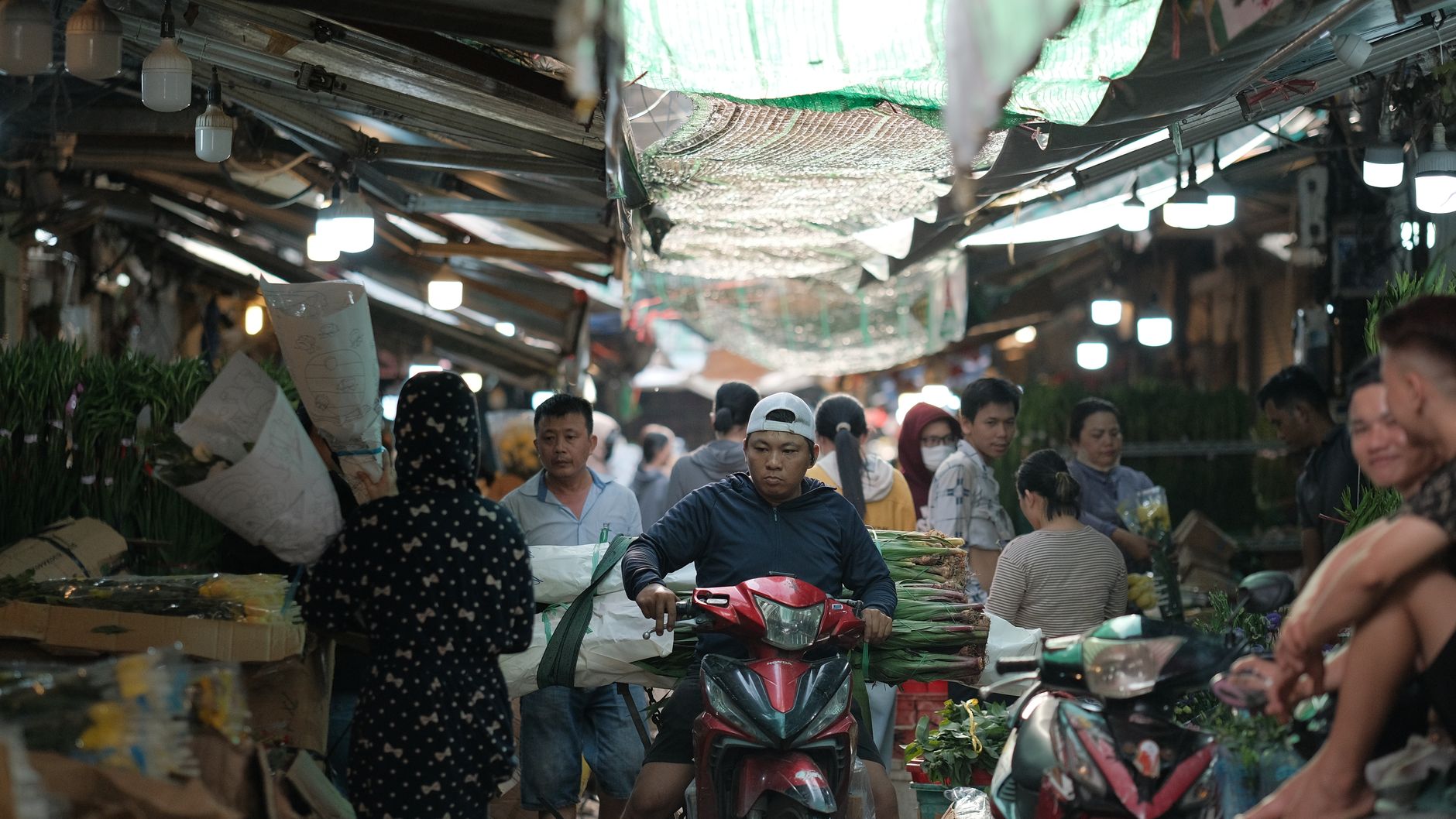
Quang Ba Flower Market is Hanoi's iconic pre-dawn wholesale flower bazaar, roughly 5 hours north of Ho Chi Minh City by car or flight. For travelers based in HCMC, we recommend visiting local flower markets (like Tan Dinh or Hoc Mon) instead—they open 5–7 a.m., sell fresh imported and seasonal Vietnamese blooms at wholesale prices, and run 2–3 hours. Most visitors buy loose stems, bunches, or pre-wrapped bundles to take home or to hotels. Vietnam Flower Workshop by Hoa Lang Thang offers guided market tours paired with hands-on arranging classes in both Hanoi and Ho Chi Minh City, so you learn conditioning, color balance, and hand-tie techniques immediately after selecting your own flowers. Tours include transportation, market guide, stems, and a 2–3 hour class; ask us for a quote on WhatsApp. Ask for workshop dates on WhatsApp | ️ See how a class runs
Should You Travel to Quang Ba or Visit a Local HCMC Market Instead?
Quang Ba in Hanoi is a once-in-a-lifetime flower experience for serious enthusiasts, but most travelers near Ho Chi Minh City choose local markets for convenience, cost, and time. Quang Ba operates 4–7 a.m. only, requires early wake-up, and sells wholesale (50–200 stem bunches per variety). HCMC markets like Tan Dinh operate 5–7 a.m., sell individual stems or small bunches, and are 15–30 minutes from central hotels. Choose Quang Ba if you're based in Hanoi or want to see Vietnam's largest flower volume; choose HCMC local markets if you're short on time, want hands-on learning same-day, or prefer smaller quantities. Both offer authentic wholesale pricing and fresh imports.

What Flowers Are Actually Available in These Markets?
HCMC markets stock imported roses, carnations, chrysanthemums, lilies, and orchids year-round, plus seasonal local varieties: lotus (July–October), sunflowers (September–November), and marigolds (around Tet, January–February). Quang Ba carries identical imports but in 10× higher volume and more niche varieties (dahlias, proteas, eryngium). Freshness is highest 5–5:30 a.m. at both—stems are cut overnight, shipped same-day. By 6:30 a.m., the best blooms sell out. Most beginners expect pre-arranged bouquets; actually, wholesale markets sell loose bunches (25–50 stems per rubber band) at 30–60% less than retail. You choose, combine, and arrange yourself at our floral design course—that's the real value.
How Do You Know Which Blooms Will Survive Your Hotel Room?
| Bloom Type | Who It's For | Hotel Life | Market Price Basis |
|---|---|---|---|
| Roses (red, pink, white) | First-timers, romantic gestures | 7–10 days if re-cut daily | Wholesale: loose stems, 25 per bunch |
| Orchids (potted or cut) | Heat lovers, low-maintenance | 14–21 days indoors, AC preferred | Depends on variety; potted = longer |
| Carnations (mixed colors) | Budget-conscious, group gifts | 10–12 days, heat-tolerant | Bulk sales; 50 stems per bunch standard |
| Sunflowers (local seasonal) | Bold, cheerful, September–November | 5–7 days, needs tall vase | Seasonal wholesale, lower cost than imports |
| Lotus (July–October only) | Adventurous, cultural interest | 1–2 days fresh; usually for decoration | Local grower prices; rare in markets after 8 a.m. |
Why this matters: HCMC heat (30–35°C year-round) wilts tender blooms fast. Roses and carnations last 1–2 weeks with daily re-cutting, conditioning, and cool nights. Orchids and lotus survive heat better but need specific vase depth and water change rhythm. At our flower box & basket class, we teach you how to condition stems and extend bloom life in tropical climates—skill you can't learn at the market alone.
How Do You Condition Stems So Flowers Last Longer in Heat?
Cut the bottom 1 inch of each stem at a 45-degree angle under running water (seals the vascular tissue and stops air bubbles). Remove all leaves below the waterline (foliage rots and breeds bacteria, shortening life by days). Use a clean vase, change water every 2 days, and re-cut stems weekly. In HCMC heat, add a few ice cubes to the water at night to cool stems. Keep the vase away from direct sun, air-conditioning vents, and ripening fruit (ethylene gas wilts blooms). Most market shoppers skip the 45-degree angle and remove zero leaves—flowers die in 3–4 days instead of 10. We show you this hands-on during our bouquet-workshop: your own stems, your hands, same-day take-home.
️ See how a class runs
What Should You Check Before Buying at the Market?
Petal tightness: Open roses and carnations are hours from wilting. Tight, closed petals mean 7–10 more days of life. Squeeze gently; petals should feel firm, not soft or bruised.
Stem firmness: Bend a stem gently. It should snap or resist; mushy stems indicate bacteria or age. Avoid any that feel slimy.
Color consistency: Fading or brown edges on outer petals mean oxidation stress. Fresh blooms are uniformly colored edge-to-center.
Water quality in buckets: Cloudy, smelly water means bacterial load is high—all stems in that bucket have shorter life. Ask the vendor for blooms from a clear-water bucket.
Leaf condition: Brown or yellowed leaves mean stress or age. Green, crisp leaves = recent harvest.
Volume realism: A single bunch (25–50 stems) looks smaller than you think in a vase. Most travelers need 2–4 bunches to fill a hotel room arrangement. Beginners buy 1 bunch and feel disappointed.
Should You Join a Market Tour + Workshop or Just Buy DIY?
Market tour only: You buy stems, handle them, see wholesale pricing, leave with loose bunches. Cost is lower; skill is not taught. Flowers arrive at your hotel. Without conditioning and arrangement technique, they wilt in 4–5 days, especially in heat.
Market tour + same-day workshop (our model): You select stems, return to our studio in HCMC, and spend 2–3 hours learning spiral hand-tie, color balance, wrapping, and conditioning. You take home a finished bouquet or arrangement you made yourself. Flowers last 10–14 days because you understand care. Cost is higher; memory and skill last years.
DIY without a tour: You buy from a retail florist in your neighborhood, no market visit, no learning. Most convenient; least authentic.
We recommend the tour + workshop for travelers who want a true Hanoi or HCMC experience tied to a creative skill. It's the only way to understand why Vietnamese flowers are prized, how wholesale pricing works, and why your arrangement lasts—or doesn't. Check out our tourist-workshop for travelers on 1–2 week visits.
How Do You Actually Arrange What You Buy at the Market?
Start with a clean vase, floral foam (if needed), or just water. Strip all lower leaves. Group stems by type: tall roses/lilies go in first (frame), medium carnations/chrysanthemums in the middle (body), short filler flowers on the outside (softness). Avoid straight, stiff lines—twist stems gently as you place them, angling outward slightly. This is called a "spiral hand-tie" when stems cross in your hand before the vase. Leave the most beautiful bloom face-front at eye level. Step back; rotate the vase; check for gaps. Fill gaps with filler (baby's breath, waxflower, greenery). Re-cut all stems once more before placing in water. Vase water should reach below the lowest leaves only. Change water every 2 days.
Most beginners make three mistakes: (1) stems too tall relative to vase height (looks unstable and wilts faster—stems should be 1.5× vase height); (2) stems bunched in the center, not fanned (tight arrangements block water uptake); (3) using the same vase for days without cleaning (bacterial buildup). Our flower-arranging-class walks you through each of these live, with your hands on real stems, so you don't repeat them at home.
Ask for workshop dates on WhatsApp
Why Buy from a Market Instead of a Retail Florist?
Retail florists near hotels charge 100–150% markups on the same stems you buy wholesale at the market. A bunch of 25 roses costs 5–our current quote at the market, 12–our current quote at retail. However, retail florists save you time, delivery, and often provide vases. For travelers with 1–2 hours free, retail is worth the premium. For travelers with curiosity and a 4-hour block, a market tour + workshop is unforgettable and better value.
Markets also sell flowers 24 hours before retail: blooms are fresher and last longer. But markets require early wake-up, cash (USD or Vietnamese dong), and willingness to buy in bulk. Not all travelers want that trade.
What If It Rains or Heat Spikes During a Market Visit?
Heavy rain (May–September, monsoon season) can close markets temporarily. We reschedule tours the same day or the next morning. Rain also delays flower shipments—availability drops, prices rise, blooms are stressed. We adapt by sourcing from backup growers or offering a studio workshop instead, focusing on seasonal workshops like Tet wreaths or Christmas designs.
Heat spikes (March–May, 35–38°C) wilt fresh blooms fast even at the market. We buy stems earlier (3–4:30 a.m.), use coolers, and rush to the workshop to condition immediately. We avoid group tours on extreme heat days and offer private-and-couples sessions instead, at your hotel or our air-conditioned studio.
We never invent flower availability or pretend heat doesn't matter—Vietnam's climate is a real partner in this work. Guides and instructors communicate weather adjustments via WhatsApp 24 hours before.
What About Family or Group Market Tours?
Families with kids (ages 8+) love the sensory chaos: colors, smells, vendors calling out prices, flowers being loaded into carts. We recommend kids-and-family sessions tied to a market visit—kids learn plant parts, color names, and simple arranging in a 60–90 minute class. They handle real flowers and take a small arrangement home.
Groups (8–15 people) can tour local HCMC markets together; Quang Ba in Hanoi is harder to coordinate. We arrange private group tours with a guide, market access (vendor connections), and a 2–3 hour studio workshop afterward. This works well for hen-and-birthday parties or team-building events—shared experience, practical skill, photo moments, and take-home gifts. Most groups buy additional stems during the tour and have us create centerpieces for evening events.
Where Exactly Are These Markets, and How Do You Get There?
Quang Ba (Hanoi): Located in the old quarter near the Red River, roughly 2 km from Hoan Kiem Lake. Taxi or Grab ride is 5–10 minutes from central hotels. The market occupies multiple alleys; early arrivals (5 a.m.) are crucial for space and stem selection. Best days: Monday–Friday; weekends are crowded with tourists and locals.
Tan Dinh Market (HCMC): District 1, 2 km south of the city center, near the airport link road. Grab or taxi: 10–15 minutes from most hotels. Smaller than Quang Ba but fresher for HCMC travelers.
Hoc Mon Market (HCMC): District 12, on the outskirts, a 30-minute drive. Quieter, lower prices, local favorites. Less polished for tourists but more authentic.
We provide pick-up and drop-off from central hotels for workshop participants; ask us for a quote on WhatsApp.
How Do Hoa Lang Thang Workshops Fit Into a Market Tour?
We offer half-day and full-day options. Half-day: arrive at 5 a.m., walk the market with a guide (90 minutes), return to our studio, arrange for 2 hours, leave by 9 a.m. Full-day: market visit, breakfast break, studio arrangement class, light lunch, optional design course extension. All sessions are in English for travelers and expats. You buy your own stems or we pre-source them based on your color preference. You use real imported and local flowers, floral foam, vases, greenery, and wrapping. Everything you create, you take home same-day—no shipping, no "sample only."
For deeper dives into floral design, we offer a floral-design-course (4–6 sessions over 2 weeks), where market tours are one module among seasonal design, color theory, and client-facing skills.
Visit our full vietnamese-flower-culture guide for context on Vietnam's flower traditions and how markets fit into the bigger cultural picture.
What Should You Bring to a Market Visit?
- Cash: Markets prefer Vietnamese dong (VND); some accept USD. Most don't take cards.
- Comfortable shoes: Wet floors, crowds, 2–3 hours of standing.
- Small backpack or bag: Loose stems are bulky; a reinforced bag helps.
- Pruning shears or scissors: Your own cuts are cleaner than vendor knives; vendors appreciate it.
- Phone charger: Early wake-up + long morning = battery drain.
- Hat or umbrella: Sun exposure, early heat.
- Cloth or plastic sheeting: To protect clothes from water and pollen.
If you're joining our workshop day, you don't need shears (we provide them), vases (we have dozens), or foam (included). Just bring yourself, curiosity, and a willingness to get your hands wet.

FAQ
Is Quang Ba Flower Market worth the trip from Ho Chi Minh City?
If you're in Hanoi, absolutely—it's the largest flower market in Vietnam and iconic. From HCMC, it's a 5-hour journey. Local HCMC markets (Tan Dinh, Hoc Mon) offer similar freshness, lower prices, and no travel. Choose based on your location and time.
What's the best time to visit a flower market in Vietnam?
5–5:30 a.m., before retail buyers arrive and blooms are picked over. Markets wind down by 8 a.m. Rain and extreme heat (35°C+) reduce availability. December–February (cooler, Tet season) offers abundant seasonal flowers and best stem quality.
How much should I expect to spend on flowers at the market?
A single bunch (25–50 stems) of roses or carnations costs 5–10 USD. Orchids, lilies, and imported specialty blooms cost 8–15 USD per bunch. Most travelers buy 2–4 bunches and spend 20–50 USD total. Ask us for a quote on our workshop packages, which include guide, market access, conditioning, and 2–3 hour arrangement class.
Can I bring market flowers to my hotel or Airbnb right away?
Yes, but condition them first. Remove lower leaves, cut stems at 45 degrees, place in clean water with flower food if available. Without conditioning, blooms wilt in 3–4 days in HCMC heat. Our workshop teaches you this step-by-step so you don't lose your investment.
What if I buy flowers and have no vase at my accommodation?
Plastic or glass bottles, jars, even coffee cups work in a pinch. We recommend carrying a collapsible vase (available at some hotels or markets) or asking your hotel concierge for a vase loan. Our flower-box-and-basket class teaches you how to arrange without a vase using floral foam and vessels you already have.
Do I need arranging skills to enjoy the market?
No—you can buy stems and enjoy them loose in a simple container. But arranging skills triple the lifespan and visual impact of your flowers. That's why we pair market tours with a 2–3 hour hands-on class. You learn conditioning, color balance, and hand-tie technique in real-time, with your own stems.
Is it safe to walk around the flower market alone as a tourist?
Yes. Markets are busy, well-lit, and vendor-friendly. Petty theft is rare. Crowds can feel overwhelming early on—go with confidence, smile, ask vendors questions. We offer guided tours so you're never alone and learn vendor etiquette and flower lingo.
Can I order flowers from the market in advance?
Not directly, but we can pre-source from market vendors for workshop groups or private sessions. Contact us on WhatsApp to request specific colors or bloom types for your tour date.
What's the difference between wholesale and retail flower pricing in Vietnam?
Wholesale (market): 5–15 USD per 25–50 stem bunch. Retail (florist shop): 15–40 USD for a small pre-arranged bouquet. Markup is 100–150%. Markets are cheaper but require bulk purchase, early wake-up, and arranging skill. Most travelers find the market experience worth the effort.
Do flower markets operate year-round, or are there seasonal closures?
Markets operate year-round in Vietnam. Seasonal availability shifts: imported blooms (roses, carnations) are stable; local lotus peaks July–October; Tet flowers (marigolds, peonies) spike January–February; monsoon rains (May–September) reduce stock and raise prices temporarily. Ask us about seasonal-workshops for holiday-specific designs.
Ask for dates
Tell us the city, the date and how many people. We reply on WhatsApp in English with workshop options and a quote.
FAQ
Is Quang Ba Flower Market worth the trip from Ho Chi Minh City?
If you're in Hanoi, absolutely—it's the largest flower market in Vietnam and iconic. From HCMC, it's a 5-hour journey. Local HCMC markets (Tan Dinh, Hoc Mon) offer similar freshness, lower prices, and no travel. Choose based on your location and time.
What's the best time to visit a flower market in Vietnam?
5–5:30 a.m., before retail buyers arrive and blooms are picked over. Markets wind down by 8 a.m. Rain and extreme heat (35°C+) reduce availability. December–February (cooler, Tet season) offers abundant seasonal flowers and best stem quality.
How much should I expect to spend on flowers at the market?
A single bunch (25–50 stems) of roses or carnations costs 5–10 USD. Orchids, lilies, and imported specialty blooms cost 8–15 USD per bunch. Most travelers buy 2–4 bunches and spend 20–50 USD total. Ask us for a quote on our workshop packages, which include guide, market access, conditioning, and 2–3 hour arrangement class.
Can I bring market flowers to my hotel or Airbnb right away?
Yes, but condition them first. Remove lower leaves, cut stems at 45 degrees, place in clean water with flower food if available. Without conditioning, blooms wilt in 3–4 days in HCMC heat. Our workshop teaches you this step-by-step so you don't lose your investment.
What if I buy flowers and have no vase at my accommodation?
Plastic or glass bottles, jars, even coffee cups work in a pinch. We recommend carrying a collapsible vase (available at some hotels or markets) or asking your hotel concierge for a vase loan. Our [flower-box-and-basket](/flower-box-and-basket) class teaches you how to arrange without a vase using floral foam and vessels you already have.
Do I need arranging skills to enjoy the market?
No—you can buy stems and enjoy them loose in a simple container. But arranging skills triple the lifespan and visual impact of your flowers. That's why we pair market tours with a 2–3 hour hands-on class. You learn conditioning, color balance, and hand-tie technique in real-time, with your own stems.
Is it safe to walk around the flower market alone as a tourist?
Yes. Markets are busy, well-lit, and vendor-friendly. Petty theft is rare. Crowds can feel overwhelming early on—go with confidence, smile, ask vendors questions. We offer guided tours so you're never alone and learn vendor etiquette and flower lingo.
Can I order flowers from the market in advance?
Not directly, but we can pre-source from market vendors for workshop groups or private sessions. Contact us on WhatsApp to request specific colors or bloom types for your tour date.
What's the difference between wholesale and retail flower pricing in Vietnam?
Wholesale (market): 5–15 USD per 25–50 stem bunch. Retail (florist shop): 15–40 USD for a small pre-arranged bouquet. Markup is 100–150%. Markets are cheaper but require bulk purchase, early wake-up, and arranging skill. Most travelers find the market experience worth the effort.
Do flower markets operate year-round, or are there seasonal closures?
Markets operate year-round in Vietnam. Seasonal availability shifts: imported blooms (roses, carnations) are stable; local lotus peaks July–October; Tet flowers (marigolds, peonies) spike January–February; monsoon rains (May–September) reduce stock and raise prices temporarily. Ask us about [seasonal-workshops](/seasonal) for holiday-specific designs.
More like this
Vietnamese flower culture
Vietnamese Flower Culture: What to Expect at a Hanoi Workshop
Vietnamese flower culture weaves ancient ritual, seasonal respect, and everyday beauty into a living practice that shapes how people celebrate, mourn, and connect. A workshop in Hanoi or Ho Chi Minh City reveals this firsthand—not as theory, but as skill you can use at home.
Vietnamese flower culture
Vietnamese Flower Culture for Beginners: What to Know
Vietnamese flower culture blends Buddhist symbolism, Lunar New Year tradition, and French colonial influence into a distinct aesthetic that beginners can learn through hands-on practice and market immersion.
Vietnamese flower culture
Vietnamese Flower Culture: Workshops & Traditions in Hanoi & HCMC
Vietnamese flower culture weaves centuries of symbolism—lotus for purity, chrysanthemums for longevity—into celebrations and daily life. We teach this living heritage through arranging workshops where travelers and expats craft authentic pieces using imported and local blooms.