
Home › Blog › Vietnamese flower culture
Quang Ba Flower Market Tour in Hoan Kiem: What to Buy and How
By the Vietnam Flower Workshop team · 2026-11-06
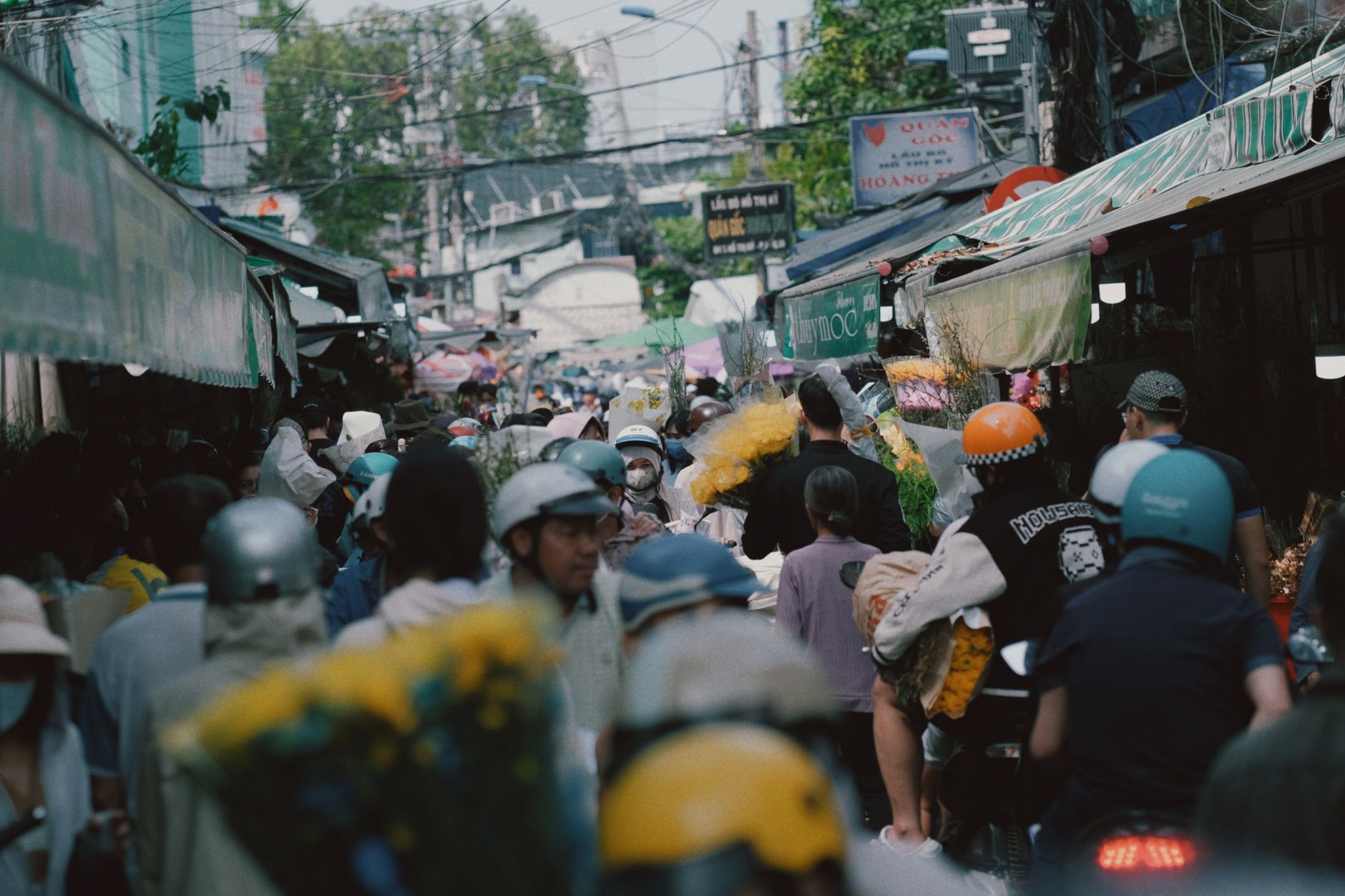
Quang Ba Flower Market sits on the Red River in Hoan Kiem district, opening around 3 a.m. for wholesale buyers and opening to casual visitors by 6–7 a.m. A typical visit lasts 2–3 hours; expect narrow aisles, cool spray, and hundreds of stem bundles. Vietnam Flower Workshop by Hoa Lang Thang teaches visitors to read the market—checking stem firmness, leaf color, and bloom stage—then applies those skills in an arranging class the same morning or afternoon. Peak season (Tet, Christmas) brings imported roses, lilies, and chrysanthemums; summer features local orchids, sunflowers, and tropical picks. Prices drop sharply late morning as traders clear stock. Many first-time buyers overpay by choosing limp or over-bloomed stems, or carrying flowers in plastic without water. Combining a market tour with our hands-on workshops transforms shopping into craft—you leave with fresh flowers, confidence, and a finished arrangement. Ask us for a quote on WhatsApp for timing and group size. Ask for workshop dates on WhatsApp
Why do locals start shopping before sunrise?
Wholesale traders arrive 3–4 a.m. to secure the freshest arrivals—stems cut the previous afternoon in nearby provinces or imported overnight. By 6 a.m., retailers have selected their stock for the day. Once daylight heat rises, even cooled flowers begin to fade; stem water uptake slows after 8 a.m. Early buyers also negotiate better bulk prices and reserve rare varieties—imported garden roses, ranunculus, and specialty eucalyptus sell out by mid-morning. Casual visitors who arrive after 9 a.m. see mostly picked-over buckets and higher per-stem markups. If you prefer a slower pace, 7–8 a.m. balances fresh selection with fewer crowds.

How do you spot a stem that will last a week indoors?
Check three points: (1) Leaf firmness—pinch a lower leaf; it should snap or bend stiffly, never limp or discolored. (2) Stem feel—press gently with your thumb; firm stems resist; hollow or mushy stems indicate bacterial wilt or poor storage. (3) Bloom stage—for roses, outer petals should be pale or slightly blemished (natural guards); if the bloom is paper-thin or heavily bruised, it's near end-of-life. Local roses in summer are cheaper but often shipped in heat; imported Dutch roses cost 2–3× more but carry 10–14 days of vase life. Chrysanthemums and sunflowers are more forgiving; their woody stems resist bacterial damage longer. When in doubt, ask a vendor how long ago the stock arrived; honest traders will say "yesterday morning" or "three days ago"—never buy from evasive answers.
️ See how a class runs
What flowers are cheapest and cheeriest in summer versus monsoon?
| Season | Top Buys | Why It Works | Longevity | Typical Use |
|---|---|---|---|---|
| May–Sep (summer) | Sunflowers, local orchids, chrysanthemums | Local growers flood supply; tropical heat suits them | 8–12 days in water | Budget bouquets, team arrangements |
| Oct–Nov (cooling) | Roses, statice, pampas grass | Import volume rises; demand peaks for Tet prep | 10–14 days (imported) | Wedding trials, corporate gifts |
| Dec–Jan (winter/Tet) | Lilies, imported roses, dahlias | Northern hemisphere peak harvest; high demand | 12–16 days (cold chain) | Holiday pieces, Tet arrangements |
| Feb–Apr (spring) | Ranunculus, carnations, tulips | Residual Northern-hemisphere supply; local tulips rare | 7–10 days | Easter workshops, spring events |
Choose by vase life and heat tolerance. Summer bouquets wilt fast indoors without daily water changes and stem re-cuts; we teach this in our seasonal workshops, which time designs to what's fresh and affordable.
Can you really bring fresh market flowers home on a flight?
Yes—if you follow three steps. (1) Condition immediately: Ask a market vendor to wrap stems in wet paper, not plastic; plastic traps heat and bacteria. Trim 1 inch at a 45° angle with sharp scissors as soon as you return to your accommodation. (2) Hydrate in clean water: Fill a vase with room-temperature water and floral food (or sugar + bleach DIY: 1 tsp sugar, 1/4 tsp bleach per 1 liter). Stems absorb water fastest in the first 2 hours. (3) Ship or arrange within 6 hours: If flying the next day, keep flowers in a cool, dark spot (hotel fridge, if available). For international travel, flowers in a hand-tie bouquet last the flight if wrapped loosely in tissue and kept upright. Packed arrangements in foam often arrive crushed; loose stems travel better. We pack workshop bouquets in a way that survives transit—ask our team for our specific wrapping technique when you book.
️ See how a class runs

Which market flowers work best in a spiral hand-tie bouquet?
A hand-tie's success hinges on stem diameter and conditioning. Roses, lisianthus, and carnations (3–5 mm stems) rotate smoothly at a 45° angle without kinking; they hold the spiral structure for hours. Sunflowers and chrysanthemums (6–8 mm stems) rotate too rigidly—they slide instead of interlock, collapsing the spiral unless you've already removed lower leaves and cooled stems in water for 30 minutes. Tropical stems (orchids, anthurium) twist rather than spiral; use them as focal accents, not repeaters. At-home tip: After buying at Quang Ba, stand all stems in a tall vase of water for 30 minutes before arranging. Then hold three stems at a 60° angle and rotate the bunch counterclockwise; each new stem overlaps the last at the stem base, not the bloom. The spiral emerges when stems are turgid (fully hydrated). Dry or limp stems refuse to interlock. This technique—taught hands-on in our bouquet-making workshop—is where most beginners fail because they skip the conditioning step or attempt a spiral with mixed stem thicknesses.
Ask for workshop dates on WhatsApp
What do group tours and team-building groups do at Quang Ba before a workshop?
Many corporate and team groups start with a 1.5-hour market walk led by a florist guide—learning to read price tags, identify fresh stock, and negotiate small bundles. Teams then select 3–4 stems per person and return to a workshop space to arrange them into a shared centerpiece or individual take-home designs. The market tour grounds the workshop: you understand why your stem was chosen (its vase life, color intensity, the vendor's reputation). Schools and kids groups do shorter 45-minute tours focused on "how many colors can you name?" and "why do flowers need water?"—less technical, more sensory. Hen and birthday parties often combine a market photo stop (selfies among the color) with a 2-hour hands-on party workshop where guests design corsages or a group bouquet. The key difference: a market-only visit is visual; a market-plus-workshop visit is skills plus memory. Visitors without workshop follow-up often forget which vendors sold quality; those who arrange what they bought retain the knowledge for years.
What should you check before booking a market tour with a workshop?
- Group size and language: Confirm whether the tour guide speaks English fluently. Small groups (2–6 people) move faster and ask more questions; large groups (15+) risk fragmented attention at the market.
- Start time: Early tours (6–7 a.m.) see peak freshness and the best vendor choice; late tours (8–9 a.m.) are quieter but offer fewer premium stems.
- Conditioning supplies at the workshop: Ensure floral foam, scissors, water, and buckets are ready before you arrive. Cold water is critical; Hanoi tap water in summer can exceed 30°C and causes wilting within hours.
- What you take home: Confirm whether the workshop provides wrapping, a vase, or a box for transport. Heat and humidity in Hanoi mean a poorly wrapped bouquet may wilt within 4 hours on the street.
- Flower sourcing on rainy days: Quang Ba's indoor sections (marked with corrugated roofs) stay open during monsoon, but stem quality drops—water-logged leaves, bruised petals. Ask the organizer if the tour pivots to a private workshop session indoors on rain days, or postpones.
- Cancellation policy: Peak Tet season (late January) and Christmas see full-day bookings weeks ahead; confirm cancellation terms before paying.
️ See how a class runs
For deeper insight into Hanoi's flower culture and the role of markets in floral craft, read our guide on Vietnamese flower culture and heritage. To combine your market visit with a longer commitment to design fundamentals, explore our floral design course or book a private & couple session if you prefer one-on-one coaching on what you selected.
Ask for workshop dates on WhatsApp
FAQ
Is Quang Ba safe for solo travelers early in the morning?
Yes. The market is bustling and well-lit by 5 a.m.; police presence is routine. Vendors are accustomed to foreign visitors and patient with questions. Avoid carrying large bags or displays of cash, as in any crowded market. A guided tour eliminates navigation stress and language barriers.
Can I negotiate prices with flower vendors?
Wholesale buyers (50+ stems) negotiate freely and may secure 10–20% discounts. Retail customers (1–5 bundles) rarely negotiate successfully; most vendors price fairly for the volume. Bundles marked as "last day" may drop 15–30% late morning to clear stock. Politeness and learning a few Vietnamese phrases (e.g., "cảm ơn" = thank you) often soften vendor attitudes and earn small upgrades.
How much should I budget for flowers at Quang Ba versus a florist shop?
Market prices are 40–60% lower than boutique florists because you're buying direct from growers or wholesalers. A bundle of 10 premium roses costs roughly the same at market as 3–4 stems in a retail florist's wrapped arrangement. Ask us for a quote on WhatsApp to compare workshop packages that include flowers versus market-only visits.
Do I need to speak Vietnamese to book a tour?
No. Our workshop team speaks English fluently. We can arrange market-tour transportation and guide services in English; simply message us on WhatsApp with your preferred date and group size. Many travelers book privately or join small English-language groups; we match you accordingly.
What if the flowers I buy at Quang Ba wilt before I arrange them?
Wilting before arranging means stems weren't conditioned (re-cut and hydrated) immediately after purchase. Always trim stems at a 45° angle and stand them in cool, clean water for 20–30 minutes before arranging. If stems remain limp after conditioning, they were already damaged at purchase or stored in excessive heat. Our flower-arranging class teaches conditioning as the first step—most beginners skip it and regret it. Prevent this by asking vendors to keep bundles in water buckets (not plastic) and requesting wet-paper wrapping for your journey.
Can children enjoy a Quang Ba market tour?
Children aged 8+ enjoy a 30–45-minute market walk focused on colors, scents, and counting blooms. Younger children (4–7) prefer a shorter 20-minute stroll with breaks. Our kids and family workshop pairs a brief market visit with an indoor class where children arrange flowers into small posies or a group bouquet—they stay engaged without fatigue.
Ask for dates
Tell us the city, the date and how many people. We reply on WhatsApp in English with workshop options and a quote.
FAQ
Is Quang Ba safe for solo travelers early in the morning?
Yes. The market is bustling and well-lit by 5 a.m.; police presence is routine. Vendors are accustomed to foreign visitors and patient with questions. Avoid carrying large bags or displays of cash, as in any crowded market. A guided tour eliminates navigation stress and language barriers.
Can I negotiate prices with flower vendors?
Wholesale buyers (50+ stems) negotiate freely and may secure 10–20% discounts. Retail customers (1–5 bundles) rarely negotiate successfully; most vendors price fairly for the volume. Bundles marked as "last day" may drop 15–30% late morning to clear stock. Politeness and learning a few Vietnamese phrases (e.g., "cảm ơn" = thank you) often soften vendor attitudes and earn small upgrades.
How much should I budget for flowers at Quang Ba versus a florist shop?
Market prices are 40–60% lower than boutique florists because you're buying direct from growers or wholesalers. A bundle of 10 premium roses costs roughly the same at market as 3–4 stems in a retail florist's wrapped arrangement. Ask us for a quote on WhatsApp to compare workshop packages that include flowers versus market-only visits.
Do I need to speak Vietnamese to book a tour?
No. Our workshop team speaks English fluently. We can arrange market-tour transportation and guide services in English; simply message us on WhatsApp with your preferred date and group size. Many travelers book privately or join small English-language groups; we match you accordingly.
What if the flowers I buy at Quang Ba wilt before I arrange them?
Wilting before arranging means stems weren't conditioned (re-cut and hydrated) immediately after purchase. Always trim stems at a 45° angle and stand them in cool, clean water for 20–30 minutes before arranging. If stems remain limp after conditioning, they were already damaged at purchase or stored in excessive heat. Our [flower-arranging class](/flower-arranging-class) teaches conditioning as the first step—most beginners skip it and regret it. Prevent this by asking vendors to keep bundles in water buckets (not plastic) and requesting wet-paper wrapping for your journey.
Can children enjoy a Quang Ba market tour?
Children aged 8+ enjoy a 30–45-minute market walk focused on colors, scents, and counting blooms. Younger children (4–7) prefer a shorter 20-minute stroll with breaks. Our [kids and family workshop](/kids-and-family) pairs a brief market visit with an indoor class where children arrange flowers into small posies or a group bouquet—they stay engaged without fatigue.
More like this
Vietnamese flower culture
Vietnamese Flower Culture: What to Expect at a Hanoi Workshop
Vietnamese flower culture weaves ancient ritual, seasonal respect, and everyday beauty into a living practice that shapes how people celebrate, mourn, and connect. A workshop in Hanoi or Ho Chi Minh City reveals this firsthand—not as theory, but as skill you can use at home.
Vietnamese flower culture
Vietnamese Flower Culture for Beginners: What to Know
Vietnamese flower culture blends Buddhist symbolism, Lunar New Year tradition, and French colonial influence into a distinct aesthetic that beginners can learn through hands-on practice and market immersion.
Vietnamese flower culture
Vietnamese Flower Culture: Workshops & Traditions in Hanoi & HCMC
Vietnamese flower culture weaves centuries of symbolism—lotus for purity, chrysanthemums for longevity—into celebrations and daily life. We teach this living heritage through arranging workshops where travelers and expats craft authentic pieces using imported and local blooms.