
Home › Blog › Vietnamese flower culture
Quang Ba Flower Market Tour Hoan Kiem: English Guide & Workshop
By the Vietnam Flower Workshop team · 2026-11-06
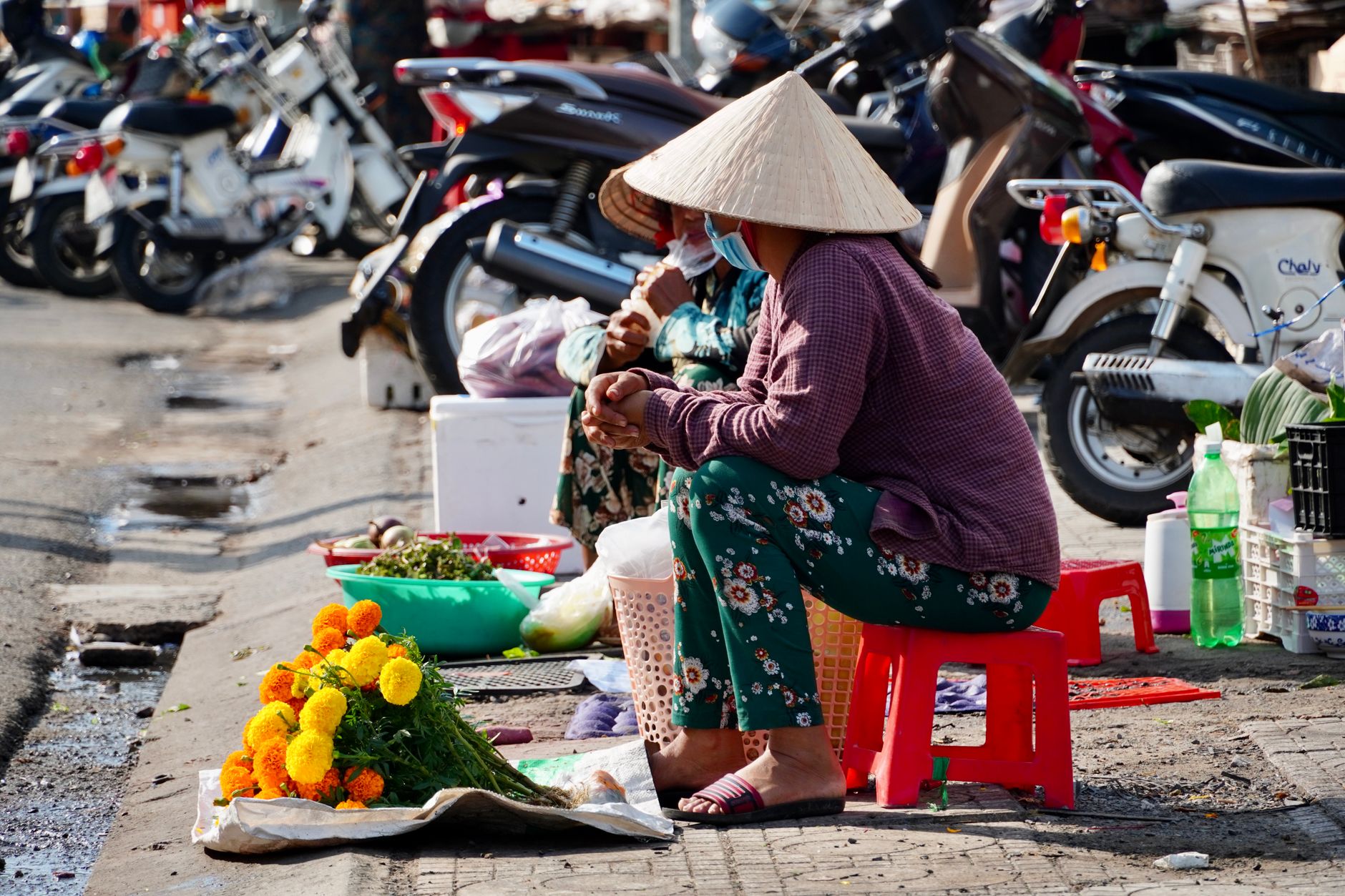
Quang Ba flower market, in the Hoan Kiem district near the Red River, opens 4–11 a.m. daily and is Hanoi's primary wholesale hub where importers, street florists, and locals buy seasonal blooms, branches, and greenery. Our market-tour packages combine a guided walk with a street florist's arrangement demo, followed by a 2–3 hour workshop in our studio where you condition, hand-tie, and take home your own bouquet using flowers bought at Quang Ba. Tours suit travelers seeking cultural immersion, expats wanting to source flowers affordably, and couples or small groups. English-speaking guides explain vendor practices, flower varieties, seasonal timing, and heat survival in Vietnam's climate. We include a snack break and informal instruction; no prior skill needed. Ask us for a quote on WhatsApp for your group size and workshop choice. Ask for workshop dates on WhatsApp
Why do flower markets open so early and close by noon?
Quang Ba operates on a wholesale schedule: vendors receive fresh imports overnight, unload by 3–4 a.m., and sell peak volume before 10 a.m. as retailers and street florists fill their carts for the day's sales. By 11 a.m., most stalls pack up because flowers have been cut 12–24 hours and heat stress accelerates wilting. Early arrival means fresher stems and better selection; late morning shoppers find picked-over stock or closed sections.
What flowers are in season, and how do we choose what to arrange?
Vietnam's climate splits seasons by temperature and import patterns. Winter (November–January) brings imported roses, chrysanthemums, and carnations; spring (February–May) adds local sunflowers, tulips, and orchids; summer (June–August) emphasizes tropical varieties (anthurium, bird-of-paradise) and local lotuses; autumn (September–October) restocks dahlias and hydrangeas. At Quang Ba, we teach beginners to check stem firmness, leaf color, and petal turgidity—squeeze gently near the flower head; if it feels papery, pass. We guide your selection by color balance and vase life; roses last 7–10 days in Hanoi's heat, while tropical flowers last 12–14. Our seasonal workshops deepen this knowledge for Christmas wreaths, Tet arrangements, and lotus designs specific to each month.
How do street florists in Hanoi survive the heat and humidity?
Hanoi's summer humidity (70–90%) and heat (32–38°C) cause rapid transpiration and bacterial stem growth. Street florists use mist-bottle sprays every 30 minutes, store buckets in shaded alcoves, and re-cut stems under running water to remove air embolism before display. They also add floral preservative (a powder mix we provide) and change water daily. In our workshop, we show how to condition stems—removing lower leaves, splitting woody stems, and cutting at a 45° angle under water—so arrangements last 5–7 days at home even in peak heat. Our private and couples sessions focus on these survival tactics for expats planning home arrangements.
What do beginners struggle with, and how does our market tour avoid those mistakes?
First-timers fight three battles: overbuying varieties (leading to muddy color palettes), choosing flowers too soft for heat (like peonies), and underselling stem count (resulting in sparse, droopy bouquets). Seeing a street florist work at Quang Ba—bundling 15–20 stems in a tight spiral, rotating as they wrap—shows why stem volume matters. We then walk you through the hand-tied bouquet workshop, where we condition your market purchase, strip leaves below the waterline, and practice the spiral technique (laying stems diagonally as you turn the bunch, keeping the tie point central). Most learners nail it in 20 minutes with real guidance. We also teach color harmony: limit 3–4 flower types, use greenery for 30% of bulk, and place warm tones (red, orange) toward the center, cool ones (blue, purple) on the outer rim.
Should I book a full workshop or just tour the market alone?
| Option | Who it's for | Includes | Duration | What to check |
|---|---|---|---|---|
| Market tour only | Budget travelers, photographers | Guide, 1-hour walk, translation | 60 min | Wear sunscreen; bring cash (vendors rarely use cards) |
| Tour + 2-hr workshop | Learners, couples, small groups | Market guide + studio class + take-home bouquet | 3.5 hrs | Confirm flower type in advance for allergies |
| Half-day intensive | Groups, hen parties, team building | Market, extended class, wrapped gift-ready arrangement | 4–5 hrs | Arrive 7 a.m.; bring comfortable shoes |
Tour only suits photographers and cultural tourists; you see vendor energy but leave empty-handed. Tour + workshop is ideal for first-time learners and couples; you buy fresh flowers and master one arrangement. Half-day suits team building groups and birthday parties—we can arrange transportation, refreshments, and group pricing. Ask us for a quote on WhatsApp with your group size.
How do we adapt the experience for kids and rainy days?
Children aged 8+ join our kids and family workshop paired with a condensed market walk (30 min, simpler explanations, focus on colorful exotic blooms). We skip the wholesale bustle and visit a quieter adjacent retail stall where vendors let kids snip and hold stems. The studio class uses lower tables and pre-conditioned stems to speed success; most kids complete a small posy in 45 minutes and take it home.
Rainy days (May–September monsoons) shift the market tour indoors: we skip Quang Ba's outdoor sections and instead tour the covered wholesale hall—vendors still open 4–10 a.m.—then move to our air-conditioned studio, where humidity control extends flower freshness during the 2-hour class. We also adjust the floral design course schedule for rainy weeks, focusing on hand-tie and color theory rather than outdoor market visits, so learners stay focused without heat or wet-weather fatigue.

What should I check before booking a market tour with us?
Before you reserve, confirm:
- Group size: solo travelers can join our public monthly tours; groups of 4+ get private guides at better rates.
- Flower allergies or sensitivities: tell us in advance; we'll avoid roses, lilies, or tropical varieties causing reactions.
- Physical fitness: the market walk involves 1 km on uneven ground; wear sturdy shoes.
- Language: all our guides speak English; request a Francophone or other-language guide with ≥7 days' notice.
- Season and availability: Tet and Christmas weeks fill 3 weeks ahead; book by WhatsApp to confirm dates.
- Your arrangement skill level: no prior skill needed, but tell us if you've taken other flower arranging classes so we skip basics.
Ask for workshop dates on WhatsApp
What does "market to home" mean in our workflow?
You shop Quang Ba with our guide (they help translate prices, negotiate bundles, and select quality stems—typical spending is modest for 10–12 stems). Back at our studio, you unpack, strip lower leaves under running water, re-cut at 45° angles, and condition in a bucket with floral preservative for 15 minutes. Then you hand-tie using the spiral method, wrap with kraft paper or cellophane, and tie with twine or ribbon. The entire process takes 2 hours; your bouquet survives 5–7 days in a vase with fresh water daily. This workflow teaches you to replicate the experience at home: buy from any local vendor, condition, and arrange using techniques we've embedded in your muscle memory.
For deeper immersion, our Vietnamese flower culture guide explains historical uses (lotus in temples, chrysanthemums at funerals, sunflowers for joy) so your arrangement gains cultural weight beyond decoration.
What's the difference between a market tour and our other workshop types?
A market tour is discovery + cultural context; you see where flowers come from, haggle, and meet vendors. Our flower box and basket class focuses on proportion and container design without a market component—ideal if you want arrangements for a specific event (wedding, corporate gift) but don't want the early-morning commute. The tourist workshop is a standalone 3-hour class in our studio for travelers with limited time; no market visit, but full instruction on color, conditioning, and hand-tie. The private and couples sessions are bespoke: you can opt for a market tour prefix or skip it and focus on technique in a quiet, custom-paced environment.
How do we ensure flowers stay fresh during the tour and workshop?
We arrive at Quang Ba by 6 a.m. when flowers are freshest; your guide has a small cooler and carries buckets of water with preservative. Any stems you buy are immediately placed in cool water and kept away from direct sun during the walk. Back at our studio (air-conditioned, 20–22°C), we mist all inventory every 2 hours. Stems are re-cut just before your class; any with bacterial slime on the cut surface are discarded. We also maintain humidity above 60% using a humidifier in summer, which slows transpiration. Take-home bouquets are wrapped loosely to allow air flow and wrapped in kraft paper (not plastic) to prevent moisture buildup. You receive care instructions: daily water change, 1 cm stem re-cut every 3 days, and removal of any yellowing leaves.
️ See how a class runs
Is the market tour suitable for solo travelers or only groups?
Solo travelers are welcome. We run public market tours on the first Saturday of each month (all levels, typically 6–12 participants); you'll meet other travelers and expats, share costs, and enjoy peer energy during the workshop. If you prefer privacy or have a specific date, we offer private 1–2 person tours on request; ask us for a quote on WhatsApp—pricing reflects the guide's time, not participant count, so pairs often find it cost-effective compared to booking separately.

FAQ
Do I need to bring my own flowers to Quang Ba, or do you supply them?
You buy blooms at the market with our guide's help—prices are wholesale-level, typically 40–60% cheaper than retail shops. We supply buckets, scissors, and preservative at the studio. No pre-purchase needed; we guide your selection on-site based on season and freshness.
Can I take my arranged bouquet on a flight or long-distance bus?
Yes, if you pack it upright in a sturdy box with a water pick (a small vial we provide). The arrangement survives 4–8 hours if kept cool. Wrap loosely in tissue; avoid plastic seal. For flights, check the airline's plant policy; most allow cut flowers in carry-on if wrapped.
What if I don't like the flowers I bought or they wilt before the workshop?
We replace any wilted or damaged stems at no charge before the class starts. We inspect all market purchases on arrival; if a flower shows yellowing, bacterial slime, or petal bruising, our guide sources a replacement from our backup stock or a nearby vendor—part of our quality assurance.
Are there vegetarian or non-floral lunch options during the tour?
We don't include meals in the market tour, but we offer a 15-minute rest at a small local café near Quang Ba where you can buy coffee, juice, and banh mi or pho (both vegetarian options available). Tell us dietary needs in advance; we'll brief your guide on nearby suitable spots.
Can I book a market tour if I can't attend at 6 a.m.?
Yes, later tours (8–9 a.m. start) are possible but see fewer vendors and picked-over inventory. Flower quality and selection drop by 10 a.m. For best results, we recommend the early slot. Evening tours don't run; the market closes by noon. Ask us for a quote on WhatsApp if you need a specific time.
Do you offer refunds if I'm unhappy with the workshop or flowers?
We stand by our 30-day smile guarantee: if your arrangement fails or you're unsatisfied with the class, let us know within 7 days and we'll rework it with you or offer a credit toward another session. Flowers are natural; some fading is normal, but premature wilting due to our conditioning or instruction is our responsibility. === Ask for workshop dates on WhatsApp
Ask for dates
Tell us the city, the date and how many people. We reply on WhatsApp in English with workshop options and a quote.
FAQ
Do I need to bring my own flowers to Quang Ba, or do you supply them?
You buy blooms at the market with our guide's help—prices are wholesale-level, typically 40–60% cheaper than retail shops. We supply buckets, scissors, and preservative at the studio. No pre-purchase needed; we guide your selection on-site based on season and freshness.
Can I take my arranged bouquet on a flight or long-distance bus?
Yes, if you pack it upright in a sturdy box with a water pick (a small vial we provide). The arrangement survives 4–8 hours if kept cool. Wrap loosely in tissue; avoid plastic seal. For flights, check the airline's plant policy; most allow cut flowers in carry-on if wrapped.
What if I don't like the flowers I bought or they wilt before the workshop?
We replace any wilted or damaged stems at no charge before the class starts. We inspect all market purchases on arrival; if a flower shows yellowing, bacterial slime, or petal bruising, our guide sources a replacement from our backup stock or a nearby vendor—part of our quality assurance.
Are there vegetarian or non-floral lunch options during the tour?
We don't include meals in the market tour, but we offer a 15-minute rest at a small local café near Quang Ba where you can buy coffee, juice, and banh mi or pho (both vegetarian options available). Tell us dietary needs in advance; we'll brief your guide on nearby suitable spots.
Can I book a market tour if I can't attend at 6 a.m.?
Yes, later tours (8–9 a.m. start) are possible but see fewer vendors and picked-over inventory. Flower quality and selection drop by 10 a.m. For best results, we recommend the early slot. Evening tours don't run; the market closes by noon. Ask us for a quote on WhatsApp if you need a specific time.
Do you offer refunds if I'm unhappy with the workshop or flowers?
We stand by our 30-day smile guarantee: if your arrangement fails or you're unsatisfied with the class, let us know within 7 days and we'll rework it with you or offer a credit toward another session. Flowers are natural; some fading is normal, but premature wilting due to our conditioning or instruction is our responsibility. === [🌸 Ask for workshop dates on WhatsApp](https://wa.me/84969293894)
More like this
Vietnamese flower culture
Vietnamese Flower Culture: What to Expect at a Hanoi Workshop
Vietnamese flower culture weaves ancient ritual, seasonal respect, and everyday beauty into a living practice that shapes how people celebrate, mourn, and connect. A workshop in Hanoi or Ho Chi Minh City reveals this firsthand—not as theory, but as skill you can use at home.
Vietnamese flower culture
Vietnamese Flower Culture for Beginners: What to Know
Vietnamese flower culture blends Buddhist symbolism, Lunar New Year tradition, and French colonial influence into a distinct aesthetic that beginners can learn through hands-on practice and market immersion.
Vietnamese flower culture
Vietnamese Flower Culture: Workshops & Traditions in Hanoi & HCMC
Vietnamese flower culture weaves centuries of symbolism—lotus for purity, chrysanthemums for longevity—into celebrations and daily life. We teach this living heritage through arranging workshops where travelers and expats craft authentic pieces using imported and local blooms.