
Home › Blog › Vietnamese flower culture
Quang Ba Flower Market Tour Hanoi Old Quarter: English Guide
By the Vietnam Flower Workshop team · 2026-11-06
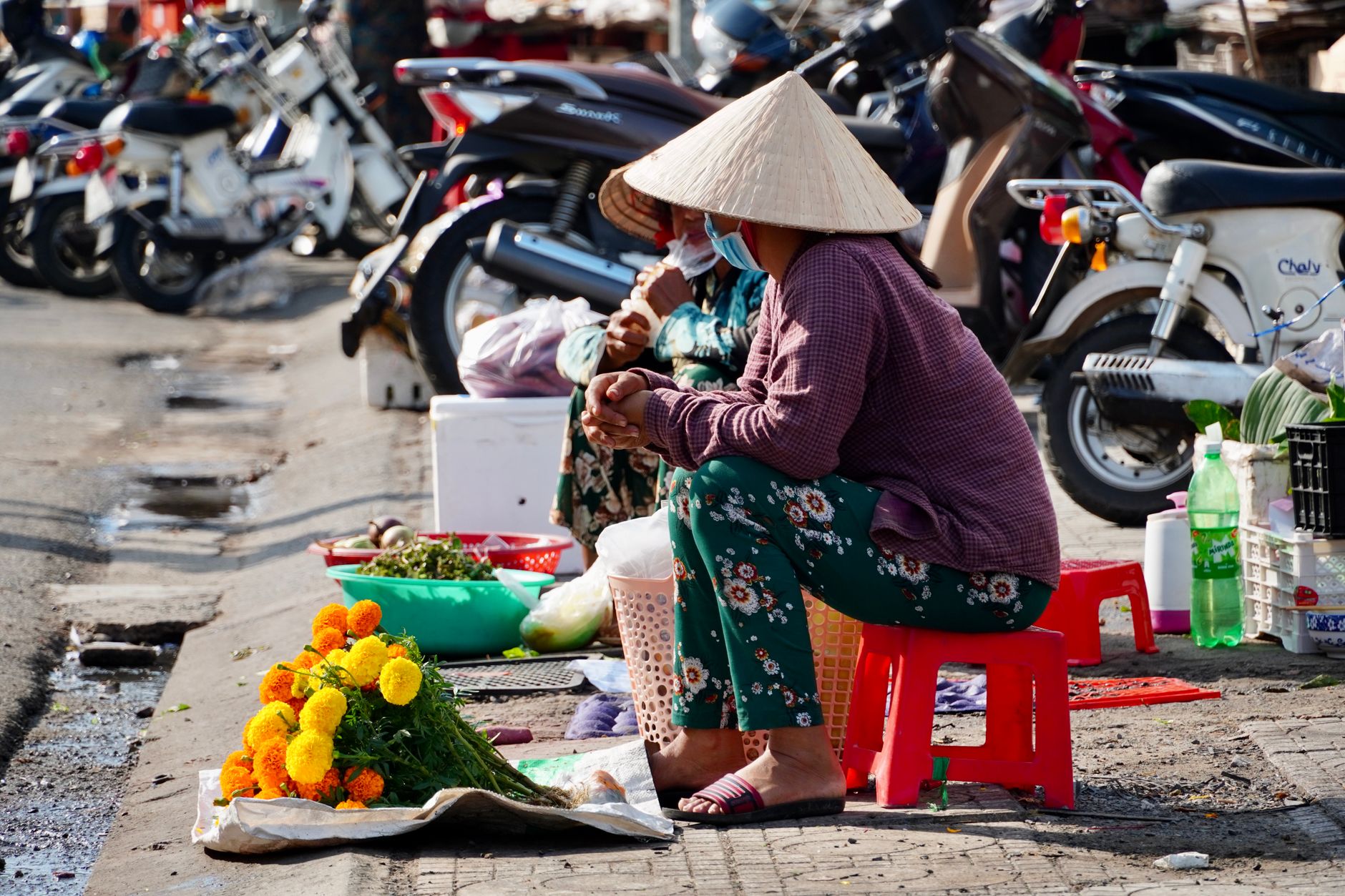
Quang Ba Flower Market sits in the heart of Hanoi's Old Quarter and opens between 4–7 a.m. when growers and wholesalers auction fresh cut flowers, potted plants, and foliage imported and grown across northern Vietnam. A typical English-guided tour lasts 90 minutes, covers haggling etiquette, seasonal availability, and quality checks (stem firmness, leaf color, bloom stage), and often includes a stop at a traditional wet market stall or local café. We run tours for travelers, expats, and workshop participants who want context before learning arrangement techniques—understanding where flowers come from and how growers grade them changes how you design. Tours are best booked in advance and paired with a same-day or next-day flower arranging class so you can immediately practice what you learned. Ask us for a quote on WhatsApp for group rates and seasonal pricing. Ask for workshop dates on WhatsApp
What time should I arrive at Quang Ba, and why does timing matter?
Arrive between 5–6 a.m. for peak activity: growers are actively selling, auctioneers calling prices, and flowers are at their freshest. By 8 a.m., the market thins out and many stalls pack up. Early arrival means cooler temperatures (critical in Hanoi's humid climate), fresher inventory, and more willingness from vendors to talk and explain their stock. Later visits risk finding picked-over selection and flowers already wilted from heat exposure. We always advise travelers to eat a light breakfast beforehand—the market is sensory-intensive and standing around 5 a.m. on an empty stomach leads to fatigue.
How do local growers grade and price flowers differently than shops?
Growers sell by stem count and quality tier: premium (tight, blemish-free petals), standard (minor leaf marks, acceptable for arrangement), and budget (good for mass-fill or short-lived displays). A dozen premium roses cost roughly double a budget bundle at market, but both are fresher than retail florist stock because wholesalers sell same-morning harvest. Growers negotiate per large quantity—a tourist buying 10 stems pays retail; a florist buying 500 negotiates a per-stem rate. We teach clients how to inspect for hidden damage (crush the stem gently, check inside petals for brown spots) and why Vietnamese growers prioritize volume over perfection—bulk sales fund their next crop cycle. This knowledge helps our bouquet workshop students understand why fresh, imperfect stems often perform better than pristine imports that have been shipped cold and stored for days.
️ See how a class runs
| Seller Type | Best For | Price Point | Flower Age | Negotiation |
|---|---|---|---|---|
| Market grower | Bulk, same-day events | Lowest | 0–4 hours | High |
| Stall wholesaler | Medium orders | Low–mid | 4–12 hours | Medium |
| Florist shop | Small gifts, urgent | Mid–high | 24–48 hours | Low |
| Online delivery | Convenience, gifting | Mid–high | 24–72 hours | None |
Choose a market grower if you're arranging same-day or next-day and have transport; choose a shop if you need reliability and short delivery time.
What flowers are in season at Quang Ba right now (2026)?
Year-round staples include roses (red, pink, white, bicolor), chrysanthemums, gladiolus, and greenery like ruscus and salal. Winter (Nov–Feb) brings imported tulips, anemones, and peonies; late summer adds local sunflowers, zinnias, and celosia. Lunar New Year (late Jan/early Feb) sees peak demand for lucky red and gold flowers—expect crowds and highest prices during Tet season. We recommend visiting in shoulder months (Mar–May, Sep–Oct) for better prices and less congestion. If you're touring in high season, book our seasonal workshops which source Tet or Christmas designs during those peaks, so you see both market supply and design application in real time.
How do you keep Hanoi's heat from wilting market flowers before the workshop?
Flowers begin heat stress within 2 hours of market pickup if left in direct sun or a hot vehicle. We advise buyers to carry a cooler or insulated bag with a damp cloth at the base—not ice (which damages petals), but evaporative cooling. On arrival at our studio, stems are immediately recut under running water, leaves below the waterline removed, and arranged in clean water with flower food for 30 minutes before the class starts. Tropical heat means every minute of delay counts: we've observed that stems picked at 5:30 a.m. and conditioned by 7:30 a.m. hold firm texture through a 2-hour arranging session; stems arriving at 10 a.m. without conditioning often droop by noon. For private and couple sessions, we recommend same-morning tours and late-morning class time to minimize storage stress. Our studio is climate-controlled to 21°C, which slows transpiration and extends vase life by 3–5 days compared to room temperature.
Should I buy flowers at the market or at a nearby shop for my workshop?
Market flowers cost 30–50% less and are fresher, but require early arrival, cash payment, and immediate transport. Shop flowers (purchased from retailers within the Old Quarter or nearby districts) cost more but are already conditioned, sorted into usable bunches, and available during regular daytime hours. For tourists with limited time, a shop visit saves logistical stress; for expats and local residents planning regular arranging, market buying becomes second nature after one guided tour. We host tourist workshops where many participants ask us to source flowers directly from our preferred growers—this hybrid approach skips the early-morning rush but keeps you connected to the supply chain. Ask us for a quote on WhatsApp if you'd like us to bundle a market tour with a private sourcing appointment before your class.

What should I check before buying flowers at the market?
Stem firmness: Gently squeeze the bottom inch—it should feel woody, not hollow or soft. Hollow stems are often old stock or have been stored too long.
Leaf color: Leaves should be glossy and firm. Yellow or browning leaves, even at the base, signal disease or age.
Petal condition: For closed blooms (roses, tulips), check that petals are tight and symmetrical. Open blooms (dahlias, sunflowers) should have no brown edges or insect damage.
Odor: A sweet floral scent is normal; a musty or vinegary smell indicates bacterial rot or ethylene exposure.
Water staining: Dry, discolored stems mean the grower didn't hydrate stock regularly—these wilt fast.
Leaf density: Dense foliage indicates good overall health; sparse leaves suggest stress or age.
We walk all kids and family workshop participants through this checklist so young arrangers learn quality assessment alongside design. It's a skill that transfers to any flower purchase anywhere in the world.
Can I combine a market tour with a group workshop or hen party?
Yes. Market tours work well as a standalone experience or as a 90-minute opening for hen and birthday parties or team building sessions. The market segment teaches culture and sourcing; the workshop segment applies that knowledge to hands-on design. For groups of 6+, we can coordinate a private market guide and reserved class time. Mixed-gender groups sometimes find the early hour challenging—we advise a group dinner the night before so everyone's rested, and we always provide tea and snacks on arrival at the studio. For team building workshops, the market tour doubles as an icebreaker: people who've just negotiated roses together are more relaxed and collaborative in the arranging studio. Ask us for a quote on WhatsApp for multi-activity packages.
Is the Old Quarter itself worth exploring before or after the tour?
The Old Quarter (Pho Hang Bac, Pho Hang Dao, Pho Hang Thung, and adjacent streets) is the historic commercial heart of Hanoi—walking streets lined with silk shops, metalware vendors, tea merchants, and food stalls. After a market tour, many visitors spend 1–2 hours exploring cafés, traditional shops, or sampling street breakfast (a local rice or noodle specialty). The Old Quarter is compact enough to navigate on foot but congested with motorcycles and vendors—wear comfortable shoes and expect crowds, especially 7–9 a.m. We recommend pairing a market tour with a flower arranging class rather than trying to do the entire Old Quarter in one morning; the flower experience is more memorable when you're not rushed. If you want a deeper cultural immersion, ask us about linking your class to a local guide for a separate neighborhood walking tour.
What to check before you book
Advance booking: Tours require a minimum of 2–3 people and must be booked 3–5 days ahead so we can arrange guides and coordinate timing. Last-minute same-day bookings are rarely possible due to guide scheduling.
Physical fitness: Market tours involve 90 minutes of standing, walking on uneven pavement, and navigating crowds. Wear supportive shoes and bring water; we don't offer seating or restroom breaks in the market itself.
Language: Tours are conducted in English. If your group has non-English speakers, let us know in advance—we may be able to arrange a bilingual guide, but this affects availability and quote.
Rainy season: Jul–Sep can bring heavy downpours. Market activity continues in rain, but footing becomes slippery. We provide umbrellas and may reschedule if conditions are unsafe.
Currency and payment: Growers accept Vietnamese dong (VND) cash. ATMs are nearby, but we advise withdrawing cash before arriving. We handle payment on behalf of clients if included in a workshop package.

FAQ
How much does a market tour cost, and does it include flowers to bring home?
Tour pricing depends on group size and whether combined with a workshop; ask us for a quote on WhatsApp. Market tours alone don't include takeaway flowers—you purchase what you want at grower prices. If paired with a same-day flower arranging class, the class flowers are included in that package.
What's the best season to visit Quang Ba market?
Shoulder seasons (March–May and September–October) offer better prices, less crowding, and diverse inventory. Tet (late Jan/early Feb) and Christmas are peak demand periods with higher prices and crowds. Year-round tours are possible; we adjust recommendations based on current seasonal availability.
Can I take photos at the market?
Yes, but ask permission from vendors before photographing their stalls or flowers for sale. Early-morning lighting is beautiful for photography. Avoid blocking foot traffic with camera equipment, and be respectful of growers' workspace.
What if I have a severe flower allergy?
Market tours involve exposure to pollen and flowers for 90 minutes in an outdoor environment. If you have respiratory sensitivity, consider skipping the market and joining a floral design course or class indoors instead. Our studio is climate-controlled and we use hypoallergenic handling practices.
Do you offer tours in other languages?
Tours are primarily in English. We can explore other language arrangements if you provide 7+ days' notice and a group of 4+ people with the same language requirement. Bilingual guide availability and rates vary—ask us for a quote on WhatsApp.
Can I arrange a private market tour without a workshop?
Yes. Private tours are available for 2+ people and typically run 90 minutes. Pricing and guide availability depend on season and your preferred departure time. Contact us at /contact or ask us for a quote on WhatsApp.
What should I wear to a 5 a.m. market tour?
Wear comfortable, closed-toe walking shoes (uneven ground), lightweight layers (it's cool at dawn but warms quickly), and avoid perfume (which competes with flower fragrance and can irritate vendors). A small backpack is useful for carrying purchases; avoid large bags that impede movement in crowds.
Is the market accessible for people with limited mobility?
The market has narrow, uneven pavement and requires standing for extended periods. Wheelchair access is extremely limited. We recommend speaking with us directly at /contact about your mobility needs; we may suggest an alternative flower arranging class or video-recorded market overview instead. Ask for workshop dates on WhatsApp
Ask for dates
Tell us the city, the date and how many people. We reply on WhatsApp in English with workshop options and a quote.
FAQ
How much does a market tour cost, and does it include flowers to bring home?
Tour pricing depends on group size and whether combined with a workshop; ask us for a quote on WhatsApp. Market tours alone don't include takeaway flowers—you purchase what you want at grower prices. If paired with a same-day [flower arranging class](/flower-arranging-class), the class flowers are included in that package.
What's the best season to visit Quang Ba market?
Shoulder seasons (March–May and September–October) offer better prices, less crowding, and diverse inventory. Tet (late Jan/early Feb) and Christmas are peak demand periods with higher prices and crowds. Year-round tours are possible; we adjust recommendations based on current seasonal availability.
Can I take photos at the market?
Yes, but ask permission from vendors before photographing their stalls or flowers for sale. Early-morning lighting is beautiful for photography. Avoid blocking foot traffic with camera equipment, and be respectful of growers' workspace.
What if I have a severe flower allergy?
Market tours involve exposure to pollen and flowers for 90 minutes in an outdoor environment. If you have respiratory sensitivity, consider skipping the market and joining a [floral design course](/floral-design-course) or class indoors instead. Our studio is climate-controlled and we use hypoallergenic handling practices.
Do you offer tours in other languages?
Tours are primarily in English. We can explore other language arrangements if you provide 7+ days' notice and a group of 4+ people with the same language requirement. Bilingual guide availability and rates vary—ask us for a quote on WhatsApp.
Can I arrange a private market tour without a workshop?
Yes. Private tours are available for 2+ people and typically run 90 minutes. Pricing and guide availability depend on season and your preferred departure time. Contact us at [/contact](/contact) or ask us for a quote on WhatsApp.
What should I wear to a 5 a.m. market tour?
Wear comfortable, closed-toe walking shoes (uneven ground), lightweight layers (it's cool at dawn but warms quickly), and avoid perfume (which competes with flower fragrance and can irritate vendors). A small backpack is useful for carrying purchases; avoid large bags that impede movement in crowds.
Is the market accessible for people with limited mobility?
The market has narrow, uneven pavement and requires standing for extended periods. Wheelchair access is extremely limited. We recommend speaking with us directly at [/contact](/contact) about your mobility needs; we may suggest an alternative [flower arranging class](/flower-arranging-class) or video-recorded market overview instead. [🌸 Ask for workshop dates on WhatsApp](https://wa.me/84969293894)
More like this
Vietnamese flower culture
Vietnamese Flower Culture: What to Expect at a Hanoi Workshop
Vietnamese flower culture weaves ancient ritual, seasonal respect, and everyday beauty into a living practice that shapes how people celebrate, mourn, and connect. A workshop in Hanoi or Ho Chi Minh City reveals this firsthand—not as theory, but as skill you can use at home.
Vietnamese flower culture
Vietnamese Flower Culture for Beginners: What to Know
Vietnamese flower culture blends Buddhist symbolism, Lunar New Year tradition, and French colonial influence into a distinct aesthetic that beginners can learn through hands-on practice and market immersion.
Vietnamese flower culture
Vietnamese Flower Culture: Workshops & Traditions in Hanoi & HCMC
Vietnamese flower culture weaves centuries of symbolism—lotus for purity, chrysanthemums for longevity—into celebrations and daily life. We teach this living heritage through arranging workshops where travelers and expats craft authentic pieces using imported and local blooms.