
Home › Blog › Workshop guides
Hoan Kiem rainy day activities workshop: flower arranging indoors
By the Vietnam Flower Workshop team · 2026-11-06
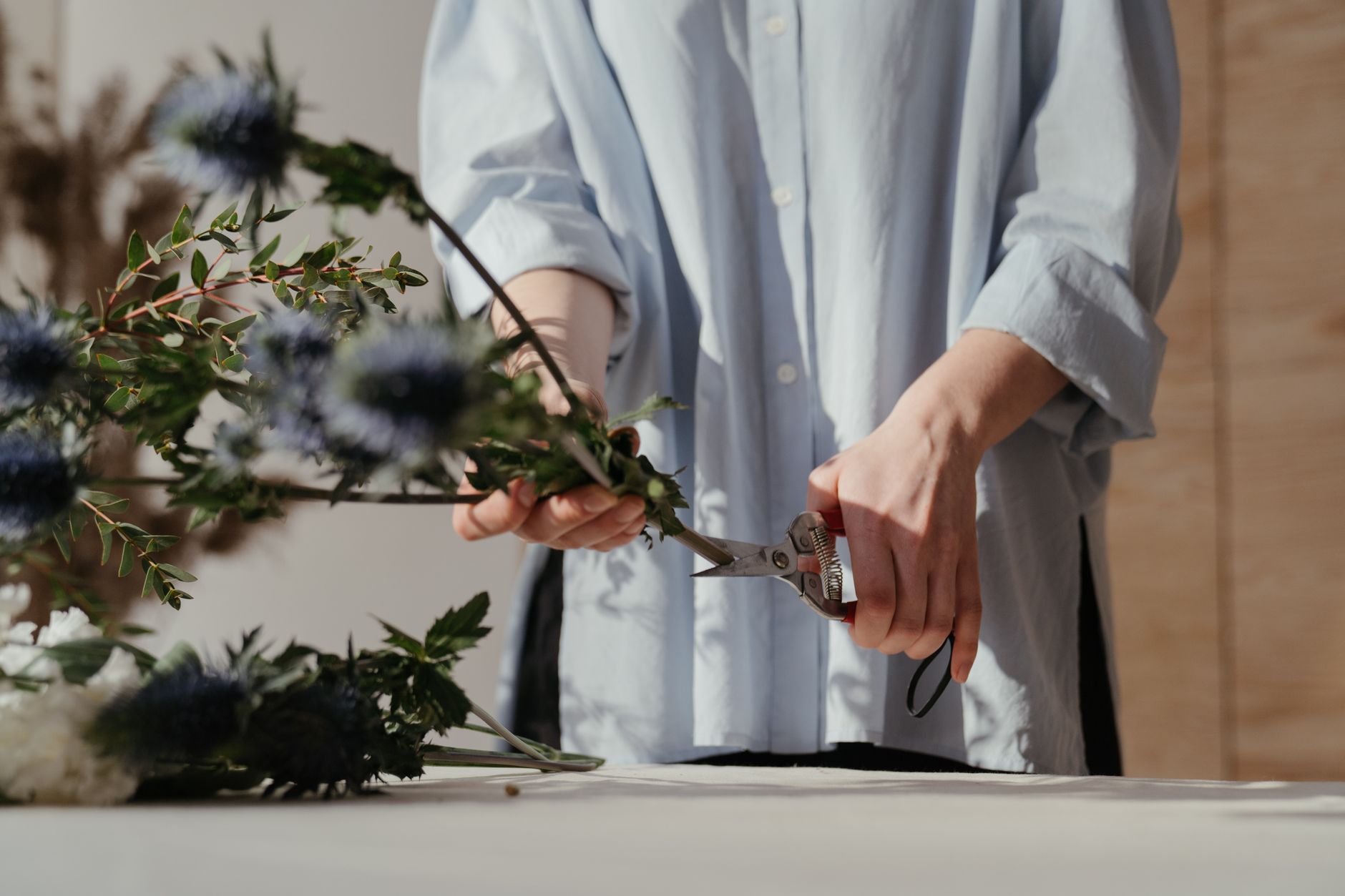
Vietnam Flower Workshop by Hoa Lang Thang offers rainy-day indoor flower arranging sessions in Hoan Kiem, Hanoi's central district. Sessions run hands-on in a dedicated workshop space—no outdoor element—where we condition fresh imported and local stems, teach spiral hand-tie and color balance techniques, and wrap arrangements you take home the same day. A single session typically flows over two to three hours (exact timing confirmed when you book on WhatsApp); participants learn conditioning (stripping leaves, cutting stems at 45°), positioning flowers in a spiral, and practical wrapping. Beginners struggle most with stem angle and grip pressure during tying, but we adjust pacing to your experience level. Cost varies by design complexity and flower choice—ask us for a quote on WhatsApp. No reservations required beyond confirming availability; rainy weather doesn't change the class because we're entirely indoors, making wet days ideal for focus without tourist crowds. Ask for workshop dates on WhatsApp
Why rain makes the perfect workshop day
Rain outside actually improves workshop conditions. Indoor humidity from weather keeps fresh flowers hydrated without us adding extra misting, reducing wilting during class. Participants focus better without street noise and foot traffic from Hoan Kiem's busy lake paths during dry days. We've noticed that rainy sessions attract fewer walk-ins, giving booked groups more hands-on attention and quieter conditioning tables.
The covered workshop prevents any water damage to materials—our wrapping supplies, foam, and tools stay dry. Guests also appreciate not rushing between indoor and outdoor spaces; everything happens in one climate-controlled room. If you're traveling and worried about weather disrupting plans, flower arranging classes scheduled on rainy days are often less crowded and more intimate than peak-season dry mornings.

What beginners struggle with (and how we fix it)
Most first-time arrangers grip stems too tightly during the spiral hand-tie, crushing delicate flowers like roses and ranunculus. We teach a looser, rotational hold: let the stems spiral naturally around your pinky and ring finger while your wrist stays still—a two-minute adjustment that transforms the whole result. The second common mistake is cutting stems at the wrong angle or height; we show you why a 45° cut increases water absorption, and why keeping stems 20–25cm above the foam line prevents overcrowding and ensures better flower-to-space ratio.
A third struggle is color balance—arrangers often clump colors together instead of distributing them throughout the spiral. We guide you through a simple test: step back every 2–3 flowers and check if colors form a rough triangle across the arrangement, not a wall. Rainy days actually help here because the consistent indoor light shows color distribution more clearly than bright sunlight streaming through windows. Private and couple sessions let us pause on exactly these points without rushing through a larger group.
How we keep tropical flowers fresh during Hanoi heat
Hanoi's humidity and heat stress blooms even indoors; we combat this from the moment flowers arrive. All stems are cut and immediately submerged in room-temperature water with flower food (usually a sachet we provide). We condition flowers in a cool, dim corner of the workshop for at least two hours before class—this hardens stems and closes the flower "throat," extending vase life. During your session, we keep the conditioning water fresh and replace it every hour; you see us do this, so you can repeat it at your accommodation.
After your arrangement is finished and wrapped, we wrap it loosely in paper (not plastic, which traps heat and humidity) and advise placing it in the coolest spot indoors—near an air-conditioning vent or window away from direct sun. Tropical flowers like chrysanthemums, solidago, and local dahlias survive 5–7 days easily if you change the water daily and trim stems every other day. We write care instructions on a card that goes home with you; the most critical step is removing any leaves below the waterline, which causes bacterial rot in warm climates.
Adapting workshops for kids, groups, and first-timers
Children (ages 6+) join our kids and family workshop sessions with scaled-down arrangements: shorter stem lengths, fewer flowers, and simplified spiral technique. We use taller, wider floral foam so young hands can place stems without wrestling angles. Group sessions for hen parties, birthdays, or team building run the same fundamentals but with playful competition—teams race to finish arrangements within time, or we build one massive centerpiece together. Beginners on rainy days often prefer group energy because rain outside feels cozy, not isolating.
For tourist-workshop visitors unfamiliar with hands-on craft, we frontload the "why": why conditioning matters (it's like warming up before exercise), why spiral hand-tie works (it creates density without crushing), why wrapping protects blooms (not just pretty). Non-English speakers get visual demonstrations repeated slowly; we've found that showing your hands and the flower—not explaining—works best across language barriers. Rainy weather keeps these sessions calm; nobody's watching rain-streaked windows wishing they were outside.
A checklist for your rainy-day session
| Before you book | During class | After you go home |
|---|---|---|
| Confirm date on WhatsApp (mind the time difference if you're abroad) | Wear clothes you don't mind getting wet or damp | Remove leaves below waterline immediately |
| Ask if session suits your skill level (first-timer vs. experienced) | Bring a phone for photos of your arrangement | Change water daily for 5–7 days |
| Tell us if you have flower allergies (pollen, latex) | Watch the conditioning demo—replicate it later | Keep blooms away from direct sun and heat vents |
| Check what flowers are in stock for that day | Step back to check color balance mid-spiral | Trim stems at 45° every two days |
| Ask for a quote on WhatsApp (no hidden fees) | Listen for the "crisp snap" when cutting stems cleanly | Display in a cool spot (under 20°C ideal) |
Seasonal & specialized workshops on rainy days
If your rainy-day session aligns with a festival, we sometimes run themed arrangements. Seasonal workshops for Tet or Christmas add cultural context—arranging lotus or pine branches teaches you about Vietnamese flower symbolism while learning technique. These rain days are perfect because you're not distracted by crowds outside, so symbolism and storytelling land better.
For travelers wanting deeper floral knowledge, Vietnamese flower culture and market tours normally include street visits; on rainy days we pivot to a condensed indoor version focused on identifying flowers, understanding regional growing seasons, and how local florists adapt to heat and humidity. The workshop still covers everything you'd learn from a market walk—just with visual aids and samples indoors instead. Ask us for details on WhatsApp.
️ See how a class runs
Why rainy days actually reduce stress mid-trip
Travelers often feel time pressure on sunny days—too many attractions, FOMO, rushed itineraries. Rain gives you permission to slow down. A rainy-day flower workshop in Hoan Kiem becomes a gentle, creative break rather than another rushed checkpoint. You're learning a motor skill (hand-tie spiral, conditioning technique), producing something real (your arrangement), and leaving with a physical memory—all while staying warm and dry. The three-hour session doesn't feel like "time spent indoors"; it feels like time invested in something you'll remember and can replicate at home.
This is especially valuable for bouquet-workshop sessions, where learning the hand-tie technique requires focus and repetition. Rain outside removes external distraction; your hands and the flowers get all your attention. Groups often emerge from rainy-day sessions closer to each other—strangers become friends over shared flower struggles and laughter when someone's spiral goes sideways.
What to check before you book
- Flower inventory for that day: Some blooms are seasonal or supply-dependent. Ask on WhatsApp which flowers are available; this affects the color palette and your final arrangement.
- Your group size and dates: We need your exact attendee count and preferred dates so we can reserve workshop time and prep materials without waste.
- Skill level and any physical limits: Arthritis, weak grip, or no prior craft experience means we adjust the spiral technique and stem-cutting method. Tell us upfront.
- Allergy or scent sensitivity: Some people react to pollen (especially lilies) or the intensity of fresh blooms in a closed space. We manage this by opening windows briefly or substituting flowers.
- Transport and storage for your finished arrangement: Rainy streets mean getting your wrapped bouquet home safely. Ask us for advice on waterproof transport; some guests bring a shallow box or wide tote.
Ask for workshop dates on WhatsApp
A real-world technique you can try at home
The spiral hand-tie test (no flowers needed):
- Hold your left hand open, pinky and ring finger extended downward (or reverse if left-handed).
- Pretend stems are held loosely around these two fingers—not gripped tightly.
- Using your right hand, rotate your left hand slowly counterclockwise 90° at a time.
- As you rotate, imagine placing a new "stem" in the outer edge of the spiral every rotation.
- Your wrist stays still; only your hand rotates.
This muscle memory translates directly to the real spiral when you join us. The key insight: the spiral happens because your hand rotates, not because you're twisting stems. Practice this for 30 seconds daily for a week, and your in-workshop spiral will feel natural immediately.
FAQ
Will rain prevent the workshop from running?
No. We operate entirely indoors in a dedicated workshop space. Rain doesn't disrupt scheduling, materials, or techniques. Rainy days often have better group focus.
What happens if flowers wilt before my class?
Flowers arrive fresh and are conditioned (submerged, trimmed, kept cool) until your session starts. We refresh conditioning water hourly. Wilting before class is rare; if it occurs, we swap blooms and adjust your arrangement design on the spot.
How long do the arrangements I make last at home?
5–7 days indoors with daily water changes and stem re-trimming. Tropical heat in Hanoi shortens vase life. We provide care instructions when you leave; follow them to maximize longevity.
Do I need craft experience or flower knowledge to join?
No. We teach complete beginners the full spiral hand-tie, conditioning, and color balance from scratch. Rainy-day sessions are less crowded, so we adapt pacing to your level.
Can I book a session just for my group on a rainy day?
Yes. Confirm your group size and preferred date on WhatsApp. Availability depends on flower inventory and instructor schedule; we reply as soon as we can on WhatsApp to confirm.
What do I wear to a flower workshop indoors?
Casual clothes you don't mind getting damp. Avoid loose sleeves that catch on stems or water. Closed-toe shoes recommended (wet floors from conditioning water). We provide aprons; bring a small towel if you prefer extra coverage.
Is there a "beginner" vs. "advanced" class, or all mixed?
Sessions accommodate mixed levels. If your group is all beginners or all experienced, tell us on WhatsApp and we tailor pacing and technique depth accordingly. ===
Ask for dates
Tell us the city, the date and how many people. We reply on WhatsApp in English with workshop options and a quote.
FAQ
Will rain prevent the workshop from running?
No. We operate entirely indoors in a dedicated workshop space. Rain doesn't disrupt scheduling, materials, or techniques. Rainy days often have better group focus.
What happens if flowers wilt before my class?
Flowers arrive fresh and are conditioned (submerged, trimmed, kept cool) until your session starts. We refresh conditioning water hourly. Wilting before class is rare; if it occurs, we swap blooms and adjust your arrangement design on the spot.
How long do the arrangements I make last at home?
5–7 days indoors with daily water changes and stem re-trimming. Tropical heat in Hanoi shortens vase life. We provide care instructions when you leave; follow them to maximize longevity.
Do I need craft experience or flower knowledge to join?
No. We teach complete beginners the full spiral hand-tie, conditioning, and color balance from scratch. Rainy-day sessions are less crowded, so we adapt pacing to your level.
Can I book a session just for my group on a rainy day?
Yes. Confirm your group size and preferred date on WhatsApp. Availability depends on flower inventory and instructor schedule; we reply as soon as we can on WhatsApp to confirm.
What do I wear to a flower workshop indoors?
Casual clothes you don't mind getting damp. Avoid loose sleeves that catch on stems or water. Closed-toe shoes recommended (wet floors from conditioning water). We provide aprons; bring a small towel if you prefer extra coverage.
Is there a "beginner" vs. "advanced" class, or all mixed?
Sessions accommodate mixed levels. If your group is all beginners or all experienced, tell us on WhatsApp and we tailor pacing and technique depth accordingly. ===
More like this
Workshop guides
Hoan Kiem Unique Experiences With Flowers: Hand-Tie Classes in Hanoi
Hoan Kiem offers a quiet retreat for flower lovers who want to create their own arrangements hands-on, not just admire them in shops. Vietnam Flower Workshop by Hoa Lang Thang runs intimate classes near the lake where you condition stems, master spiral hand-ties, and walk away with a finished bouque
Workshop guides
Hoan Kiem Flower Market Guide: Where to Buy & Learn
Hoan Kiem flower market in central Hanoi buzzes with fresh blooms year-round. Learn what to expect, how to pick quality flowers, and why a workshop beats shopping alone.
Workshop guides
Hoan Kiem Creative Workshops for Tourists: Flower Design in Hanoi
We run drop-in and booked creative flower workshops in Hanoi's Hoan Kiem district for travelers and expats. You'll condition stems, build a hand-tied bouquet, and walk out with your finished arrangement—no experience needed.