
Home › Blog › Workshop guides
Hanoi Unique Experiences With Flowers: Hands-On Workshops
By the Vietnam Flower Workshop team · 2026-11-06
Hanoi unique flower experiences centre on hands-on workshops where you condition, arrange, and wrap real flowers in a single session, leaving with your finished piece. Vietnam Flower Workshop by Hoa Lang Thang operates tourist-focused sessions in English for travelers, expats, couples, families, and groups—no prior skill needed. Sessions run through the morning or afternoon; you work with imported and local blooms suited to Hanoi's heat, learn spiral hand-tie and color-balance techniques, and troubleshoot common beginner mistakes (stem breakage, uneven spiral, proportions). Cost varies by arrangement type and flower selection; ask us for a quote on WhatsApp. Best for: travelers seeking authentic cultural experience, couples wanting a shared activity, team-building groups, hen or birthday parties, and families with kids aged 6+. Ask for workshop dates on WhatsApp | ️ See how a class runs
Why Do Travelers Choose Flower Workshops Over Tourist Shops?
A flower workshop lets you make something by your own hands rather than buy a pre-made bouquet you could order anywhere. You learn the "why" behind each choice—stem conditioning softens hard water buildup, spiral wrapping looks lush because stems radiate from one point, color balance means no single shade overwhelming the eye. In shops you see the finished product; here you understand it. Most travelers say they'd never have known stems need 2–3 hours in fresh water and flower food before arranging, or that tropical blooms like anthuriums and celosia resist Hanoi's humidity better than imported roses. Our tourist workshops are taught in English by florists who've trained travelers for years; you go home with photos, skills, and an arrangement that lasts 7–10 days if you follow aftercare tips we share. The experience feels far more personal than a hotel concierge buying you flowers.
Ask for workshop dates on WhatsApp
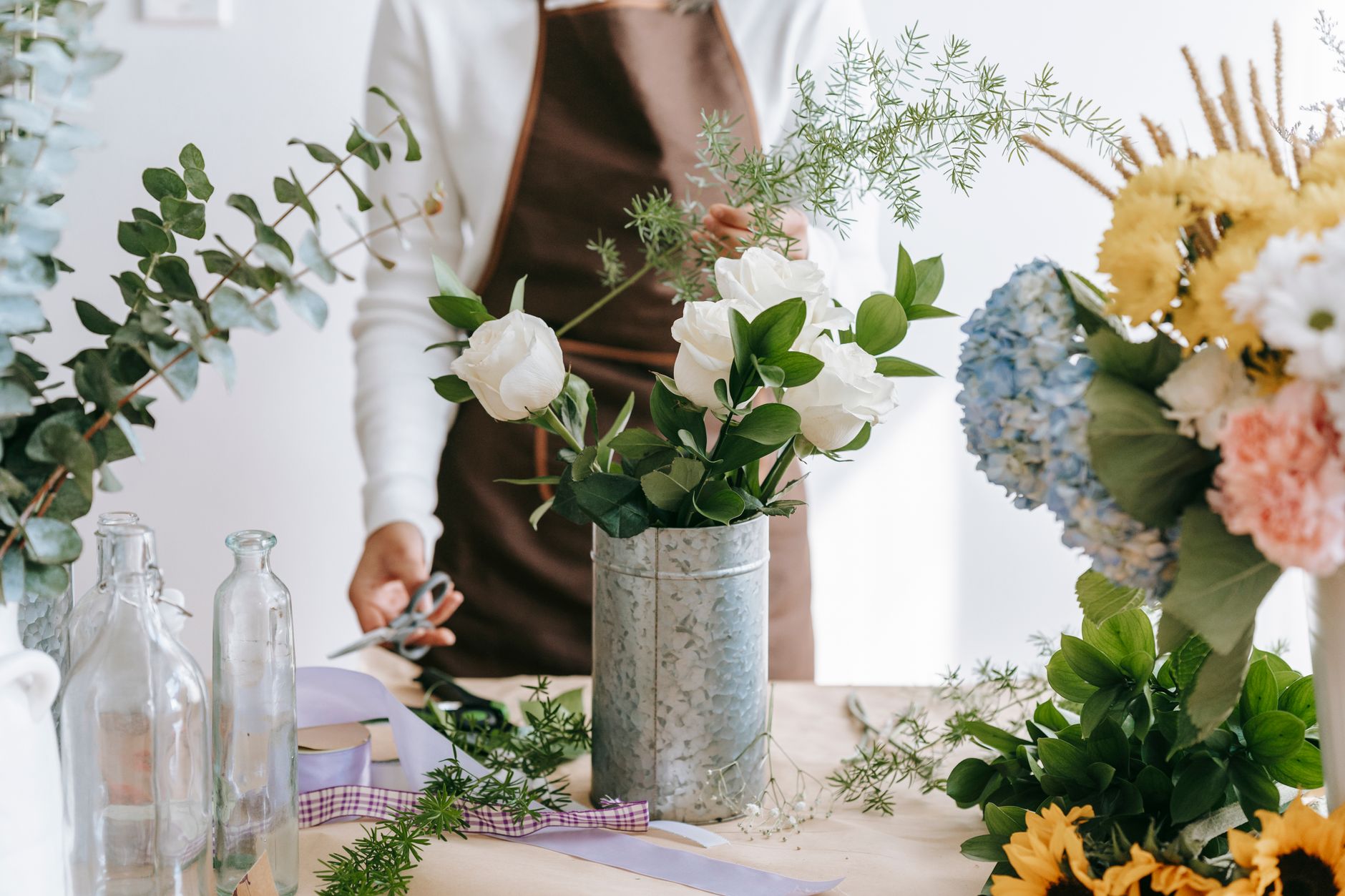
What Technique Can You Actually Use at Home After One Session?
The spiral hand-tie—where every stem angles outward from a central point—is the single most learnable skill in one morning, and you can recreate it with gas station flowers. Here's the step-by-step: (1) Strip all lower leaves so no stem touches water. (2) Hold 3–5 blooms in one hand, rotate the bunch gently. (3) Add stems one at a time, laying each diagonally across the previous one—never straight up. (4) Once you've placed 8–10 stems, pause and look: stems should fan outward like a spiral staircase when viewed from above. (5) Wrap floral tape around the base once to lock the angle, then wrap paper or burlap for a finished look. The hardest part is trusting the spiral—beginners bunch stems too tightly or keep adding blooms in the same angle. We show you the moment when it "locks" and looks full. After a session, most people text us photos of bouquets they've made at home in their own city; the spiral is portable and satisfying.
How Do Flowers Survive Hanoi's Heat and Humidity?
Hanoi's heat—30–36°C in peak months, high moisture year-round—kills delicate imported blooms within 24 hours if you don't condition them properly. We use tropical varieties (anthuriums, celosia, heliconia, preserved eucalyptus, and local dahlias) that thrive here, and we skip fragile imports like garden roses for public sessions. Our conditioning method: stems soak in room-temperature water with flower food for 3 hours minimum before arranging—this hardens the stem wall, seals the cut, and lets vascular tissue absorb water faster. We also cut stems at a 45° angle under running water (air bubble in a straight cut blocks water intake). During your session you'll cut, condition, then arrange so you skip the overnight wait. After you take your bouquet home, we give you a small sachet of flower food and a printed card: place stems in a tall, clean vase, refill water daily, re-cut stems every 3 days, and keep the arrangement away from direct sun and fruit (ethylene gas shortens bloom life). In Hanoi humidity, a hand-tied bouquet lasts 7–10 days; a tall vase arrangement in a cool room can go 2 weeks.
Which Session Type Fits Your Hanoi Stay Best?
| Session Type | Best For | Duration | Group Size | Why Choose It |
|---|---|---|---|---|
| Tourist workshop | First-time travelers, expats new to Hanoi | Half-day | 2–6 people | English teaching, cultural intro, bouquet you take home |
| Private & couple sessions | Honeymooners, anniversary, intimate group | Custom | 2 people or closed group | Personalized pacing, your flower choice, no strangers |
| Team building | Corporate groups, expat communities | Half-day | 8–15 people | Icebreaker activity, shared creativity, gifts for colleagues |
| Kids & family | Families with children 6+, multigenerational | 90 min | Parents + 2–3 kids | Hands-on learning, smaller stems, safe tools, take-home art |
| Hen & birthday | Bridal or birthday groups, milestone events | 2–3 hours | 6–12 people | Themed florals (blush and white for hens, bold colors for birthdays), celebration atmosphere |
| Floral design course | Career changers, serious hobbyists, teachers | 5–10 full days | 4–8 people | Advanced techniques, portfolio-building, Vietnamese floral traditions, wholesale flower market tour |
How to decide: If you have 1–2 hours and want the core experience, book a tourist workshop. If you're a couple or small group wanting privacy and longer pacing, choose private sessions. If your company or friend group is visiting, team building combines learning with team bonding.
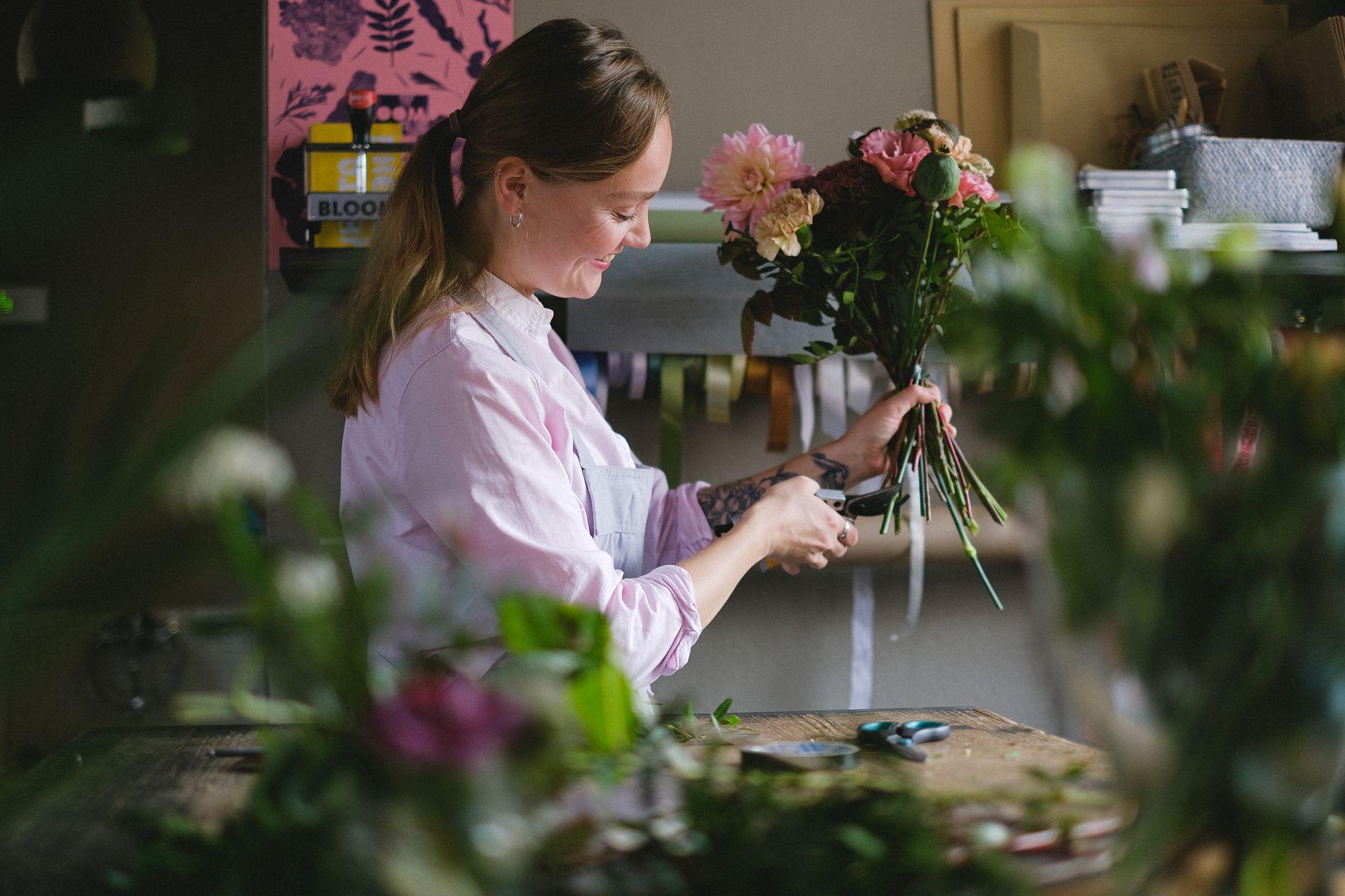
What Do Beginners Struggle With—and How We Fix It?
Stem breakage. New students grip stems too hard or bend them sharply when removing leaves. Fix: use a leaf stripper tool (looks like a metal comb) or gently pinch-and-pull downward. We demo on a practice stem first.
Uneven spiral. Stems angle inconsistently, so the bouquet looks lopsided when you turn it. Fix: every new stem must cross the previous one at roughly the same angle. We place a folded paper cone around your hand so you see the geometry. Takes 2–3 tries.
Over-crowding. You add too many stems in fear of gaps, so the center bunches up and water can't reach inner stems. Fix: we count aloud: 12 stems for a small bouquet, 18 for medium. Fewer stems, better water flow, longer vase life.
Proportions off. The flower heads sit way above or below the hand. Fix: trim stems before you start. A rule of thumb we teach: stem length = hand-span below the tie point plus hand-span above. Try it with grocery store flowers at home first.
Wrapping too loose or tight. Paper tears, or tape cuts off water uptake. Fix: we demo with paper, then you practice on an empty tie. Most people nail it by the second bouquet.
When Should You Visit for Seasonal Flowers and Themes?
Seasonal workshops in Hanoi tie to Tet (lunar new year, January–February), Christmas (November–December), and lotus season (June–August, though fresh lotus is rare indoors). Tet workshops focus on auspicious colors (red, gold, pink) and branch arrangements (peach blossoms, kumquat, pussy willow). Christmas sessions emphasize evergreen wreath-making, berry picks, and table centerpieces. Lotus workshops are short-session celebrations of the national flower—you learn to condition lotus stems (which are hollow and fragile) and float them in shallow bowls. Outside these peaks, we run general hand-tie and arrangement sessions year-round. Hanoi's annual flower market (busiest February–March for Tet, October–November for All Saints' Day flowers) is worth visiting even if you don't book a class—but a session beforehand teaches you to spot quality stems and understand pricing, so you shop smarter. Ask us on WhatsApp what's available during your visit; availability shifts with the season and flower availability. See our seasonal calendar for themes and dates.
️ See how a class runs
Can Kids, Large Groups, and Rainy Days Join Too?
Kids (6+): We adapt kids and family sessions to smaller hand sizes and shorter attention spans—usually 90 minutes. You use shorter stems, lightweight holders, and simple techniques like color layering instead of spirals. Kids work alongside a parent or in pairs. Safety: no sharp tools without guidance; we use child-friendly scissors and hold the demo stem for them to cut. Rainy days: kids don't mind; indoors feels cozy. They often make seasonal or holiday themes (pumpkins for October, hearts for Valentine's).
Large groups (8+): Team building and hen/birthday parties work best with 8–15 people. We set up multiple workstations, one florist per 4–5 people, and rotate demos so everyone sees each step. With big groups, pacing matters—you'll be done in 2–3 hours instead of a leisurely afternoon. Rainy days actually help: no one's tempted to rush out.
Rainy weather: Hanoi's monsoon season (May–September) brings heavy rain and occasional flooding in low-lying districts. Our workshops are indoors in climate-controlled spaces, so rain doesn't disrupt a session. Water-hungry flowers (like celosia) can wait in a bucket of water without harm. The one challenge: if you want to walk to a nearby flower market or garden as part of a cultural tour, we may reschedule. We check the forecast and confirm on WhatsApp.
Group dynamics: Strangers mixing in a workshop? Common. We pair people by experience level if possible. By the second demo, conversation flows; by the third, people are swapping flower-shopping tips and exchanging contact info.
What to Check Before You Book
- Language: Confirm English or another language you need. Tourist workshops are taught in English; floral design courses adapt to mixed groups.
- Flower allergies: Tell us if you're sensitive to pollen (lilies, chrysanthemums, some tropical blooms). We'll substitute or provide antihistamines.
- Physical ability: You stand at a workstation for 2–3 hours; bring a cushion if you need to sit. We can arrange a seated setup.
- Takeaway method: Your finished bouquet is yours to carry or we can wrap it in a sturdy box. Know how you'll transport it home or to your hotel.
- Vase inclusion: Most sessions don't include a vase—you're learning with a floral foam holder that you can reuse. If you want a ceramic vase, ask for a quote on WhatsApp.
Ask for workshop dates on WhatsApp

FAQ
Do I need experience to join a Hanoi flower workshop?
No. Beginners are our main audience. All sessions assume zero skill and start with conditioning and basic cuts. You'll leave with a finished, vase-ready bouquet by day's end.
What flowers do you use—imported or local?
We use both. Local blooms (dahlias, certain chrysanthemums, greens) are fresher and cheaper; imports (roses, hydrangeas, lisianthus) add variety. For tropical heat, we lean toward locally-grown celosia, anthuriums, and heliconia because they last longer indoors.
How long does my arranged bouquet last after I take it home?
7–10 days in a clean vase with daily water changes and fresh flower food. Tropical blooms last longer than imported roses. Keep it out of direct sun and away from fruit.
Can I book a private session for just two people?
Yes. Private & couple sessions are tailored to groups of 2 or a closed friend group. You choose the arrangement style and flower palette. Ask for a quote on WhatsApp with your dates and group size.
What if it rains during my workshop day?
Workshops are indoors. Rain doesn't affect the session. If a cultural market or garden walk was planned, we reschedule it to another day or offer an alternative indoor activity.
Is there a "best time" to visit Hanoi for flower workshops?
October–November and January–February are ideal—cooler weather means flowers last longer and stay fresher. June–August is hot and humid, so sessions focus on heat-tolerant blooms. Tet and Christmas have themed seasonal workshops; book early if you want to join.
Do you offer group discounts or team packages?
We tailor pricing to group size and session length. Team building packages for offices and hen/birthday parties get custom quotes. Ask us on WhatsApp with your headcount and preferred dates.
Can I combine a flower workshop with a market or cultural tour?
Yes. Vietnamese flower culture & market tours can be paired with a morning or afternoon workshop. You'll learn arranging techniques first, then visit wholesale and retail markets to shop for flowers using your new skills. Confirm on WhatsApp so we book the right guide.
Ask for dates
Tell us the city, the date and how many people. We reply on WhatsApp in English with workshop options and a quote.
FAQ
Do I need experience to join a Hanoi flower workshop?
No. Beginners are our main audience. All sessions assume zero skill and start with conditioning and basic cuts. You'll leave with a finished, vase-ready bouquet by day's end.
What flowers do you use—imported or local?
We use both. Local blooms (dahlias, certain chrysanthemums, greens) are fresher and cheaper; imports (roses, hydrangeas, lisianthus) add variety. For tropical heat, we lean toward locally-grown celosia, anthuriums, and heliconia because they last longer indoors.
How long does my arranged bouquet last after I take it home?
7–10 days in a clean vase with daily water changes and fresh flower food. Tropical blooms last longer than imported roses. Keep it out of direct sun and away from fruit.
Can I book a private session for just two people?
Yes. [Private & couple sessions](/private-and-couples) are tailored to groups of 2 or a closed friend group. You choose the arrangement style and flower palette. Ask for a quote on WhatsApp with your dates and group size.
What if it rains during my workshop day?
Workshops are indoors. Rain doesn't affect the session. If a cultural market or garden walk was planned, we reschedule it to another day or offer an alternative indoor activity.
Is there a "best time" to visit Hanoi for flower workshops?
October–November and January–February are ideal—cooler weather means flowers last longer and stay fresher. June–August is hot and humid, so sessions focus on heat-tolerant blooms. Tet and Christmas have themed [seasonal workshops](/seasonal); book early if you want to join.
Do you offer group discounts or team packages?
We tailor pricing to group size and session length. [Team building](/team-building) packages for offices and [hen/birthday parties](/parties) get custom quotes. Ask us on WhatsApp with your headcount and preferred dates.
Can I combine a flower workshop with a market or cultural tour?
Yes. [Vietnamese flower culture & market tours](/vietnamese-flower-culture) can be paired with a morning or afternoon workshop. You'll learn arranging techniques first, then visit wholesale and retail markets to shop for flowers using your new skills. Confirm on WhatsApp so we book the right guide.
More like this
Workshop guides
Hoan Kiem Unique Experiences With Flowers: Hand-Tie Classes in Hanoi
Hoan Kiem offers a quiet retreat for flower lovers who want to create their own arrangements hands-on, not just admire them in shops. Vietnam Flower Workshop by Hoa Lang Thang runs intimate classes near the lake where you condition stems, master spiral hand-ties, and walk away with a finished bouque
Workshop guides
Hoan Kiem rainy day activities workshop: flower arranging indoors
Rainy days in Hoan Kiem don't mean you're stuck at your hotel. Vietnam Flower Workshop by Hoa Lang Thang runs fully indoors in central Hanoi, teaching real flower arranging techniques while tropical rain falls outside—and you leave with your own hand-tied bouquet.
Workshop guides
Hoan Kiem Flower Market Guide: Where to Buy & Learn
Hoan Kiem flower market in central Hanoi buzzes with fresh blooms year-round. Learn what to expect, how to pick quality flowers, and why a workshop beats shopping alone.