
Home › Blog › Vietnamese flower culture
Dalat Flowers Vietnam: Market Tour + Workshop Guide 2026
By the Vietnam Flower Workshop team · 2026-11-06
Vietnam Flower Workshop by Hoa Lang Thang organizes guided tours of Dalat's flower markets—the nation's primary production hub—followed by arranging sessions where you work with fresh stems sourced that morning. Tours run 3–4 hours including market walk, grower visits, and flower selection; arranging classes add 2–3 hours. You'll learn why Dalat's 1,500-meter altitude favors rose, lily, and chrysanthemum quality, spot seasonal varieties, and understand pricing differences between wholesale and retail. Tours suit travelers, expats, floral enthusiasts, and corporate teams; classes work for all skill levels. Dalat stays 15–18°C year-round, which slows stem aging compared to Ho Chi Minh City heat. Ask us for a quote on WhatsApp and mention your group size and preferred dates—we customize itineraries for small groups and longer stays. Ask for workshop dates on WhatsApp
Why Visit a Dalat Flower Market Instead of Buying Locally?
Dalat grows 70% of Vietnam's cut flowers because altitude, soil, and cool nights produce denser petals, longer vase life, and richer color than lowland varieties. Retail shops in Hanoi and Ho Chi Minh City source from Dalat but mark up 40–60% and hold stock 1–2 days. Touring the source means you see grading standards, meet growers, spot freshly harvested stems (cut that morning), and pay closer to wholesale rates if buying bulk. Most travelers and expats don't know blooms arrive at markets by 5 a.m. and peak quality lasts until 11 a.m. Visiting at dawn versus afternoon shifts what you find and how long arrangements survive. Our Vietnamese flower culture guide explains regional growing patterns; a Dalat market tour embeds that knowledge firsthand.
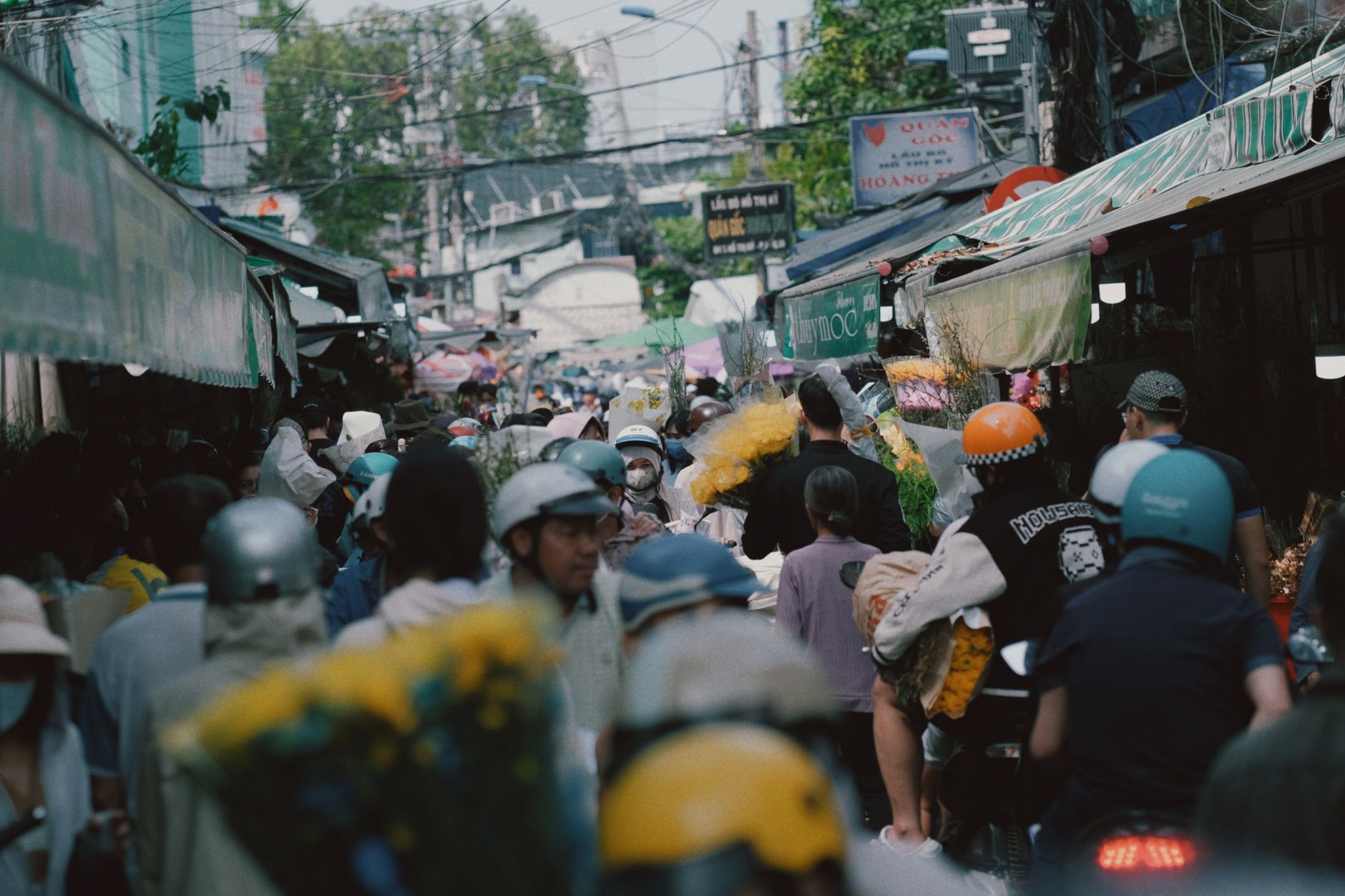
What Flowers Peak in Dalat Across Seasons?
Rose (year-round, best Nov–Mar): Dalat roses dominate Vietnamese weddings. Local growers produce spray roses, garden roses, and long-stem reds. Winter (Nov–Mar) yields the deepest reds and tightest petals because cool nights slow opening. Summer heat (May–Aug) causes looser blooms and shorter vase life—ask growers about "summer grade" versus "winter grade" pricing.
Lily (June–Sept peak, available year-round): Oriental lilies (fragrant, large trumpet) and Asiatic types fill summer markets. These are pollen-heavy and need conditioning—remove anthers to prevent staining. Tours show you which varieties last 10+ days versus 5–7 days.
Chrysanthemum (Sept–Nov peak): Daisy-form, pom-pom, and button types are cheaper than roses and last 14+ days. Peak freshness September–November; available year-round but with less density off-season.
Carnation, statice, solidago (year-round fillers): These extend bouquet lifespan and form the volume in many designs. Dalat's climate keeps them crisp; lowland versions often arrive wilted.
Seasonal novelties: Orchids, anthurium, protea, and local foliage rotate based on harvest cycles. Tours reveal what's hidden from retail—unusual stems that tour guides and florists source quietly.
| Flower | Peak Season | Vase Life | Why Dalat Grows It | Best For |
|---|---|---|---|---|
| Rose | Nov–Mar | 10–14 days | Cool nights = tight petals | Weddings, formal events |
| Lily | June–Sept | 10–12 days | Altitude favors large blooms | Arrangements, statements |
| Chrysanthemum | Sept–Nov | 14–18 days | Humidity + cool air = density | Budget bouquets, long-term |
| Carnation | Year-round | 12–16 days | Hardy, versatile, high yield | Filler, color volume |
| Statice | Year-round | 14–21 days | Lightweight, dries well | Texture, lasting power |
How Do You Arrange Fresh Dalat Flowers the Day You Buy Them?
A market tour doesn't stop at looking—we teach conditioning and arranging on the same day. Here's the sequence we follow in our workshops:
Conditioning (15 minutes):
- Strip lower leaves 2 inches below the cut line; leaves underwater rot fast and shorten vase life by days.
- Re-cut stems at a 45-degree angle under running water (oxygen in freshly cut tissue matters). Never use scissors on woody stems like roses—use a sharp knife or shears to avoid crushing vessels.
- Place stems immediately in water mixed with flower food (we provide this). Food contains sugar (energy) and biocide (kills bacteria). Warm water is a myth for fresh cuts—room temperature or slightly cool is standard.
- Let stems drink for 2–4 hours before arranging. This firms petals and raises water uptake. Dalat growers sometimes show visible leaf curl from transport; rehydration reverses this.
Arranging (60–90 minutes): We teach a spiral hand-tie if you prefer to take stems home tied, or we show vase-arranging if you want a finished piece before transport.
Spiral hand-tie (portable, easy to recut at home):
- Hold the first stem in your left hand (right if left-handed) at a 45-degree angle.
- Add the second stem at a slight angle and rotate the bunch clockwise.
- Each new stem spirals around the center; this creates a cone that sits flush in a vase with no gapping.
- Beginners struggle with angle consistency—we demo with a single rose first, then add filler.
- Wrap the stem bundle tightly with floral tape, then decorative wrap (kraft paper, cellophane, or fabric). Tie with twine or ribbon.
- This method survives Dalat-to-Hanoi flights and car rides better than a wet vase arrangement.
Color balance (critical for visual impact):
- Limit a hand-tie to 3–5 colors max. Dalat's vibrant blooms tempt you to mix too many.
- Place the dominant color (say, red roses at 60% of the bunch) first; fill 30% with secondary color (white lilies); accent with 10% foliage or texture (statice, ruscus, or local greenery).
- Odd numbers look balanced; even numbers feel formal and static.
Transport & Rehydration at Home:
- After arranging, place the hand-tie in a bucket or vase with room-temperature water and food.
- If you travel by car or plane, wrap the base loosely in damp paper towels and a plastic bag to reduce water loss (not airtight—stems need air).
- On arrival, re-cut stems and place in clean water with fresh food. A properly conditioned Dalat bouquet lasts 7–10 days in a cool room.
Beginners often skip the leaf-stripping step or re-cut too shallow (½ inch instead of 1–2 inches); both drastically reduce vase life. Our flower arranging class teaches these steps hands-on with real Dalat stems so you see the difference immediately.
️ See how a class runs
Which Dalat Flower Tour Format Fits Your Trip?
We offer three pairing options depending on your schedule and interest:
Half-Day Market + Class (4–5 hours total):
- 8 a.m.–12 p.m.: Market tour, warehouse visit, grower meet-and-greet, flower selection.
- 1 p.m.–3 p.m.: Hands-on arranging in our Dalat workshop space.
- Best for: Travelers with 1–2 days in Dalat. You leave with a finished bouquet and market knowledge.
- What to bring: Comfortable walking shoes (wet market floors), a camera, and a bag to carry stems home.
Full-Day Immersion (6–7 hours):
- Morning: Early-bird market visit (6–9 a.m., when peak selection and grading happen).
- Mid-morning: Workshop in a grower's greenhouse or our space (learn propagation, variety differences).
- Lunch: Local café near market (not included; we suggest types of restaurants in the area).
- Afternoon: Advanced class (spiral hand-ties, color theory, seasonal design).
- Best for: Floral designers, long-stay visitors, corporate teams, serious enthusiasts.
Multi-Day Workshop + Market Rotation:
- Day 1: Seasonal design class + market overview.
- Day 2: Market sourcing + hand-tie technique + take-home bouquet.
- Day 3: Specialty design (wedding, corporate, seasonal) + field visit to a family grower.
- Best for: Our floral design course students, expats considering a second career, or groups doing team-building.
Ask us for a quote on WhatsApp with your preferred format and dates. Smaller groups (2–4 people) often book private and couples sessions; families with children see our kids and family workshop page for adapted market tours and arrange-at-your-pace classes. Corporate teams can book team building or customize via contact.
How Do Dalat Flowers Survive Vietnam's Heat After You Leave?
Dalat's altitude (1,500 m) means nights drop to 12–15°C and days stay 18–22°C. Your home or hotel in lowland cities (Hanoi, Ho Chi Minh City) may hit 30–35°C and 70–90% humidity—a shock that can wilt delicate stems in 2–3 days if they're not conditioned properly. Here's what actually extends vase life:
Cool storage:
- Keep arrangements away from direct sunlight, heating vents, and ripening fruit (ethylene gas from fruit speeds petal aging).
- Air conditioning or a cool north-facing room is ideal. Even 3–5°C cooler than ambient temperature adds 2–3 days to lifespan.
Water discipline:
- Change water every 2 days, not daily (daily changes waste conditioning and expose new stem cuts to bacteria before tissue seals).
- Top up water daily with room-temperature tap water; add fresh food every 3 days or when the vase looks murky.
- Mist petals in the morning (not evening—evening moisture invites mold).
Stem prepping after market:
- In high heat, re-cut stems an extra ½ inch every 3 days; vessels clog faster in warm climates.
- Remove any yellowed or softening leaves immediately—decay spreads fast in heat and humidity.
Realistic expectations:
- Roses: 7–10 days in cool rooms; 4–6 days in heat.
- Lilies: 8–11 days in cool rooms; 5–7 days in heat (remove pollen to prevent staining and improve airflow).
- Chrysanthemums: 12–16 days in cool rooms; 8–12 days in heat (most heat-resistant).
- Hand-tied bouquets: Same rules apply. If you can't refrigerate, move to a vase immediately and re-cut stems.
Many travelers return from Dalat tours and assume their bouquet will last as long as it would in Dalat's climate—that's the biggest surprise. Our flower arranging class shows you the conditioning tricks that help, and we always remind guests that heat is the enemy, not neglect.
What Should You Check Before Booking a Dalat Market Tour?
Group size & timing:
- Do you want a private guide (1–4 people) or a small group tour (5–12 people)? Private sessions offer flexible timing and personalized routes; group tours split cost and connect you with other flower lovers.
- Are you an early riser? Best market energy is 6–11 a.m. Afternoon visits (2–5 p.m.) show stock but miss peak selection.
Physical demands:
- Markets involve 2–3 km of walking on uneven, wet floors. Wear slip-resistant shoes.
- You'll stand and cut stems for 1–2 hours during class—not strenuous, but not a sit-down experience.
Arranging level:
- Beginners: Start with a single hand-tie or vase arrangement; we scaffold from there.
- Intermediate: Ask about spiral technique or color-theory deep dives.
- Advanced: Request a working session with real wedding or event briefs.
Language & communication:
- Our guides speak English, Vietnamese, and basic French. Confirm your language preference when you book.
- If traveling with a friend who doesn't arrange flowers, they can walk the market, observe the class, or explore nearby cafés—no pressure to participate.
Seasons & availability:
- Dalat is accessible year-round by car or small plane from Hanoi or Ho Chi Minh City.
- Rainy season (May–Sept) means muddy market floors and slower foot traffic; still worth visiting, but bring rain gear.
- Avoid Tet (Lunar New Year, late Jan–early Feb) if you want calm; markets are chaotic with holiday bulk orders.
Take-home logistics:
- Hand-tied bouquets travel better than vase arrangements on flights or long car trips.
- We wrap and prep your bouquet so it survives transport; you'll learn the same technique in class.
- If flying home, ask us about flower-safe packaging and timing—arrange on your last day in Dalat or the day before, depending on your flight.
Ask for workshop dates on WhatsApp
What Makes a Dalat Market Tour Different From a Hanoi or HCMC Florist Visit?
A flower market visit is wholesale energy: growers, traders, and small-shop owners haggle, bulk-buy, and rotate stock every few hours. A retail florist is curated, finished, and priced retail. On a tour, you'll see:
- Grading & bundling: Growers sort roses by stem length, petal count, and blemishes; you learn quality tiers and why a "first-grade" rose costs 2–3× a "second-grade" one.
- Seasonal surprises: Local foliage, heirloom varieties, and experimental hybrids that never reach retail shops appear here.
- Wholesale pricing: If you buy in bulk (30+ stems), you often get 20–40% off retail.
- Relationships: Growers will set aside stems for you if you ask; we help negotiate and translate.
This sets a Dalat tour apart from arranging in a retail setting. You're not just learning technique—you're learning the supply chain and building confidence to source flowers independently on future visits. Many expats and travelers book a tour once, then return solo to their favorite grower for years.
Our Vietnamese flower culture guide explains the broader context of Dalat's role in Vietnam's flower economy; a market tour is the lived experience of that story.

FAQ
Can I book a market tour if I've never arranged flowers?
Yes. Tours are for any level. We pair market walks with beginner-friendly arranging classes. No experience needed; curiosity is enough.
What if I only want the market tour, not the class?
We can arrange market-only visits (2–3 hours). You'll learn history, grading, and sourcing; you won't take home a finished arrangement. Ask us on WhatsApp for a quote.
How do I get to Dalat from Hanoi or Ho Chi Minh City?
Flights (1 hour) or car/van (5–8 hours by road). We don't arrange transport but can suggest reliable local options. Many travelers combine a Dalat tour with a city stay.
Can I buy flowers at the market to take on a plane?
Yes, but timing matters. Arrange the day before your flight or same-morning if your flight is evening. Wrap stems in damp paper towels and a sealed plastic bag. International flights typically allow cut flowers; check your airline's live plant policy.
What's the difference between hand-tied and vase-arranged bouquets for travel?
Hand-tied bouquets are wrapped tightly and travel in a bag or box; they're compact and survive jostling. Vase arrangements are finished in a vase and need a stable, upright space. For flights or long car rides, hand-tied is safer. We teach both in class.
Do you offer tours in other seasons, like summer?
Yes, year-round. Summer (May–Sept) has rain and fewer tourists, but Dalat's cool climate means flowers still thrive. Expect slower market traffic and muddier floors. It's a quieter, more intimate experience.
Can I arrange custom bouquets during the tour?
If you book a half-day or full-day class, yes. You source stems at the market and design your own arrangement or hand-tie. Advanced groups can work on wedding or event designs with real briefs. Confirm your skill level and goals when booking.
What if I'm traveling with a group and want team-building?
We run team building workshops that include market tours and collaborative arranging. Groups of 8–20 work well. Ask us for a custom quote on WhatsApp with your group size and dates.
Ask for dates
Tell us the city, the date and how many people. We reply on WhatsApp in English with workshop options and a quote.
FAQ
Can I book a market tour if I've never arranged flowers?
Yes. Tours are for any level. We pair market walks with beginner-friendly arranging classes. No experience needed; curiosity is enough.
What if I only want the market tour, not the class?
We can arrange market-only visits (2–3 hours). You'll learn history, grading, and sourcing; you won't take home a finished arrangement. Ask us on WhatsApp for a quote.
How do I get to Dalat from Hanoi or Ho Chi Minh City?
Flights (1 hour) or car/van (5–8 hours by road). We don't arrange transport but can suggest reliable local options. Many travelers combine a Dalat tour with a city stay.
Can I buy flowers at the market to take on a plane?
Yes, but timing matters. Arrange the day before your flight or same-morning if your flight is evening. Wrap stems in damp paper towels and a sealed plastic bag. International flights typically allow cut flowers; check your airline's live plant policy.
What's the difference between hand-tied and vase-arranged bouquets for travel?
Hand-tied bouquets are wrapped tightly and travel in a bag or box; they're compact and survive jostling. Vase arrangements are finished in a vase and need a stable, upright space. For flights or long car rides, hand-tied is safer. We teach both in class.
Do you offer tours in other seasons, like summer?
Yes, year-round. Summer (May–Sept) has rain and fewer tourists, but Dalat's cool climate means flowers still thrive. Expect slower market traffic and muddier floors. It's a quieter, more intimate experience.
Can I arrange custom bouquets during the tour?
If you book a half-day or full-day class, yes. You source stems at the market and design your own arrangement or hand-tie. Advanced groups can work on wedding or event designs with real briefs. Confirm your skill level and goals when booking.
What if I'm traveling with a group and want team-building?
We run [team building workshops](/team-building) that include market tours and collaborative arranging. Groups of 8–20 work well. Ask us for a custom quote on WhatsApp with your group size and dates.
More like this
Vietnamese flower culture
Vietnamese Flower Culture: What to Expect at a Hanoi Workshop
Vietnamese flower culture weaves ancient ritual, seasonal respect, and everyday beauty into a living practice that shapes how people celebrate, mourn, and connect. A workshop in Hanoi or Ho Chi Minh City reveals this firsthand—not as theory, but as skill you can use at home.
Vietnamese flower culture
Vietnamese Flower Culture for Beginners: What to Know
Vietnamese flower culture blends Buddhist symbolism, Lunar New Year tradition, and French colonial influence into a distinct aesthetic that beginners can learn through hands-on practice and market immersion.
Vietnamese flower culture
Vietnamese Flower Culture: Workshops & Traditions in Hanoi & HCMC
Vietnamese flower culture weaves centuries of symbolism—lotus for purity, chrysanthemums for longevity—into celebrations and daily life. We teach this living heritage through arranging workshops where travelers and expats craft authentic pieces using imported and local blooms.