
Home › Blog › Vietnamese flower culture
Vietnamese Flower Culture in Hanoi: What to Buy & Experience
By the Vietnam Flower Workshop team · 2026-11-06
Vietnamese flower culture in Hanoi centers on symbolic blooms for Tet, weddings, and daily altars—lotus for purity, chrysanthemums for longevity, orchids for refinement. You'll find this expressed in street markets, temple offerings, and home arrangements. At Vietnam Flower Workshop by Hoa Lang Thang, we teach hands-on arranging in English for travelers and expats, using imported and local flowers you keep at the end. Sessions cover stem conditioning, spiral hand-tying, and color balance across private classes, group workshops, and seasonal pieces like Tet arrangements. Cost varies by session type and flower selection; ask us for a quote on WhatsApp. What to avoid: buying wilted imported stems or ignoring local seasonal blooms—we source fresh daily to ensure your arrangement lasts in Hanoi's heat. Ask for workshop dates on WhatsApp | ️ See how a class runs
What are the core flowers in Vietnamese tradition?
Lotus symbolizes enlightenment and purity in Buddhist practice and appears in temples and home shrines year-round. Chrysanthemums represent longevity and are gifted at funerals and festivals. Orchids convey respect and refinement, favored in wealthy households and corporate settings. Peonies symbolize prosperity during Tet celebrations. Roses carry romantic meaning in weddings and anniversaries. Each flower has a color language too: white for respect, red for luck, yellow for joy. Understanding these meanings helps you choose arrangements that fit the occasion and show cultural awareness. Our workshops teach you to pair blooms by both meaning and visual balance.
Conclusion: Learning Vietnamese flower language transforms a bouquet from decoration into communication.

How do Hanoi's markets shape what you can buy?
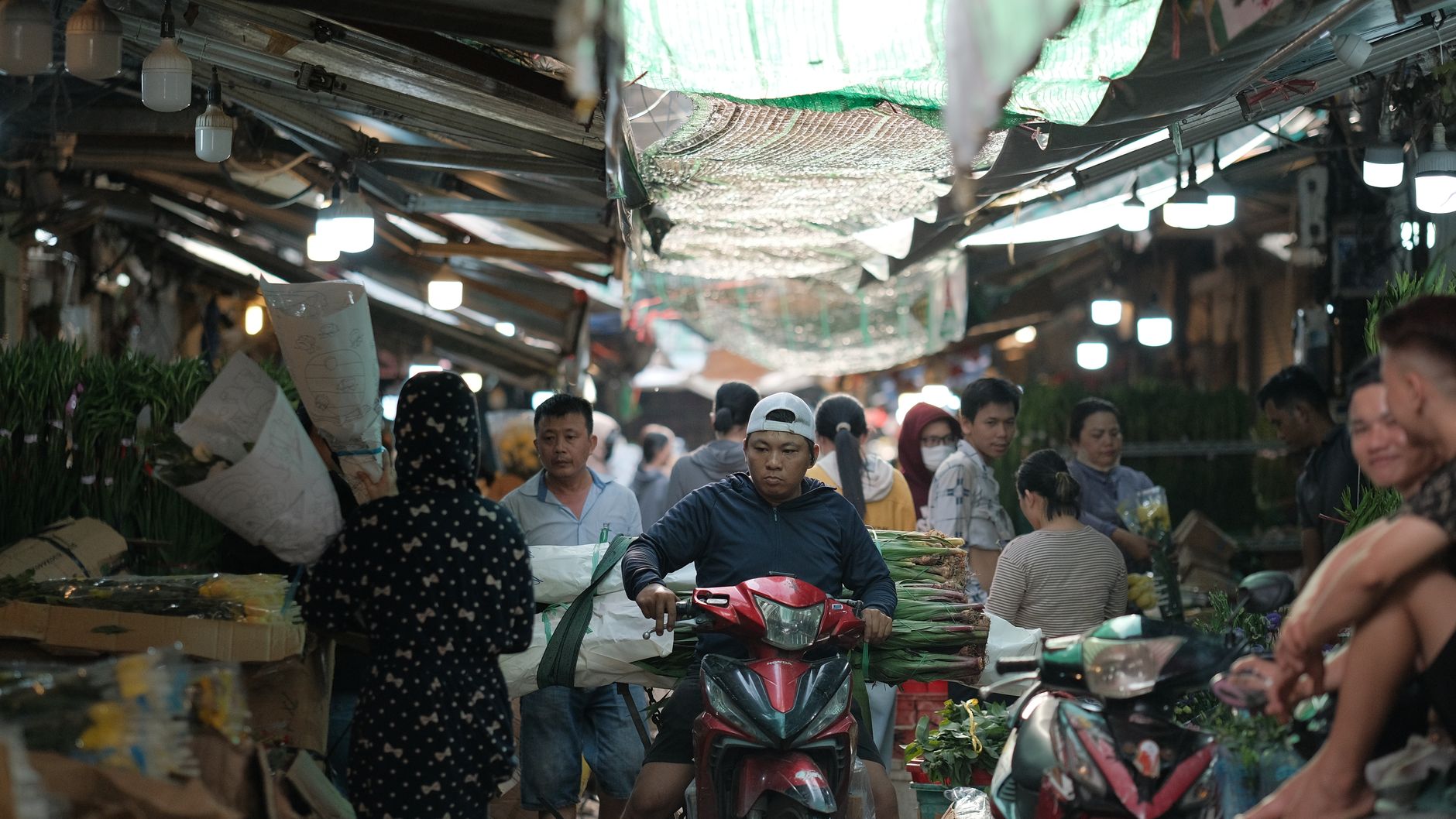
Hanoi's flower markets—concentrated near central districts in early mornings—stock local seasonal blooms and imported varieties from Thailand and China. Local farmers bring chrysanthemums, marigolds, and lotus in season; importers offer roses, carnations, and orchids year-round at premium prices. Market prices fluctuate daily based on supply; during Tet and holidays, costs rise 30–50% and availability shrinks by afternoon. Hanoi's heat (28–35°C in warm months) wilts delicate stems fast unless they're conditioned properly. Shopping early (before 8 a.m.) gives you fresher stock and wider choice. At our workshop, we source from these same markets and condition each stem in-house, so you learn which blooms survive the heat and how to keep them alive at home. We also teach you to spot over-mature flowers and avoid vendors selling yesterday's stock.
Conclusion: Market timing and conditioning knowledge directly affect how long your flowers last in Hanoi's climate.
Why do arranging techniques matter in tropical heat?
Tropical humidity and heat stress tropical flowers differently than temperate blooms. Roses and carnations lose water through their leaves faster; lotus and chrysanthemums tolerate heat better. Stem conditioning—cutting at a 45-degree angle, removing lower leaves, placing in cool water immediately—creates a larger water-absorbing surface and prevents bacterial blockage. The spiral hand-tie technique (wrapping stems in a cone shape rather than bunching them) allows water to reach every stem and lets air circulate, cooling the bundle. In workshops, we show you how to check for water uptake: a freshly cut stem should draw water in under 30 seconds; if it doesn't, the flower is dying or over-mature. Beginners often skip the conditioning step or strip leaves incorrectly, leaving bacteria in the vase. We also teach you the "float test"—submerge the finished bouquet briefly to hydrate the blooms before wrapping. These small steps add 5–10 days to a bouquet's life in Hanoi's heat.
Conclusion: Conditioning and hand-tie technique are non-negotiable for survival in hot, humid climates.
Which workshop style matches your schedule and learning goal?
| Workshop Type | Who It's For | What You Make | Best If You Want |
|---|---|---|---|
| Tourist workshop | First-time visitors, 2–4 hours | Hand-tied bouquet + one seasonal piece | Quick cultural immersion & takeaway gift |
| Flower arranging class | Beginners wanting technique | 2–3 designs (vase, hand-tie, box) | Core skills: conditioning, spiral wrap, color balance |
| Bouquet workshop | Bouquet-focused learners | 3–4 hand-tied bouquets, color variations | Gift-making confidence & repeat-order skills |
| Private & couple sessions | Couples, proposals, anniversaries | Custom 2–3 designs + personal styling | Intimate, personalized experience & memories |
| Kids & family workshop | Families, ages 5+ | Simpler hand-ties, foliage arrangements | Age-friendly fun without pressure; parent–child bonding |
| Seasonal workshops | Tet, Christmas, holiday planners | Wreaths, altar pieces, Tet golden branches | Cultural knowledge + ready-to-gift pieces |
| Hen & birthday parties | Groups, celebrations | Mixed bouquets + group competition | Laughter, team energy, Instagram-ready arrangements |
| Team building | Corporate groups, morale | 3–5 designs, competitive or collaborative | Bonding, creativity without work pressure, takeaway wellness |
Each class includes fresh flowers, tools, conditioning demo, and your finished pieces. We teach in English for travelers and expats. Availability is confirmed on WhatsApp; reply time is as soon as we can.
Conclusion: Match your schedule, group size, and learning goal to the workshop format that fits.
How do seasonal blooms and Tet culture influence what to order?
Tet (Lunar New Year, early February) transforms Hanoi's flower landscape. Lucky golden trees (quỳnh quỳnh) and peach blossoms fill markets for 2–3 weeks before the holiday; prices spike and stock clears by Tet Eve. Chrysanthemums and kumquat trees symbolize longevity and prosperity. Lilies and roses appear for post-Tet gifting. Our seasonal workshops teach you to arrange Tet pieces—altar bouquets, golden-branch displays, and mixed prosperity bunches—using symbolism and color (red, gold, white) that fit traditions. If you're visiting Hanoi during Tet, booking early ensures availability; outside Tet, local chrysanthemums, roses, and orchids are abundant and affordable. Summer (May–August) brings lotus and water flowers reflecting Buddhist practice. Autumn (September–November) favors chrysanthemums and subtle hues. Winter (December–January) sees increased demand for imported poinsettias and Christmas designs. Planning your purchase or class around the season gives you fresher blooms, better prices, and deeper cultural meaning.
Conclusion: Seasonal timing shapes both availability and the cultural narrative your arrangement tells.
️ Book your seasonal workshop | Ask for workshop dates on WhatsApp
What to check before you buy or book
- Flower freshness: Check that petals have no brown spots, stems are firm (not mushy), and leaves are glossy. Ask the vendor how many hours the stems have been in water.
- Color & variety fit: List the occasion and recipient's preferences. Ask staff or our workshop teachers if your chosen blooms suit the season and symbolism.
- Conditioning readiness: Confirm stems are cut at 45°, lower leaves are removed, and water is room-temperature. At our workshops, we do this together.
- Humidity tolerance: If you're keeping flowers indoors in Hanoi's heat (28–35°C), prioritize chrysanthemums, orchids, and carnations over delicate tulips or gardenias.
- Vase & water setup: Decide if you need a vase, frog (stem holder), or wrapping at purchase. Our workshops include all tools; takeaway pieces come ready to display.
- Budget & timing: Ask us for a quote on WhatsApp with your group size, session type, and preferred dates. Availability is confirmed same-day or next-day; mind the time difference.
Why join a hands-on workshop instead of buying pre-made?
Pre-made bouquets from street vendors are convenient but often wilted, use 1–2 cheap filler flowers, and don't reflect your personality. Workshops give you control: you choose colors, learn why each stem works, condition them yourself, and take home an arrangement you built—lasting 10–14 days instead of 3–5. You also leave with a skill: after one session, you can recreate designs at home, impress friends, or gift hand-made arrangements year-round. For travelers, it's a hands-on cultural experience. For expats, it's community and confidence. For couples and groups, it's a memory. Our workshops in Hanoi and Ho Chi Minh City run in English with real imported and local flowers. We reply as soon as we can on WhatsApp to confirm dates and availability. See how a class runs step-by-step, or explore our bouquet-making workshop if you're gift-focused.
Conclusion: A workshop transforms you from buyer to maker—and flowers into connection.
Ask for workshop dates on WhatsApp | Explore the pillar guide
How does Hanoi's flower culture connect to daily life?
Altars in homes, offices, and shops display fresh flowers as offerings—a daily practice rooted in Buddhist and ancestor-honoring traditions. Chrysanthemums and roses are most common. Weddings and engagements use elaborate arrangements to signal family status and respect. Business gifts often include orchids or premium imported roses. Tet festivals drive the year's largest flower sales and cultural expression. Street vendors along major roads (Hàng Mã during Tet, everyday markets in central districts) serve as cultural hubs where locals and visitors encounter flower language firsthand. Tourists visiting temples or monuments often buy flowers as offerings, learning respect through gesture. Our flower arranging class and tourist workshop weave this cultural layer into every lesson—you're not just arranging; you're practicing Hanoi's daily traditions. Understanding these layers means your own arrangement becomes a meaningful gift, not just decoration.
Conclusion: Hanoi's flower culture is woven into spirituality, relationships, and daily ritual—not ornament alone.

FAQ
What's the best time to visit Hanoi for flower culture if I want to join a workshop?
Tet (early February) is peak season for flower markets and cultural significance; book early. Outside Tet, any month works—local blooms and imported varieties are available year-round. Workshops run in English every week; confirm dates on WhatsApp.
How long do hand-tied bouquets last in Hanoi's heat?
Properly conditioned bouquets last 10–14 days if kept in cool water, away from direct sun and heat sources. Beginners often see wilting by day 3–4 if stems aren't cut correctly or vase water isn't changed. Our workshops teach conditioning to maximize lifespan.
Can I join a workshop if I have zero arranging experience?
Yes—all our workshops assume no prior experience. We start with stem conditioning, teach the spiral hand-tie step-by-step, and guide you through color balance. Kids (age 5+) also join family sessions with simplified techniques.
Do I need to bring anything, or does the workshop provide tools and flowers?
We provide everything: fresh imported and local flowers, scissors, tape, wrapping, and containers. You bring only curiosity and hands. All finished pieces are yours to take home.
What if I'm ordering a bouquet as a gift—should I buy from a market or a workshop graduate?
Workshop graduates understand conditioning and symbolism, so their bouquets last longer and carry intent. Market vendors are faster but less consistent on freshness. Ask us for a quote if you want a custom arrangement made by our team—we'll confirm availability on WhatsApp.
Which flowers are considered unlucky or inappropriate for gifts in Vietnamese culture?
White chrysanthemums are reserved for funerals and mourning—avoid for celebrations. Clock flowers symbolize death and are never gifted. Red and gold combinations are lucky for Tet. Our workshops teach these nuances so your gift never offends.
Can I book a group workshop for a team-building event or birthday party?
Yes—we offer team building and hen & birthday parties with customized group sizes, competitive or collaborative setups, and Instagram-ready arrangements. Ask us for a quote and available dates on WhatsApp.
Ask for dates
Tell us the city, the date and how many people. We reply on WhatsApp in English with workshop options and a quote.
FAQ
What's the best time to visit Hanoi for flower culture if I want to join a workshop?
Tet (early February) is peak season for flower markets and cultural significance; book early. Outside Tet, any month works—local blooms and imported varieties are available year-round. Workshops run in English every week; confirm dates on WhatsApp.
How long do hand-tied bouquets last in Hanoi's heat?
Properly conditioned bouquets last 10–14 days if kept in cool water, away from direct sun and heat sources. Beginners often see wilting by day 3–4 if stems aren't cut correctly or vase water isn't changed. Our workshops teach conditioning to maximize lifespan.
Can I join a workshop if I have zero arranging experience?
Yes—all our workshops assume no prior experience. We start with stem conditioning, teach the spiral hand-tie step-by-step, and guide you through color balance. Kids (age 5+) also join family sessions with simplified techniques.
Do I need to bring anything, or does the workshop provide tools and flowers?
We provide everything: fresh imported and local flowers, scissors, tape, wrapping, and containers. You bring only curiosity and hands. All finished pieces are yours to take home.
What if I'm ordering a bouquet as a gift—should I buy from a market or a workshop graduate?
Workshop graduates understand conditioning and symbolism, so their bouquets last longer and carry intent. Market vendors are faster but less consistent on freshness. Ask us for a quote if you want a custom arrangement made by our team—we'll confirm availability on WhatsApp.
Which flowers are considered unlucky or inappropriate for gifts in Vietnamese culture?
White chrysanthemums are reserved for funerals and mourning—avoid for celebrations. Clock flowers symbolize death and are never gifted. Red and gold combinations are lucky for Tet. Our workshops teach these nuances so your gift never offends.
Can I book a group workshop for a team-building event or birthday party?
Yes—we offer [team building](/team-building) and [hen & birthday parties](/parties) with customized group sizes, competitive or collaborative setups, and Instagram-ready arrangements. Ask us for a quote and available dates on WhatsApp.
More like this
Vietnamese flower culture
Vietnamese Flower Culture: What to Wear & Why It Matters
Vietnamese flower traditions shape dress codes at celebrations and sacred spaces. We show you what's appropriate and how florals guide your wardrobe choices.
Vietnamese flower culture
Vietnamese Flower Culture: A Rainy Day Workshop in Hanoi & HCMC
Vietnamese flower culture thrives year-round, even when monsoon rains drench Hanoi and Ho Chi Minh City. A rainy day flower workshop lets you dive into this tradition indoors—conditioning stems, mastering spiral hand-ties, and learning why lotus and chrysanthemum hold such meaning in Vietnamese life
Vietnamese flower culture
Vietnamese Flower Culture in Ho Chi Minh City: What to Buy & Experience
Flowers in Ho Chi Minh City are woven into daily life: temple offerings, Tet decorations, family celebrations, and street-corner hand-tied bouquets. Understanding what locals buy and why helps you choose the right arrangement or workshop for your needs.