
Home › Blog › Floral design course
Floristry Course Saigon English: Hands-On Design in 2026
By the Vietnam Flower Workshop team · 2026-11-06
We offer English-language floristry courses at Vietnam Flower Workshop by Hoa Lang Thang in Ho Chi Minh City and Hanoi, ranging from half-day fundamentals to multi-week intensive design programs. Sessions run 90 minutes to full days, covering conditioning stems, spiral hand-ties, color theory, seasonal composition, and professional wrapping—participants take home every piece they make. Beginner courses suit travelers, expats, and hobbyists; advanced tracks prepare serious students for small business or event design. Classes include all imported and local flowers, tools, and take-home wrapping. We adapt group size, pacing, and difficulty to your background. Cost varies by location, course length, and flower selection—ask us for a quote on WhatsApp with your preferred dates and level, and we'll confirm availability and pricing. Ask for workshop dates on WhatsApp
What's inside a typical English-language floristry course here?
We begin each session with stem conditioning: cutting at 45°, removing lower foliage, and splitting woody stems under water to maximize hydration—this single step halves wilting in Saigon's heat. Next, we teach the spiral hand-tie technique: building a circular bouquet by angling each stem as you rotate the bunch, creating a natural vase-ready dome. Then we cover color balance (complementary vs. analogous schemes), texture layering (focal flowers, filler, greenery), and wiring for stability. You'll make 2–4 finished pieces depending on your course. We finish with wrapping: kraft paper, tissue, ribbon technique, and aftercare cards so your bouquet survives 7–10 days in tropical humidity. Every step is hands-on; we guide but never do it for you.

Who takes an English floristry course in Saigon, and why?
Three main groups fill our classes. Travelers (3–7 days in Vietnam) book a flower arranging class or tourist workshop for a cultural morning or afternoon—they want a memorable souvenir and a skill they can show friends at home. Expats and long-term residents (1–6 months+) often enroll in private sessions or bouquet-making workshops weekly or monthly to learn a craft they can sustain. Event planners and entrepreneurs choose our floral design course over 4–8 weeks to understand structure, color theory, seasonal sourcing, and basic business—some launch small wedding or corporate flower services after. We've also taught team-building workshops for expat companies wanting a creative break, and hen and birthday parties where groups learn to make corsages, wreaths, or large installations together. Each group has different pacing and focus; we customize.
️ See how a class runs
How do we keep flowers fresh in Saigon's heat and humidity?
This is the question every new student asks, and it's honest. Saigon's 28–35°C humidity is brutal; a poorly conditioned stem wilts in 24 hours. We use four strategies. First: water temperature. We condition all flowers in room-temperature water immediately after cutting—never ice, which shocks tropical stems. Second: glycerin soak. On day 2 or 3, we teach you to swap the vase water for a 1:3 ratio of floral preservative (a blend of sugar, biocide, and acidifier) to water; this extends life to 7–10 days by feeding the stem and slowing bacterial growth. Third: air circulation. We never tell you to keep bouquets in direct sun or sealed rooms; moving air (a fan, an open window) slows transpiration. Fourth: daily misting. For display pieces (wreaths, boxes, installations), we mist lightly each morning and keep them in a cool, shaded spot during the hottest hours (11am–4pm). In our workshops, we prep flowers the morning of class in walk-in coolers; beginners are shocked how cold the storage room is—that's intentional. During your course, we show you how to build this into a routine at home: a single vase in a cool corner, one water change, and misting buys you nearly two weeks instead of two days.
What do beginners struggle with most, and how do we fix it?
The spiral hand-tie trips up 60% of first-timers. The instinct is to bunch flowers in a tight knot; the result is flat and rigid. We break it into three steps: hold a focal flower (rose, peony, sunflower) vertically at the center of your hand. Step 1: Add the second stem at a 45° angle to the right, rotate the bunch 90° counterclockwise. Step 2: Add the third at 45° to the left, rotate again. Step 3: Continue spiraling, never stacking stems vertically—each new stem crosses the previous diagonal. By stem 8–10, you'll see the dome form. We use demonstration (doing it slowly once), then guided hands-on (we hold your hand and walk you through), then supervised (you do it, we spot-check). Most students nail it by their second piece.
Color mixing is the second struggle. Many assume that "more colors = more beautiful." We teach this: start with a primary + secondary pair (e.g., blush roses + cream spray roses), add one accent (burgundy hypericum or dusty miller foliage), then fill with texture (white waxflower, eucalyptus). This creates cohesion. We often lay out all flowers on a table and ask, Which three feel connected? rather than showing a rulebook. Intuition plus one constraint beats paralysis.
Wrapping looks effortless but requires practice. Novices wrap too tight (crushing stems) or too loose (it unravels in the customer's hands). We demonstrate the "figure-eight" technique twice, then have you wrap your own bouquets while we adjust your hand angle. By the third wrap, most get it.
English-language floristry courses: how to choose the right one for you
We offer several formats; here's how to decide:
| Course Type | Who It's For | Duration | What You Make | Why It Fits |
|---|---|---|---|---|
| Half-day workshop | Tourists, first-timers | 2–3 hours | 1–2 small arrangements | Quick, beginner-friendly, takes no full day |
| Couple or private session | Partners, friends, small groups | 90 min–2 hrs | 2–3 bouquets | Flexible schedule, personalized pacing |
| Multi-week design course | Serious learners, pre-entrepreneurs | 4–8 weeks, 2–3 hrs/week | 20+ full compositions | Master color, structure, seasonal sourcing, business basics |
| Team or group workshop | Companies, families, events | 2–3 hours | Shared installation or individual pieces | Bonding, not individual credentials |
| Seasonal special | Holiday enthusiasts | 2–3 hours | 1 wreath, garland, or festive box | Tet lotus arranging, Christmas wreaths, Valentine hand-ties |
Beginner tip: Start with a half-day or private session. If you enjoy it and have time, move to the multi-week course. If you're here just 2 days, book a tourist workshop and call it done.
What to check before you book an English floristry course in Saigon
- Language level. We teach fully in English; no translation needed. If you're more comfortable with another language (Mandarin, French, Vietnamese), mention it in your WhatsApp message—we sometimes arrange translators for small groups, but lead time is needed.
- Skill level match. We've taught hedge-fund traders with no design experience and returning wedding florists. Tell us your background. We won't waste time on basics if you already spiral-tie, and we won't throw advanced color theory at a first-timer.
- Flower type preference. Some students want only roses; others want "whatever's in season." Both are fine. Seasonal flowers (lotus in summer, chrysanthemums in autumn) are fresher and cheaper; imported roses are consistent. Mention any allergies or dislikes.
- Take-home logistics. Your arrangements are delicate. If you're flying out the same day, we wrap them in rigid boxes and advise you to pack them as hand luggage (carry-on fits two small bouquets). For expats staying in the city, we provide take-home care cards, and you handle vase storage. Ask us specifically about transport if it's a concern.
- Rainy-day contingency. Saigon rains mid-May to September. Our workshops are indoors, so rain doesn't cancel class. However, flower delivery to our studio can be delayed if roads flood heavily. In 15+ years, we've never had to reschedule, but in peak monsoon (July–August), we order flowers 24 hours earlier. It's never been an issue for students.
- Group size and noise. Our studios hold 2–12 people comfortably. Larger groups (15+) can be split into back-to-back sessions or satellite locations. Groups tend to chat and laugh; if you need quiet, book a private session.
- Aftercare support. After your course, you can WhatsApp us with photos of your arrangements and questions. We're not a nursery, but if something wilts fast and you want to know why, we answer honestly.
Ask for workshop dates on WhatsApp
Hands-on technique to try at home: the stem-conditioning trick
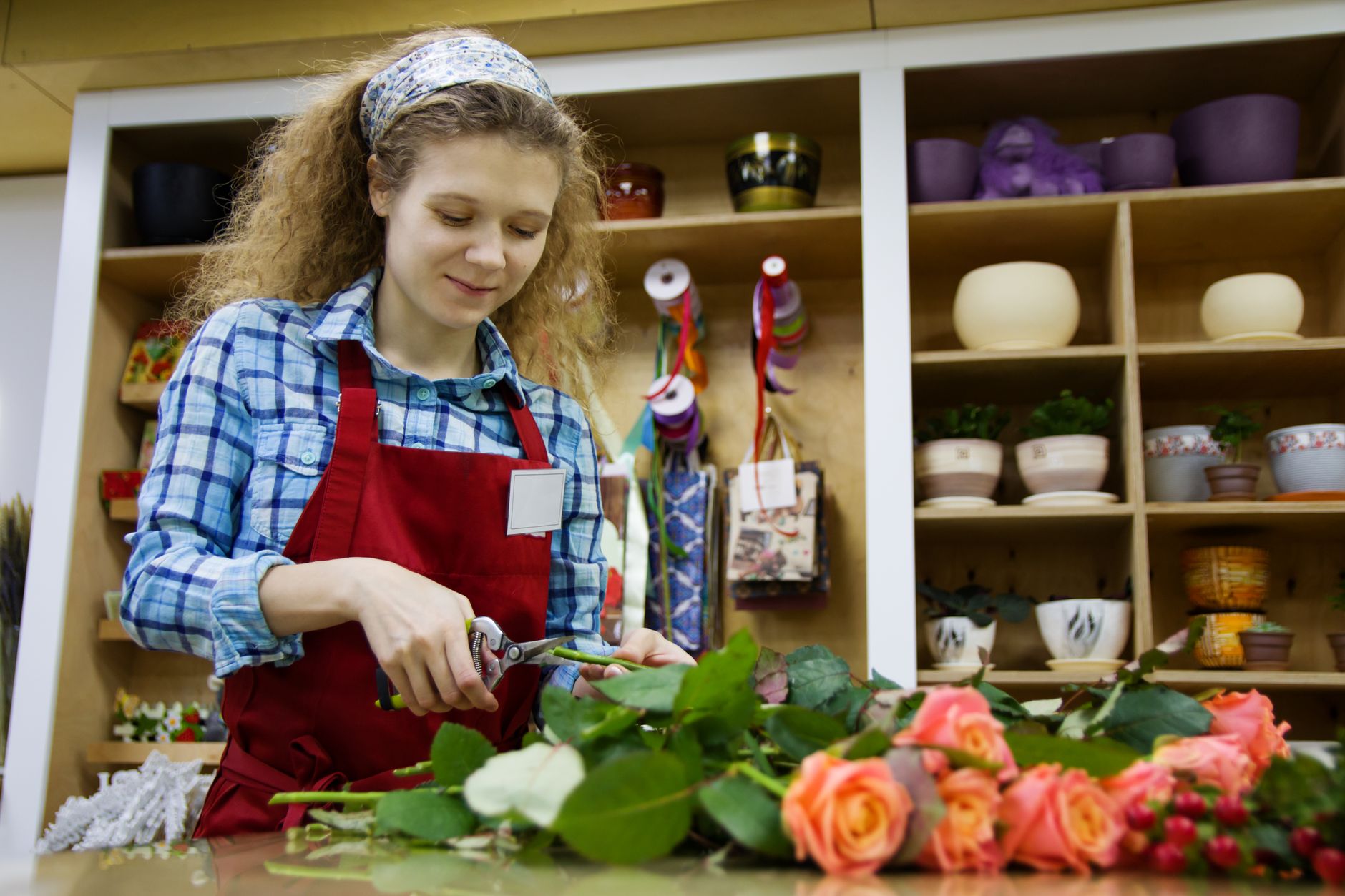
You don't need a workshop to master this, but it changes everything. Take a rose or any cut flower you've bought. Step 1: Cut 1 cm off the base at 45° under running water (not tap; filtered or bottled if your tap is hard). Step 2: Remove the bottom 2–3 leaves below the water line (they rot and invite bacteria). Step 3: If the stem is woody (roses, lilies, branches), split the last 3 cm vertically into a cross, or crush it gently with a hammer. Step 4: Place in room-temperature water with a pinch of sugar or floral food. Step 5: Change the water every 2–3 days and re-cut 1 cm each time. You'll gain 3–5 extra days of life. This is what we do on day one of every course—and it's the one technique that saves bouquets in Saigon.
Why English-language floristry matters in Saigon
Floristry is a craft language: conditioning, spiraling, focal flower, filler, floral foam. In Vietnam, most florists speak Vietnamese or Mandarin; English courses let expats and travelers learn without translation lag or misunderstanding terms. We've run courses since the early 2010s and seen the demand grow as Saigon's international community expands. An English-taught course also means peer learning: a banker from Toronto, an architect from Berlin, and a yoga instructor from Australia in the same session—everyone brings a different eye to color and shape. That cross-pollination is part of why people come back.
Comparing depth: short workshop vs. full design course
Half-day or full-day workshop: You learn conditioning, spiral hand-tie, basic color (warm or cool), and make 1–3 take-home pieces. Cost is lower, time is short, outcome is a beautiful memory and a usable skill. Best for: Travelers, first dates, team breaks, one-off enthusiasts.
Multi-week design course (4–8 weeks): You deepen spiral hand-ties (multiple sizes), learn wiring and taping (for corsages, boutonnières), study color theory (hue, saturation, value), master seasonal sourcing (what's available month by month), and create professional-grade installations (large pedestal arrangements, wedding trials). You'll make 20+ pieces and leave with a portfolio. Best for: Expats planning to stay 2+ months, people launching a small business, serious hobbyists.
The jump from half-day to multi-week isn't just quantity—it's the ability to design rather than copy. In a short workshop, we show you a technique and you follow it. In the full course, we teach the why behind color and structure, so you can invent your own designs. Both matter; pick based on your time and ambition.
️ See how a class runs
A note on seasonal courses: why they exist and what's on offer
Every quarter, we run seasonal workshops tailored to Vietnamese holidays and climate. Tet (January–February): We teach lotus and peony arranging—these flowers are symbolic and expensive, so learning to condition and display them correctly is valuable. Summer (June–August): Tropical blooms (anthurium, bird of paradise, heliconias) and hand-fan arrangements for heat resilience. Autumn (September–November): Chrysanthemums, dahlias, and bronze-toned boxes. Christmas (November–December): Wreaths, garlands, and advent boxes using imported greens (eucalyptus, holly) that don't grow locally. Seasonal courses use whatever's peak-fresh that week, so flowers are vivid, affordable, and last longer. We also run Vietnamese flower culture & market tour sessions where you learn the history and sourcing—some students pair this with a hands-on class for a full day.
Next steps: how to book your English floristry course
- Decide your format: Half-day workshop, private session, multi-week course, or special seasonal class.
- Check availability: WhatsApp us your preferred dates, location (Hanoi or Ho Chi Minh City), group size, and skill level.
- Get a quote: We'll confirm times, flower selections, and cost based on your choices.
- Show up, learn, and take your flowers home: No prior experience needed. Wear clothes you don't mind getting wet (flower water, soil, leaf stain); we provide aprons. Bring a phone if you want photos of your work.
Ask for workshop dates on WhatsApp

FAQ
Do I need to know anything about flowers before the course?
No. We teach from zero. Many students say I've never arranged a flower in my life—perfect. We start with conditioning and build from there. If you've done floristry before, tell us, and we'll skip basics and dive deeper.
Can I bring a friend or partner?
Yes. Private & couple sessions are ideal for pairs. Group courses (half-day workshops) mix strangers, which many enjoy for the social aspect. Tell us your preference when you book.
What if I'm only in Saigon for one day?
A half-day flower arranging class or tourist workshop is perfect—2–3 hours, one finished bouquet, fully in English. We've done this hundreds of times. Book 24 hours ahead if you can; same-day is sometimes possible.
Do the flowers die quickly in the heat?
Not if you follow our conditioning and aftercare. Properly conditioned bouquets last 7–10 days in Saigon. The key is room-temperature water, daily misting, and a cool, shaded spot. We send you home with a care card and are happy to troubleshoot via WhatsApp if something wilts fast.
Can I take my bouquet on a plane?
Yes. We wrap finished arrangements in rigid florist boxes; small bouquets fit in carry-on luggage. Larger pieces (wreaths, installations) travel better checked or in a car. Ask us about your specific piece when you pick it up, and we'll advise on the safest packing.
Is there a course for kids or families?
Yes. We run kids & family workshops where ages 6+ can arrange small hand-tied bouquets or wreaths with adult guidance. Kids often make simpler, bolder color schemes—and they love it. Family sessions last 90 minutes and are fully in English.
What if it rains while I'm taking the course?
Our studios are fully indoors. Rain doesn't affect the class. The only rare issue is if heavy monsoon flooding delays flower delivery to our studio, but we prepare 24 hours early, so it's never happened on a student's course day.
Can I do a course if I don't speak English fluently?
We teach in English and speak slowly, using visual demonstration heavily. If your English is beginner-level, a private session is better than a group (less pressure, more one-on-one clarification). Tell us in your WhatsApp message, and we'll advise.
Ask for dates
Tell us the city, the date and how many people. We reply on WhatsApp in English with workshop options and a quote.
FAQ
Do I need to know anything about flowers before the course?
No. We teach from zero. Many students say *I've never arranged a flower in my life*—perfect. We start with conditioning and build from there. If you've done floristry before, tell us, and we'll skip basics and dive deeper.
Can I bring a friend or partner?
Yes. [Private & couple sessions](/private-and-couples) are ideal for pairs. Group courses (half-day workshops) mix strangers, which many enjoy for the social aspect. Tell us your preference when you book.
What if I'm only in Saigon for one day?
A [half-day flower arranging class](/flower-arranging-class) or [tourist workshop](/tourist-workshop) is perfect—2–3 hours, one finished bouquet, fully in English. We've done this hundreds of times. Book 24 hours ahead if you can; same-day is sometimes possible.
Do the flowers die quickly in the heat?
Not if you follow our conditioning and aftercare. Properly conditioned bouquets last 7–10 days in Saigon. The key is room-temperature water, daily misting, and a cool, shaded spot. We send you home with a care card and are happy to troubleshoot via WhatsApp if something wilts fast.
Can I take my bouquet on a plane?
Yes. We wrap finished arrangements in rigid florist boxes; small bouquets fit in carry-on luggage. Larger pieces (wreaths, installations) travel better checked or in a car. Ask us about your specific piece when you pick it up, and we'll advise on the safest packing.
Is there a course for kids or families?
Yes. We run [kids & family workshops](/kids-and-family) where ages 6+ can arrange small hand-tied bouquets or wreaths with adult guidance. Kids often make simpler, bolder color schemes—and they love it. Family sessions last 90 minutes and are fully in English.
What if it rains while I'm taking the course?
Our studios are fully indoors. Rain doesn't affect the class. The only rare issue is if heavy monsoon flooding delays flower delivery to our studio, but we prepare 24 hours early, so it's never happened on a student's course day.
Can I do a course if I don't speak English fluently?
We teach in English and speak slowly, using visual demonstration heavily. If your English is beginner-level, a private session is better than a group (less pressure, more one-on-one clarification). Tell us in your WhatsApp message, and we'll advise.
More like this
Floral design course
Learn Floristry: What to Expect in Our Hanoi & Ho Chi Minh City Workshops
Floristry workshops teach you to arrange, wrap, and condition flowers in a single session. We run beginner-friendly classes in Hanoi and Ho Chi Minh City where you design pieces to take home.
Floral design course
Learn Floristry in Vietnam: Hands-on Classes in Hanoi & HCMC
Vietnam Flower Workshop by Hoa Lang Thang teaches floristry hands-on in Hanoi and Ho Chi Minh City, using imported and local flowers. Sessions run from beginner hand-tied bouquets to advanced seasonal design.
Floral design course
Learn Floristry in English: Hands-On Classes in Hanoi & Ho Chi Minh City
Vietnam Flower Workshop by Hoa Lang Thang teaches floristry in English through hands-on sessions in Hanoi and Ho Chi Minh City. Learn conditioning, spiral wrapping, color balance, and design theory from real florists using imported and local flowers you take home.