
Home › Blog › Workshops for travelers
Things to Do With Flowers in Vietnam: Hoan Kiem Workshops & Classes
By the Vietnam Flower Workshop team · 2026-11-06
A flower workshop in Hoan Kiem is a 2–3 hour hands-on class where visitors learn stem conditioning, spiral hand-tie techniques, and color balance while arranging real blooms with a florist-teacher speaking English. Vietnam Flower Workshop by Hoa Lang Thang runs sessions in both Hanoi and Ho Chi Minh City for individuals, couples, and small groups—perfect if you want an authentic craft experience beyond typical tourist activities. You work with seasonal imported and local flowers, condition stems using proper tools, and walk away with a finished bouquet or arrangement. Most travelers choose a bouquet-making workshop (2 hours) or full flower arranging class if you prefer learning design principles. Classes fill weekday mornings and weekend afternoons; ask us for workshop dates on WhatsApp to check availability and book a session that fits your itinerary. Ask for workshop dates on WhatsApp
Why Hoan Kiem is the best location for a flower workshop visit
Hoan Kiem district puts you walking distance from Old Town's market energy, traditional architecture, and independent cafés—ideal if you want a single-morning activity that doesn't require long transport. The neighborhood has small flower stalls and gardens, so you'll see where local blooms come from before stepping into a classroom filled with imported roses, dahlias, and seasonal foliage. Most travelers report that arranging flowers here feels more intimate than a standard tour: you're not watching something, you're making it. Classes run in air-conditioned studios to keep both you and flowers cool during Hanoi's humid months, which matters because heat stress wilts stems faster than you'd expect. Proximity to Hoan Kiem Lake and central hotels means minimal logistical friction—book a session, walk there, spend a focused morning with a florist, and still have time for lunch with your arrangement in hand.
️ See how a class runs

What happens step-by-step during a beginner bouquet session
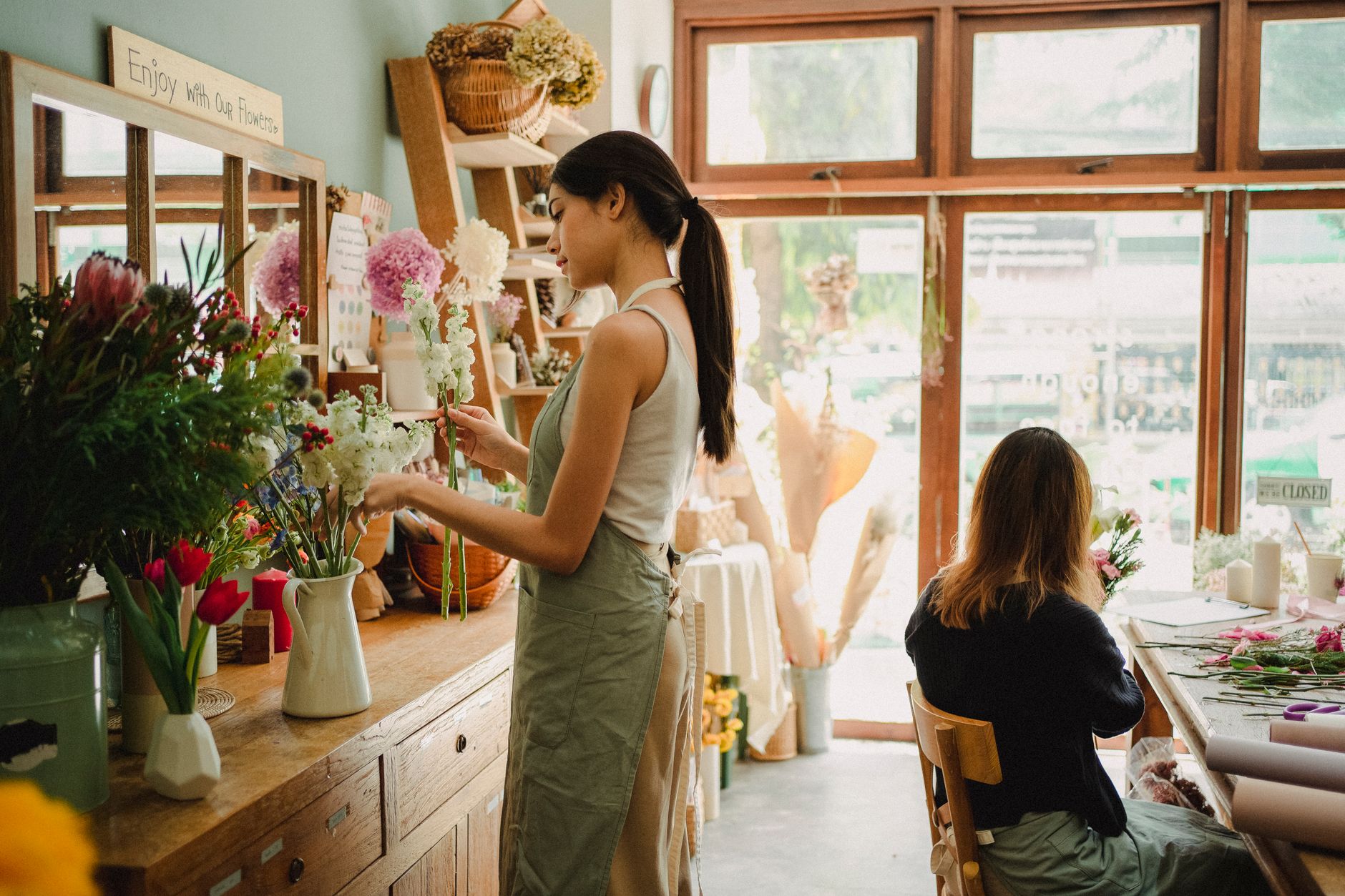
Your florist-teacher will spend the first 15 minutes showing you how to condition stems: cutting at a 45-degree angle under running water, removing lower foliage, and using sharp scissors (dull blades crush vascular tissue). You'll watch them demonstrate the spiral hand-tie—rotating each stem as you add it to create a radial cage that holds blooms at varying heights without florist foam. Then you work with real flowers: a mix of roses, greenery, filler blooms, and seasonal accent flowers chosen that morning from Hanoi's market or imported stock. Most beginners struggle with stem angles (they bunch stems vertically instead of radiating them) or over-crowd the center, so your teacher will gently reposition your hands and show you the difference in how light travels through a properly spaced bouquet. You'll wrap the stems in floral tape, then finish with kraft paper or tulle—choosing a color that complements your blooms. The entire class runs 2–2.5 hours; you leave with your bouquet and knowledge of why each technique matters, not just how to copy it.
How do flowers survive Hanoi's heat between class and your hotel
Hanoi's humidity and 28–35°C temperatures hit fresh-cut flowers hard, especially if you're carrying them around Old Town or through markets. We condition every stem with flower food that includes a biocide (kills bacteria in the vase water) and a sugar source, extending vase life significantly compared to untreated bouquets. During the workshop, we keep buckets of ice water nearby and mist arrangements if class runs long; we also choose heat-tolerant varieties in summer months—roses, dahlias, chrysanthemums, and celosia hold up better than, say, tulips or delphiniums. After you leave, place the bouquet in cool water immediately, strip any leaves below the waterline, and keep it out of direct sun and air-conditioning vents (temperature shock kills cells). Change the water every 2 days and re-cut the stems at a 45-degree angle if the arrangement sits more than 4 days. In peak heat, a properly conditioned bouquet lasts 5–7 days indoors; untreated flowers from a street vendor might wilt in 2. This is one reason travelers appreciate the workshop: you understand why flowers die and how to keep yours alive as a memory of Hanoi.
Choosing between a bouquet class, full arranging course, or seasonal design session
| Workshop Type | Best For | Duration | What You Take Home | Why Choose It |
|---|---|---|---|---|
| Bouquet-making workshop | First-timers, couples, busy travelers | 2–2.5 hours | One hand-tied bouquet | Fast, hands-on, romantic, immediate result |
| Flower arranging class | Design learners, expats, longer stays | 3–4 hours | One arrangement in vase or box | Learn principles (balance, color, form), deeper skills |
| Seasonal workshops | Holiday gift-makers, repeat visitors | 2–3 hours | Tet wreath, Christmas garland, lotus piece | Culturally specific, unique to Vietnam's calendar |
| Flower box & basket class | Gift buyers, event planners, couples | 2.5–3 hours | One decorated box or basket | Elevated presentation, longer vase life, Instagram-ready |
| Private & couple sessions | Anniversaries, proposals, solo travelers | 2–3 hours (custom) | Custom bouquet or arrangement | Personalized pacing, intimate setting, flexible timing |
Most travelers book a bouquet-making workshop if they're in Hanoi 1–2 days, or a flower arranging class if they're staying a week and want deeper technique. Couples often choose a private session to avoid group dynamics. Seasonal workshops suit repeat visitors or those with specific cultural interest.

What to check before you book your Hoan Kiem flower workshop
Timing and availability: Ask us for workshop dates on WhatsApp because our schedule changes weekly based on flower availability and group bookings. Peak tourist seasons (Sept–Nov, Jan–Feb) fill faster; off-season often has same-day or next-morning slots.
Language: All classes run in English; we accommodate other languages by request but confirm ahead—single-language groups teach better than mixed-language ones.
Physical setup: Classes happen in seated studios with tables and good light. If you have mobility issues, let us know when booking so we can arrange a comfortable workspace.
Flower allergies: Some travelers have latex sensitivity (from florist tape) or pollen allergies. Tell us upfront; we can swap materials and choose low-pollen varieties.
What you wear: Bring clothes you don't mind staining—floral tape, water, and stem juice leave marks. We provide aprons, but the workshop isn't sterile.
Group size: Private sessions run 1–4 people; small-group workshops hold 4–8. Larger groups (team building, hen parties) need separate coordination—mention your headcount when you ask for dates.
Carrying your bouquet home: Arrangements are wrapped in kraft paper or tulle; most fit a standard backpack or cabin-bag-sized carry. If you're flying same day, keep your bouquet upright in a water bottle or ask your hotel for a small vase to borrow.
Ask for workshop dates on WhatsApp
Other flower activities and workshops to pair with a class visit
If you're spending more than half a day around flowers in Hanoi, consider layering activities. A Vietnamese flower culture & market tour shows you where wholesalers source blooms, how prices vary by season, and which flowers are sacred in Vietnamese tradition—a 1.5–2 hour walk that deepens your understanding before or after a hands-on class. Team building workshops suit groups of 6–12 (companies, friend groups, families); we design these so everyone makes a small piece together, then you share a meal or photo session with the finished display. Kids and family workshops simplify the technique (no spiral hand-ties, more pre-cut stems, simpler color palettes) but keep the core experience—children as young as 6 have arranged flowers alongside parents in a 1.5-hour session. Couples often book a private session followed by a quiet coffee in the neighborhood to enjoy the result. For longer stays, a multi-week floral design course teaches you to design for weddings, events, and shops—but that's for serious learners, not one-off tourist experiences.
️ See how a class runs
One technique you can try at home after your workshop
The 45-degree angled cut: This single habit extends vase life by 3–5 days. Use sharp scissors (kitchen scissors crush stems; buy florist scissors if you love flowers). Cut each stem at a 45-degree angle—never straight across. The angle exposes more surface area for water uptake; straight cuts let stems sit flat on the vase bottom, blocking flow. Recut your stems every 2–3 days if the bouquet sits at home. This costs nothing, takes 30 seconds per arrangement, and is why workshop-trained flowers outlast grocery-store bouquets. Pair it with flower food (dissolve one packet per vase of water) and daily misting, and even tropical heat won't kill a bouquet in under a week.
Why book a hands-on workshop instead of a guided tour or museum visit
A flower workshop is rare in tourism because it teaches a skill you can use anywhere—at home, at events, when you want to give or receive a meaningful gift. Unlike a museum tour (you walk, watch, photograph) or market tour (you observe vendors), a workshop puts a tool in your hand, shows you consequences (too tight = water can't move; too loose = it collapses), and lets you make mistakes in real time with live guidance. You understand why a bouquet works, not just what it looks like. Most travelers report it's the most memorable thing they did in Vietnam because it's active, social, and portable—a skill and memory you carry home. Studio classes run rain or shine; we adapt for weather by keeping fans ready and choosing heartier flowers on humid days. The entire experience lasts a morning or afternoon, fits any itinerary, and costs less than a high-end restaurant meal—ask us for a quote on WhatsApp once you've picked your workshop type.
Ask for workshop dates on WhatsApp
FAQ
Can I do a flower workshop if I've never arranged flowers before?
Yes. All beginner classes assume zero experience. Your florist-teacher shows every step—cutting, conditioning, spiral hand-tie, color balance—and guides your hands as you work. Most first-timers finish with a bouquet they're proud of.
What if I'm allergic to pollen or latex?
Tell us when you book. We use pollen-free varieties (roses, hydrangeas) and tape-free wrapping (kraft paper, string) on request. A small number of flowers have high pollen; we avoid those if you mention allergies.
How long does a finished bouquet last if I take it to my hotel?
5–7 days indoors if you condition it (cut stems, remove lower leaves, add flower food, change water every 2 days) and keep it cool. Uncut bouquets or those in warm rooms wilt faster—usually 2–3 days.
Do you offer same-day or walk-in workshops?
Sometimes, but availability depends on flower stock and our teacher schedule. Message us on WhatsApp to ask about next-morning or same-afternoon slots—don't assume availability without checking.
What's the difference between a bouquet workshop and a full arranging class?
Bouquet workshops (2–2.5 hours) focus on hand-tied technique and wrapping. Arranging classes (3–4 hours) teach design principles (balance, focal point, color theory) and work with vases and sometimes foam. Choose bouquet if you want speed and romance; choose arranging if you want to learn deeper skills.
Can I do a workshop for an event like an anniversary or proposal?
Yes. Private and couple sessions run 2–3 hours and can be customized—we can incorporate symbolic flowers, color themes, or even a surprise reveal. Ask us on WhatsApp for private session details and availability.
Ask for dates
Tell us the city, the date and how many people. We reply on WhatsApp in English with workshop options and a quote.
FAQ
Can I do a flower workshop if I've never arranged flowers before?
Yes. All beginner classes assume zero experience. Your florist-teacher shows every step—cutting, conditioning, spiral hand-tie, color balance—and guides your hands as you work. Most first-timers finish with a bouquet they're proud of.
What if I'm allergic to pollen or latex?
Tell us when you book. We use pollen-free varieties (roses, hydrangeas) and tape-free wrapping (kraft paper, string) on request. A small number of flowers have high pollen; we avoid those if you mention allergies.
How long does a finished bouquet last if I take it to my hotel?
5–7 days indoors if you condition it (cut stems, remove lower leaves, add flower food, change water every 2 days) and keep it cool. Uncut bouquets or those in warm rooms wilt faster—usually 2–3 days.
Do you offer same-day or walk-in workshops?
Sometimes, but availability depends on flower stock and our teacher schedule. Message us on WhatsApp to ask about next-morning or same-afternoon slots—don't assume availability without checking.
What's the difference between a bouquet workshop and a full arranging class?
Bouquet workshops (2–2.5 hours) focus on hand-tied technique and wrapping. Arranging classes (3–4 hours) teach design principles (balance, focal point, color theory) and work with vases and sometimes foam. Choose bouquet if you want speed and romance; choose arranging if you want to learn deeper skills.
Can I do a workshop for an event like an anniversary or proposal?
Yes. [Private and couple sessions](/private-and-couples) run 2–3 hours and can be customized—we can incorporate symbolic flowers, color themes, or even a surprise reveal. Ask us on WhatsApp for private session details and availability.
More like this
Workshops for travelers
Flower Workshop for Tourists: Tools & Techniques in Hanoi & HCMC
We teach tourists real floral techniques—spiral hand-ties, color balance, stem conditioning—using imported and local flowers you take home same day.
Workshops for travelers
Flower Workshop for Tourists in Saigon: What to Expect
A flower workshop for tourists in Ho Chi Minh City puts you in front of real blooms, teaches core techniques in one session, and sends you home with an arrangement you made yourself—no experience needed.
Workshops for travelers
Flower Workshop for Tourists in Hoan Kiem: What to Expect
Hoan Kiem flower workshops teach tourists real arranging techniques in English, with imported and local blooms. You design, wrap, and leave with your creation the same day.