
Home › Blog › Workshops for travelers
Things to Do With Flowers in Vietnam: Hanoi Workshops & Experiences
By the Vietnam Flower Workshop team · 2026-11-06
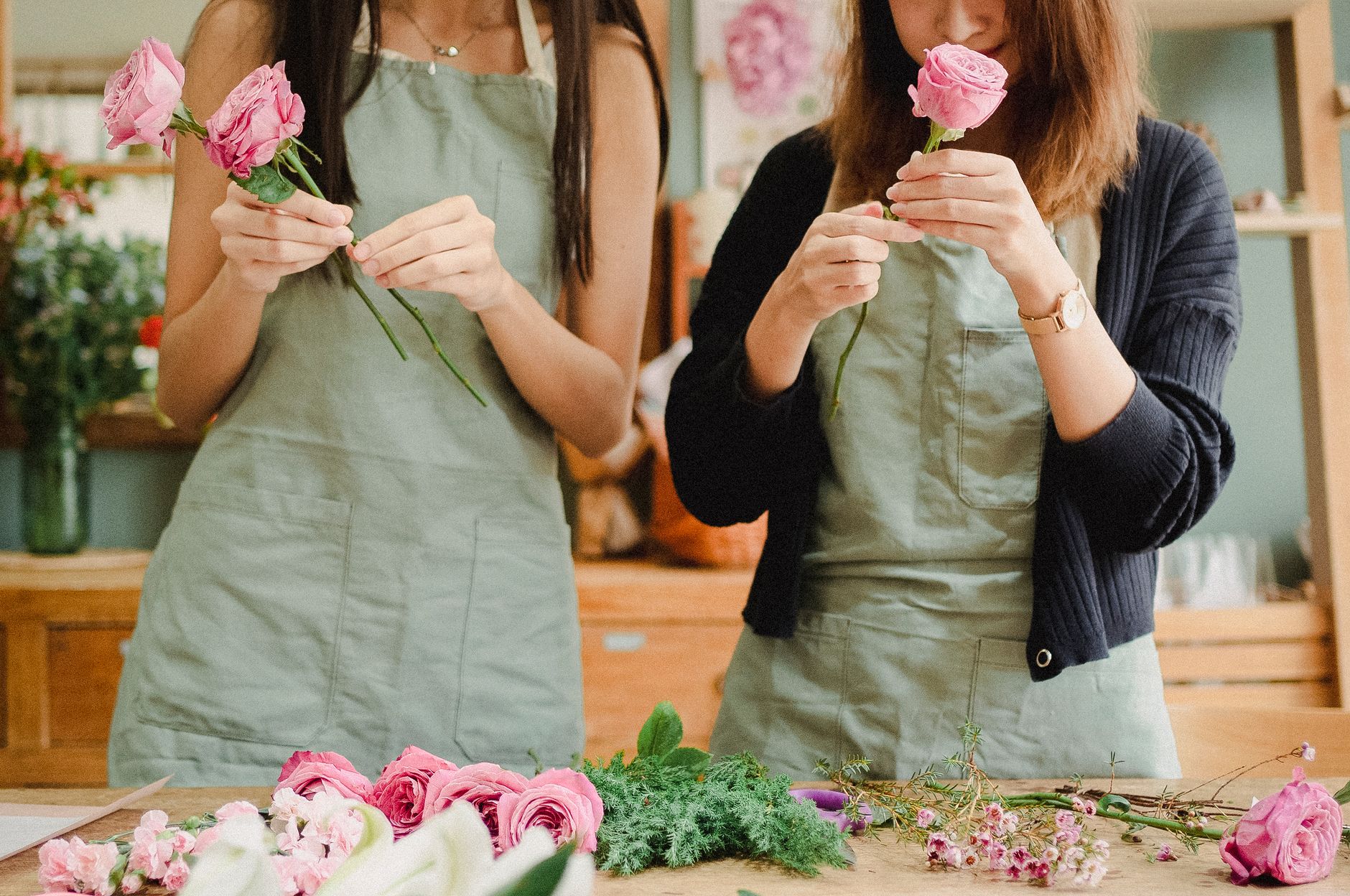
In Hanoi, flower experiences range from informal market tours exploring lotus and chrysanthemums to structured arranging classes where you condition real stems, practice hand-tie spirals, and wrap finished pieces. Vietnam Flower Workshop by Hoa Lang Thang teaches flower arranging, hand-tied bouquets, boxes, baskets, and seasonal designs (Tet wreaths, Christmas arrangements, lotus displays) in English for travelers and expats. Sessions run in small groups or private pairs; beginners typically struggle with hand tension, stem angle, and tropical-flower hydration in heat. We teach conditioning (hydrating, stripping foliage, cutting stems at 45°), color blocking, and wrapping. Kids' sessions adapt techniques to smaller hands and shorter focus; rainy days shift to covered spaces. Flowers survive Hanoi's humidity with daily water changes and misting. Ask us for a quote on WhatsApp for dates, group size, and session type — availability is confirmed real-time. Ask for workshop dates on WhatsApp | ️ See how a class runs
What flower workshops actually teach in Hanoi—and what beginners struggle with
Most travelers expect "nice arrangement time" and find instead a precise craft with physics. Stem angle, hand spiral tension, and hydration timing matter. Beginners often grip too tight (crushing stems), angle stems too vertical (weak spiral), or skip water uptake before arranging. We start every session with conditioning: remove lower leaves (rot risk), cut stems at 45° under running water (maximum capillary uptake), then submerge for 30 minutes in room-temperature water with flower food. Once conditioned, stems absorb water steadily even in Hanoi's heat (30–35°C in summer). The spiral hand-tie works like this: hold the focal flower at eye level, rotate it counterclockwise, layer each stem diagonally across the previous one—not radially outward. Asymmetry and depth matter more than perfection. We show this live, and each person builds muscle memory over 90–120 minutes. What surprises people is that tropical flowers (orchids, anthurium, protea) last longer than roses in humid air; we source both imported and local blooms depending on season. A first-timer usually leaves with one completed bouquet, one lesson in maintenance (daily water, re-cut stems, remove spent petals), and confidence to try at home.
️ See how a class runs

Hands-on classes vs. market tours: which experience is right for you?
Both exist in Hanoi; choosing depends on what you want to leave with.
| Experience | Who it's for | Time | What you take home | Best season |
|---|---|---|---|---|
| Flower arranging class | Makers, gift-givers, visual learners | 2–3 hours | One finished bouquet or box | Year-round |
| Hand-tie workshop | Detail-focused, hands-on builders | 2–2.5 hours | One wrapped spiral bouquet | Year-round |
| Seasonal design (Tet, Christmas) | Holiday prep, cultural learners | 2–3 hours | One seasonal arrangement (wreath, lotus display) | Tet (Jan–Feb), Christmas (Dec) |
| Market + arrangement combo | Cultural explorers, photographers | 3–4 hours | Knowledge of local blooms, one small arrangement | Jan–Oct |
A market tour alone teaches you flower names (hoa hồng = rose, hoa cúc = chrysanthemum), which vendors sell bulk vs. retail, how prices shift by season, and the role of flowers in Vietnamese holidays and funerals. You see lotus floating displays (summer), chrysanthemums (autumn), plum branches (Tet). You take no flowers home. A class or workshop puts you at a table with real scissors, foam or hand-tie structure, and time to build rhythm. The difference: a market tour is about flowers; a workshop is doing flowers. If you have 2–3 hours and want a keepsake, choose a workshop. If you want cultural context and photography, add a market element before or after.
Seasonal workshops: lotus, Tet wreaths, and Christmas—what's available when
Hanoi's flower calendar shapes what we teach and when.
Lotus season (May–September): Lotus floats in shallow bowls, anchored to a base. You learn to strip the stem (it's hollow, needs support), trim the leaf, arrange multiple blooms at varying heights. Lotus arrangements last 3–5 days and are deeply tied to Buddhist and summer aesthetics. We offer seasonal workshops featuring lotus design.
Tet season (January–February): Tet flower arranging centers on peach blossoms (hoa đào), kumquats, and gold-toned chrysanthemums. Arrangements often lean tall and asymmetrical (symbolizing growth and renewal). If you're in Hanoi in late January, book early; groups fill up.
Christmas (November–December): Green wreaths, imported poinsettia, dried foliage, and gold accents are common. We teach wreath-base wrapping, cluster placement, and balance for wall or table display. Not every participant is Christian; many see Christmas florals as winter décor and gift-giving tradition.
Off-season (March–April, October–November): We focus on hand-tie bouquets, boxes, and baskets with seasonal bulk blooms—roses, carnations, mums, orchids. Tropical flowers (anthurium, heliconia) are available year-round.
Group workshops, hen parties, and team building: who books what
Hanoi's mix of travelers, expats, and locals creates demand for different group formats.
Traveler groups (3–8 people): Most opt for a flower arranging class or bouquet-making workshop. Low pressure, 2–3 hours, shared table. We teach the same techniques but break it into fun milestones: conditioning, spiral demo, individual build, wrapping photo. Groups often bond over the shared "my first bouquet" moment.
Hen and birthday parties (6–15 people): These are hands-on, celebratory, and benefit from a dedicated party session. We can run them in our Hanoi or Ho Chi Minh City spaces or arrange private setups. Formats vary: everyone makes one bouquet, or teams compete on color balance or speed. Timing is flexible (2–3 hours typical). We adapt for energy and mix of skill levels.
Couples (private session): Private and couple sessions are popular with travelers and locals alike. One instructor, two people, your pace. Some couples make one shared piece; others each make one and photograph them together. No time pressure. Romantic, less public, deeper technique focus.
Corporate team building: Team building workshops teach collaboration, color theory, and mindfulness through flowers. Groups of 8–20 build one large installation together (passing stems, debating placement, solving the spiral in real time). It's creative problem-solving with a live outcome.
Kids and families: Kids and family workshops adapt hand-tie and foam techniques to ages 6+. We use smaller stems, lower tables, simpler color palettes, and shorter sessions (90 minutes). Foam is gentler for small hands; hand-tie spirals become "make a flower tornado" (less technical language, same motion). Parents often join; mixed-age groups work well because each person builds at their own pace.

How tropical flowers survive Hanoi's heat and humidity—and what to do at home
Hanoi's summer (May–September) hits 30–35°C with 80% humidity. Most flowers wilt in this if not treated right. Here's what we do and teach:
In the workshop: We keep buckets of water with flower food and ice cubes on hand. After conditioning, stems sit in cold water until arrangement time. We wrap finished pieces loosely (not plastic—air needs to move) and advise pickup or same-day placement in a cool room. We avoid over-packing foam with flowers (congestion traps heat and ethylene gas, which shortens vase life).
What to do at home: Change water every 2 days, re-cut stems by ½ inch at 45°, remove any leaves below the waterline (they rot and cloud water), and keep the vase away from direct sun and fruit (both speed ripening and wilting). In high heat, move the arrangement to the coolest room (often a bedroom away from windows). Orchids and anthuriums last 7–10 days in these conditions; roses and imported flowers 4–7 days.
Tropical vs. temperate: Tropical flowers (anthurium, heliconia, birds of paradise, protea) evolved in humid air and often outlast delicate roses in Hanoi. We mix them deliberately in summer designs. A beginner might assume imported roses are "better"—they're not in this climate; local and tropical blooms are smarter choices June–August.
A beginner's checklist: what to verify before booking a Hanoi flower workshop
Not all workshops run the same way. Here's what to confirm:
- Language: We teach in English for travelers and expats. Ask if instructors are fluent and if the pace suits your experience level.
- Flowers included: Confirm whether blooms are imported, local, or a mix. Seasonal blooms (lotus, Tet peach) cost more. Ask us for a quote on WhatsApp.
- What you take home: One finished arrangement? Two? Raw materials to practice at home? This changes value.
- Group size: Small groups (2–4) mean more correction and personalized pacing. Larger groups (8+) are louder, faster, better for celebration and cost per person.
- Duration: 90 minutes is tight but doable. 2–3 hours allows technique deepening and cleanup. Clarify whether this includes intro or just arranging time.
- Rainy-day plan: Hanoi's monsoon (May–September) brings sudden downpours. We shift indoor or reschedule; ask the cancellation policy upfront.
- Location: We operate in Hanoi and Ho Chi Minh City only. Both cities have workshop spaces. Ask for the exact address and parking/public transit details on WhatsApp.
- Accessibility: If mobility is an issue, mention it when you book. Tables can be adjusted; we've worked with various needs.
Ask for workshop dates on WhatsApp
Longer courses and skill progression: from first bouquet to floral design mastery
One-off workshops are fun, but some travelers and expats want to go deeper. We offer a floral design course that runs weekly or intensive formats. Over 4–8 weeks (or a packed intensive), you learn:
- Flower anatomy and conditioning (roots to bloom stages).
- Color theory and seasonal palettes.
- Hand-tie spirals, foam mechanics, foam-free Japanese methods.
- Vase design and balance for different vessels.
- Event arrangement (centerpieces, installations, bridal bouquets).
- Market sourcing and supplier relationships in Hanoi.
Typical progression: first class = one bouquet, early confidence. Week 3–4 = speed improves, color choices become deliberate, you critique your own work. Week 7+ = you think like a designer (reading a room, anticipating breakage, adapting on the fly). Most people who take the longer course either gift florals regularly, prep for a move back home where they want to sustain the hobby, or consider small-scale freelance work (weddings, events).
One technique you can try at home: the hydration test
Before arranging anything, test your water and flowers. Fill a vase with room-temperature water and a pinch of flower food (or sugar + a few drops of bleach if you don't have food). Cut a test stem at 45° and drop it in. Wait 10 minutes. Does it feel crisp and firm? Yes = good hydration. Limp = old flowers or bacterial buildup in the vase. Do this every time. You'll develop an instinct for which flowers are worth arranging and which to return or compost. This one habit—the hydration test—cuts waste and improves every arrangement you make.
FAQ
Can I book a workshop if I have no flower experience?
Yes. We teach beginners and assume no prior knowledge. Conditioning, spiral technique, and color balance are shown live step-by-step. Most people finish one complete bouquet in a first session.
How do I know if a hand-tie bouquet or a foam arrangement is right for me?
Hand-tie spirals are faster (30–45 minutes), portable, and feel artisanal. Foam boxes are slower, hold complex arrangements, and suit gifts. First-timers often prefer hand-tie because the learning curve feels gentler and the result feels handmade.
What if I'm traveling with kids—can they join?
Yes. We run dedicated kids and family workshops with adapted techniques and shorter sessions. Kids 6+ can build simple foam or hand-tie pieces. Parents often make their own piece at the same table.
Do I need to book weeks in advance?
We reply as soon as we can on WhatsApp with available dates and times. Availability depends on group size and season. Holidays (Tet, Christmas) fill faster; regular months often have openings within days.
How long do flowers last after I take them home?
Depends on the flower type and care. Tropical blooms (orchids, anthurium) last 7–10 days in Hanoi's heat if you change water, re-cut stems, and keep them cool. Roses and imported flowers last 4–7 days. We give you care instructions at pickup.
What's the difference between a workshop and a class?
We use these terms interchangeably—both are hands-on, 2–3 hours, and end with a finished piece. A "class" can imply more structured learning; a "workshop" can feel more casual. The experience is the same.
Ask for dates
Tell us the city, the date and how many people. We reply on WhatsApp in English with workshop options and a quote.
FAQ
Can I book a workshop if I have no flower experience?
Yes. We teach beginners and assume no prior knowledge. Conditioning, spiral technique, and color balance are shown live step-by-step. Most people finish one complete bouquet in a first session.
How do I know if a hand-tie bouquet or a foam arrangement is right for me?
Hand-tie spirals are faster (30–45 minutes), portable, and feel artisanal. Foam boxes are slower, hold complex arrangements, and suit gifts. First-timers often prefer hand-tie because the learning curve feels gentler and the result feels handmade.
What if I'm traveling with kids—can they join?
Yes. We run dedicated [kids and family workshops](/kids-and-family) with adapted techniques and shorter sessions. Kids 6+ can build simple foam or hand-tie pieces. Parents often make their own piece at the same table.
Do I need to book weeks in advance?
We reply as soon as we can on WhatsApp with available dates and times. Availability depends on group size and season. Holidays (Tet, Christmas) fill faster; regular months often have openings within days.
How long do flowers last after I take them home?
Depends on the flower type and care. Tropical blooms (orchids, anthurium) last 7–10 days in Hanoi's heat if you change water, re-cut stems, and keep them cool. Roses and imported flowers last 4–7 days. We give you care instructions at pickup.
What's the difference between a workshop and a class?
We use these terms interchangeably—both are hands-on, 2–3 hours, and end with a finished piece. A "class" can imply more structured learning; a "workshop" can feel more casual. The experience is the same.
More like this
Workshops for travelers
Things to Do With Flowers in Vietnam: What to Wear
Flowers are woven into Vietnamese culture—from temple offerings to celebration centerpieces. Our workshops teach you to arrange, design, and style blooms while discovering what works best in tropical heat.
Workshops for travelers
Rainy Day Flower Workshop: Indoor Activity in Hanoi & Ho Chi Minh City
When tropical rain floods Vietnamese streets, a flower workshop becomes your perfect indoor escape. We teach real floral techniques in climate-controlled studios—take home what you make.
Workshops for travelers
Things to Do With Flowers in Vietnam: Workshop & Activity Ideas
Vietnam's tropical flowers inspire travelers to move beyond viewing and make. We teach bouquet spirals, box arrangements, and seasonal pieces so you leave with skills and a design you created.