
Home › Blog › Workshop guides
Things to Do in Hanoi Old Quarter: Flower Workshop & Classes
By the Vietnam Flower Workshop team · 2026-11-06
Vietnam Flower Workshop by Hoa Lang Thang runs hands-on flower arranging sessions in Hanoi Old Quarter for travelers, couples, groups, and families. A typical session begins with stem conditioning and color theory, moves into spiral hand-tie or box design technique, and ends with you wrapping and taking home your work—usually the whole experience flows across a single visit. We use real imported and local flowers that arrive fresh daily; the heat and humidity here demand quick water changes and shade, which we manage on-site so your arrangement survives. Sessions suit anyone from first-timer to anyone planning a hen party or team building day. Beginners often rush the spiral or overthink color balance; we slow that down with guided steps. Cost varies by design type and flower selection; ask us for a quote on WhatsApp, and we'll confirm availability same-day in most cases. Ask for workshop dates on WhatsApp | ️ See how a class runs
What exactly happens in a flower workshop session?
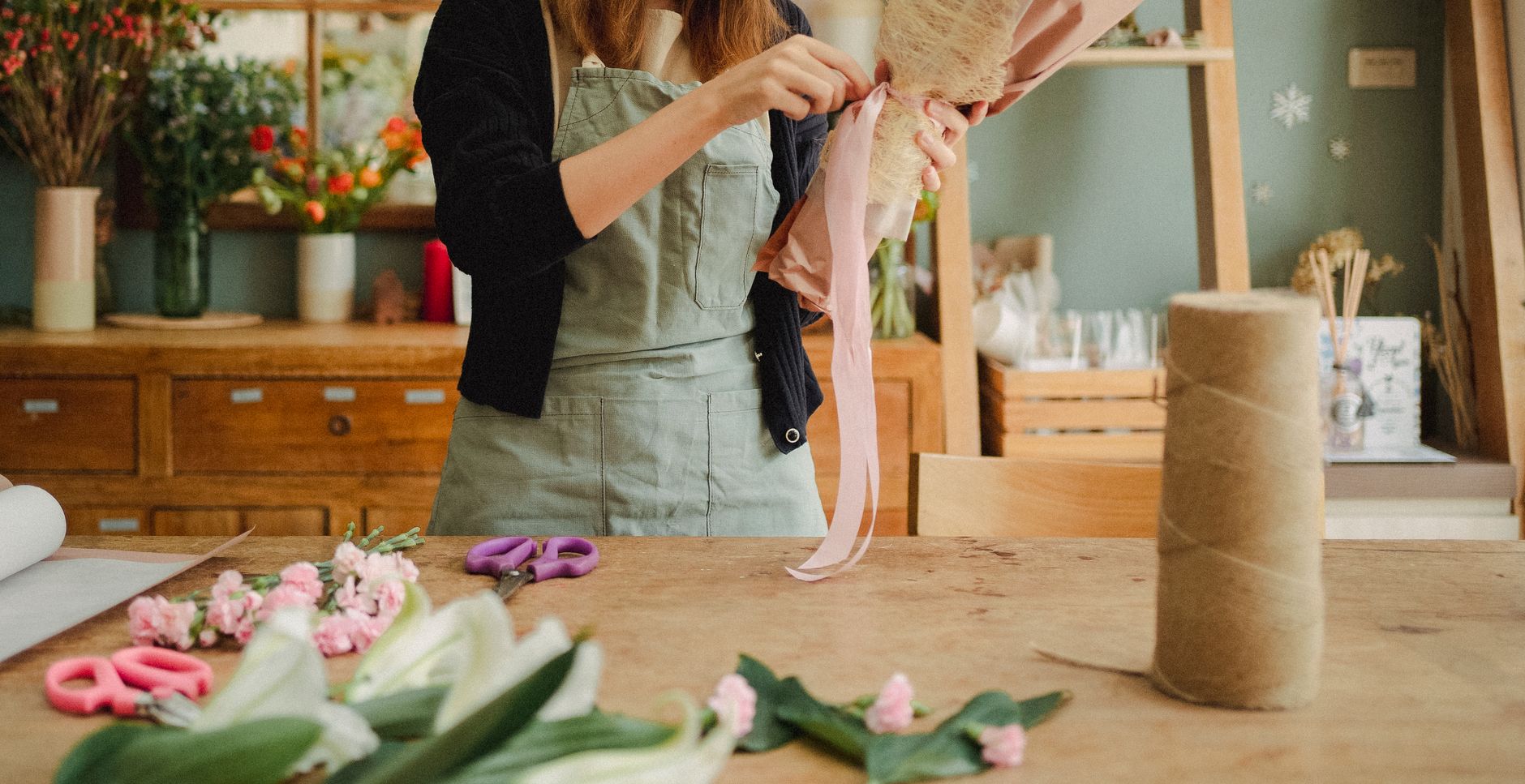
From the moment you arrive, we walk you through a five-step flow. First, you meet the flowers: we show you how to strip lower leaves, cut stems at 45 degrees, and condition them in room-temperature water for the first few minutes—this stops air bubbles clogging the vascular system. Next comes color theory: we explain warm versus cool tones, why three or five stems of one shade beats random mixing, and how green foliage acts as a neutral anchor. Third, you build the hand-tie spiral: holding the bouquet at a 45-degree angle, rotating it slowly, adding stems one by one in a descending spiral pattern. Fourth, you tie and trim the stems level. Finally, you wrap the stems in paper or fabric, and we show you how to carry it upright, where to keep it cool, and when to re-cut and water it at home. The entire process takes one visit; no waiting between sessions.

Why is Hanoi's heat a real problem for fresh flowers?
Hanoi's tropical climate—often 30–35°C and humid—accelerates water loss through leaves and petals. Flowers wilt faster here than in cooler climates because their cells dehydrate rapidly and ethylene gas (a ripening hormone) speeds aging. We counter this by keeping all flowers in cold storage until you're ready to work, misting foliage during class, and using sugar and flower food in the water to feed stems and lower bacterial growth. After you leave with your arrangement, we advise you to find a cool, shaded spot away from direct sun and air conditioning vents (which dry flowers faster than heat alone). Many travelers don't know that a finished bouquet lasts longer in a cool corner of a hostel room than on a sunny windowsill. We also teach you how to spot when an arrangement is fading—petals browning, stems getting soft—so you know when to refresh the water or trim again.
️ See how a class runs
Which workshop format fits your trip: solo, couple, group, or family?
Our private and couple sessions suit two people who want an intimate, slower pace and time to chat with the florist. Family and kids workshops adapt height, cutting tools, and design complexity—children often find the spiral tricky, so we simplify it into layered, bunch-and-tie work and let them choose colors freely. Team-building sessions combine small groups (typically 4–10 people) with a light competition element or a shared final piece; the energy is higher, and timing is tighter. Hen and birthday parties add themed flowers (pastels for a hen do, bold reds for an anniversary) and music, plus a group photo moment with finished work. Tourist-focused workshops assume no floral experience and run shorter, with guides who speak English fluently and explain each step in simple terms. Couples report they leave with a shared memory and a piece to take to their accommodation; families say kids talk about the workshop for weeks afterward; groups say the competitive edge or celebration focus makes it memorable without feeling like a class.
| Format | Who it suits | Key length | Why it works |
|---|---|---|---|
| Solo | First-timer, explorer | One visit | One-on-one feedback, no rush |
| Couple | Partners, anniversaries | One visit | Intimate, slower, you build two pieces or one together |
| Family | Kids 5+, parents | Shorter visit | Tools adapted, play-based color choices, low pressure |
| Group/team | Friends, colleagues, 4–10 | One visit | Energy, friendly competition, shared memory |
| Hen or birthday | 6–20 people, celebration | 2 hours+ | Themed flowers, group photo, celebration vibe |
How do beginners struggle—and how do we fix it?
The most common mistake is building the spiral too loose or too tight. Loose spirals collapse the moment you tie them; tight ones crease petals and bruise stems. We show you the "gentle grip" test: if a pencil placed in the spiral rotates slowly but doesn't fall, you've got it. Second, beginners chase symmetry obsessively—they want every stem the same height and angle. Reality is messier; a slight asymmetry and varied heights feel more alive. We encourage this by pointing out professional florist work around the city, where no two arrangements are identical. Third, they underestimate the importance of foliage. A bouquet of only flowers looks thin and fast-wilting; we teach learners to use 30–40% greenery (eucalyptus, ruscus, or local varieties) as a scaffold and water-holder. Last, they panic if a stem snaps or a petal bruises mid-work. We normalize mistakes—we fix them on the spot, show you how, and remind you that flowers are organic; flaws add character.

What's the real difference between a hand-tied bouquet and a box arrangement?
A hand-tied bouquet workshop teaches you the spiral grip, wrapping, and how to hold it upright. You leave with a vase-ready piece that guests can instantly drop into water. A flower box and basket arrangement uses floral foam, which allows you to place stems at any angle—tops, sides, even downward for trailing foliage. Boxes work better for gifts because they're fully arranged and stable; they don't spill or tilt. Bouquets are lighter, easier to carry on a motorbike taxi, and feel more personal because you've gripped them yourself. For Hanoi Old Quarter visitors, bouquets suit those staying in narrow hostel rooms or taking a flight same-day (they're compact); boxes suit those with a hotel room or planning a gift delivery. Both last equally long in heat if kept cool and watered daily. We offer both in every workshop; you choose based on your accommodation and how much hand-on-hand technique you want to learn.
How does the Old Quarter location change what you learn?
The Old Quarter sits in the heart of Hanoi's historic district, surrounded by markets, narrow streets, and constant foot traffic. Our studio is accessible by motorbike taxi, local bus, or short walk from major public landmarks and tourist areas. Because the Old Quarter is dense and bustling, you're working in a space where humidity is high and air conditioning is modest—this teaches you real-world flower care rather than lab conditions. We keep water running and flowers cold-stored just before you arrive, simulating what you'd do at home in a hot city. You also see local flower vendors and daytime market rhythms; some workshops include a guided flower culture and market tour so you learn where Hanoians source blooms, which varieties are seasonal, and why certain flowers are cheaper in summer. The Old Quarter location also means you can combine your workshop with exploring temples, cafés, and street food minutes away—it's a full Old Quarter morning or afternoon, not an isolated class.
Ask for workshop dates on WhatsApp
Can you book a longer course instead of a one-off session?
Yes. Our floral design course runs across multiple days or weeks and covers hand-tied bouquets, boxes, baskets, seasonal pieces (Tet wreaths, Christmas arrangements, lotus designs), color theory, stem mechanics, and even basic business skills if you're considering floristry professionally. One-off sessions teach you technique and let you take home one piece; courses build muscle memory and design confidence across many pieces and styles. Courses suit people staying in Hanoi longer (expats, remote workers on a working holiday, or travelers spending 2+ weeks) who want to deepen their knowledge. We structure courses so you can attend on your own schedule; ask us for a quote and available dates on WhatsApp, and we'll fit you into a cohort or run private lessons if you prefer.
What should you check before booking a workshop?
- Confirm availability on WhatsApp first. We reply as soon as we can; availability depends on flower stock and florist schedule.
- Wear clothes you don't mind getting wet. Flower water, soil, and plant sap splash; bring an apron or old shirt.
- Tell us about allergies or mobility needs. We can adapt stem height, cutting height, and table position.
- Expect to spend 1–3 hours depending on format. Fast bouquet-only sessions run shorter; courses and group workshops take longer.
- Bring a small bag or box if you want to carry your arrangement home immediately. We wrap it, but you need transport.
- Mind the time difference if you're booking from overseas. We're in Vietnam; reply times depend on local hours.
- Ask for a quote. We don't advertise prices publicly because costs vary by flower type, season, and group size.
For more details about how we run each workshop type, see our main workshop page or contact us directly.
FAQ
Do I need any flower experience to join a workshop?
No. We design every session for absolute beginners. You'll learn conditioning, spiral technique, and color balance from scratch. Advanced florists also join to refine their wrap or try new seasonal styles.
How long does a finished bouquet last in Hanoi's heat?
With daily water changes and a cool, shaded spot, 5–7 days. In direct sun or without water refresh, 2–3 days. We teach you the signs of wilting so you know when to refresh or enjoy it as-is.
Can I book a workshop the day I arrive or leave Hanoi?
Yes, we confirm same-day availability on WhatsApp. We reply as soon as we can; response times depend on local hours and florist schedule.
What if I'm traveling with kids—can they join?
Absolutely. Our kids and family workshops adapt tools, cutting height, and design complexity. Kids as young as 5 can participate with adult guidance. Younger children can help choose colors and arrange foliage.
Do I take my arrangement home, or do you deliver it?
You take it home the same day. Same-day delivery in Hanoi and Ho Chi Minh City is available for orders placed separately; for workshops, the piece you make is yours to carry or have us wrap for transport.
What flowers are used—imported or local?
Both. We source imported blooms (roses, peonies, tulips) and local varieties (lotus, chrysanthemums, sunflowers). Seasonal availability and heat influence which is fresher; we always choose what's best for your arrangement that day.
Can I book a private session for two people?
Yes. See our private and couples sessions page for details. We offer one-on-one or two-person formats with flexible scheduling.
How do I ask about pricing or book?
Ask us for a quote on WhatsApp. We reply as soon as we can with options, dates, and next steps based on your group size and format preference.
Ask for dates
Tell us the city, the date and how many people. We reply on WhatsApp in English with workshop options and a quote.
FAQ
Do I need any flower experience to join a workshop?
No. We design every session for absolute beginners. You'll learn conditioning, spiral technique, and color balance from scratch. Advanced florists also join to refine their wrap or try new seasonal styles.
How long does a finished bouquet last in Hanoi's heat?
With daily water changes and a cool, shaded spot, 5–7 days. In direct sun or without water refresh, 2–3 days. We teach you the signs of wilting so you know when to refresh or enjoy it as-is.
Can I book a workshop the day I arrive or leave Hanoi?
Yes, we confirm same-day availability on WhatsApp. We reply as soon as we can; response times depend on local hours and florist schedule.
What if I'm traveling with kids—can they join?
Absolutely. Our [kids and family workshops](/kids-and-family) adapt tools, cutting height, and design complexity. Kids as young as 5 can participate with adult guidance. Younger children can help choose colors and arrange foliage.
Do I take my arrangement home, or do you deliver it?
You take it home the same day. Same-day delivery in Hanoi and Ho Chi Minh City is available for orders placed separately; for workshops, the piece you make is yours to carry or have us wrap for transport.
What flowers are used—imported or local?
Both. We source imported blooms (roses, peonies, tulips) and local varieties (lotus, chrysanthemums, sunflowers). Seasonal availability and heat influence which is fresher; we always choose what's best for your arrangement that day.
Can I book a private session for two people?
Yes. See our [private and couples sessions page](/private-and-couples) for details. We offer one-on-one or two-person formats with flexible scheduling.
How do I ask about pricing or book?
Ask us for a quote on WhatsApp. We reply as soon as we can with options, dates, and next steps based on your group size and format preference.
More like this
Workshop guides
Things to Do in Saigon Flower Workshop: Hands-On Classes for Travelers
A flower workshop in Ho Chi Minh City lets you create and take home your own arrangement in a single session, combining relaxation with a tangible craft memory of Vietnam.
Workshop guides
Things to do in Hoan Kiem flower workshop: hands-on classes & designs
At Vietnam Flower Workshop by Hoa Lang Thang in Hanoi, you'll arrange real imported and local blooms, take your designs home, and learn techniques that survive Vietnam's heat. We run beginner-friendly sessions daily for travelers, couples, teams, and families.
Workshop guides
Ho Chi Minh City Rainy Day Activities: Indoor Flower Workshops
Ho Chi Minh City's monsoon months mean waterlogged streets and cancelled plans. Flower workshops held indoors offer a dry, creative way to spend rainy afternoons—learning real techniques, working with fresh blooms, and taking home arrangements you've made yourself.