
Home › Blog › Seasonal workshops
Lotus Flower Workshop Hanoi Old Quarter for Beginners
By the Vietnam Flower Workshop team · 2026-11-06
Vietnam Flower Workshop by Hoa Lang Thang offers beginner-friendly lotus arranging sessions in the Old Quarter—the spiritual and commercial heart of Hanoi's flower trade. Sessions run 2–3 hours; we supply fresh-cut lotus, seasonal greens, mechanics, and all wrapping materials; you take home your finished piece. Expect to learn stem conditioning (crucial in tropical heat), spiral hand-tying, color balance for lotus' natural pink-white palette, and wrapping technique. Most beginners struggle with stem weakness (lotus bruises easily) and spiral tension (too tight wilts petals), but we correct both live. Cost varies by group size and imported-stem availability—ask us for a quote on WhatsApp. The Old Quarter location puts you steps from Vietnam's oldest flower market, so you see where blooms come from before arranging them. Ask for workshop dates on WhatsApp | ️ See how a class runs
Why Lotus Is Harder Than Other Blooms for Newcomers
Lotus petals are thinner and more fragile than roses or hydrangeas; a beginner's grip often bruises them brown within hours. The stems are hollow and collapse if squeezed or bent sharply. We show you how to hold stems from the base—a two-finger pinch, never a palm clench—and why cutting at 45° under running water (not tap, but cool water from a basin) keeps the vascular tissue open. By the end of session, your hands know the difference. Most who skip this step go home disappointed when their lotus wilts by evening.

What Conditioning Means and Why Hanoi Heat Demands It
Conditioning is soaking cut stems in room-temperature water for 30–60 minutes before arranging, letting them drink fully before mechanical stress. In Hanoi's humid tropical climate (often 28–35°C April through September), a lotus that skips this step will lose 40–50% of its water uptake during arranging, causing petal curl and browning within 4 hours. We condition every stem when you arrive; we show you how it's done; then we arrange. At home, fill a bucket with cool (not cold—cold shocks Asian stems) water, submerge the bottom 10 cm of each lotus stem, and wait. If you're arranging same-day, skip this and watch your work fade by dinner. That's the honest trade-off.
How Our Old Quarter Studio Adapts to Hanoi's Rainy Season
June through September brings afternoon downpours; humidity can spike to 90%+ in minutes. Our studio has climate control (air conditioning and dehumidifiers, not just open fans) because wilting stems in a humid room are the biggest beginner frustration. When guests arrive soaked, we offer a 15-minute settling period in cool air before we start conditioning; this rehydrates petals that have begun to curl from rain exposure. We also teach the "float test"—if your finished lotus feels lighter than when you made it, it's already losing water; take it home in a tall vase with 5 cm of water (never packed flat) and it will last 3–4 days indoors in AC, or 1 day at room temperature. Rainy-day sessions are actually popular because the humidity reminds you that lotus is a water plant; treating it that way makes the difference.
Comparing Lotus Arranging to Year-Round Options: When to Book
| Bloom Type | Best Season | Beginner Difficulty | Session Length | Take-Home Life | Why Choose It |
|---|---|---|---|---|---|
| Lotus | June–Sept | Medium–High | 2–3 hrs | 3–5 days indoors | Sacred, iconic, seasonal rarity |
| Roses | Oct–May | Low | 1.5–2 hrs | 7–10 days | Forgiving, mass availability |
| Hydrangea | Jan–April | Medium | 2 hrs | 5–7 days | Large petals hide beginner gaps |
| Mixed Seasonal | Year-round | Low–Medium | 2 hrs | 4–6 days | Teach layering; most forgiving |
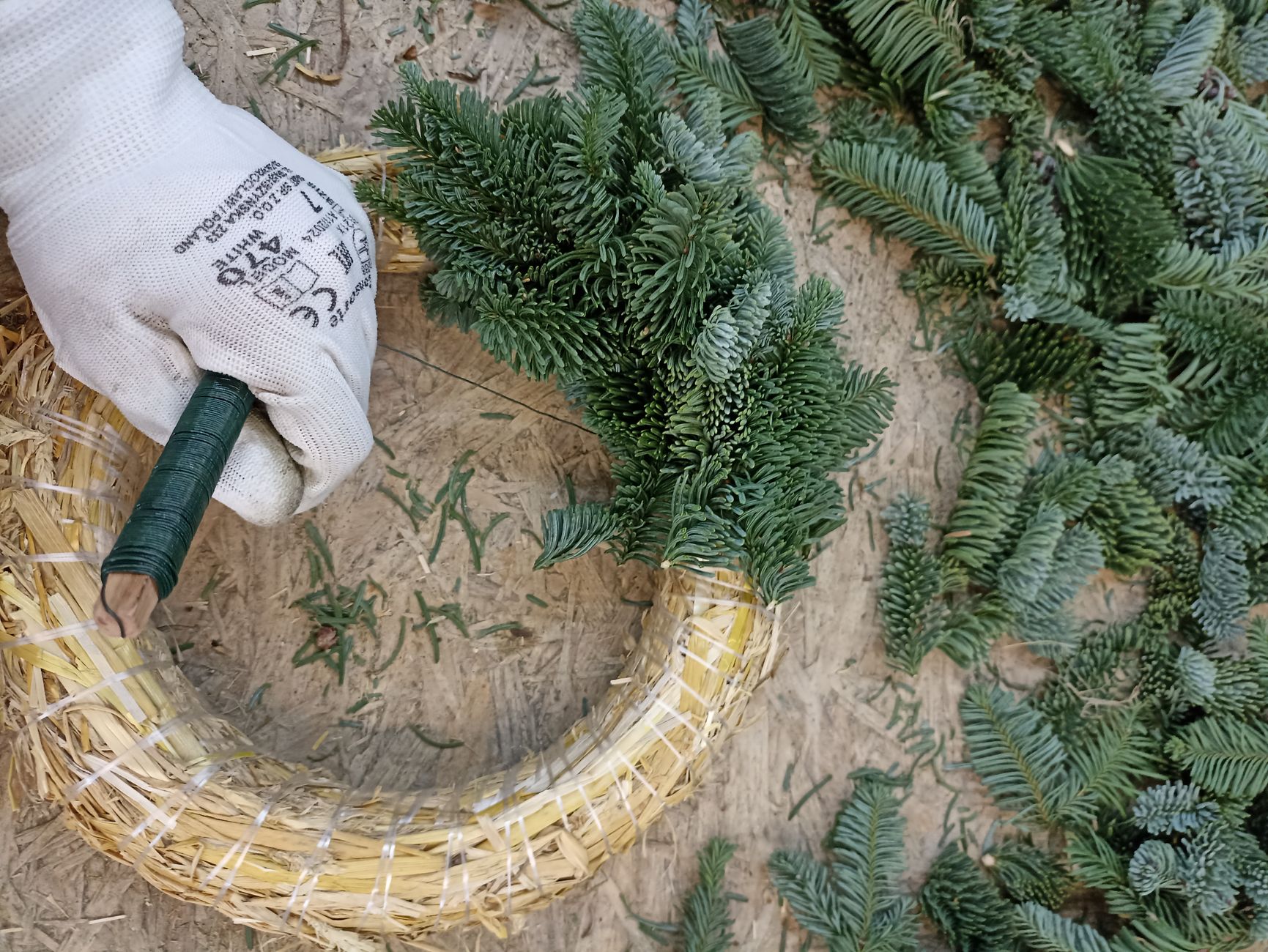
Lotus workshops run mid-June through end of September (the natural bloom window in Vietnam). If you visit outside that window, ask about our seasonal workshops—chrysanthemum (Aug–Oct), poinsettia and Christmas wreaths (Nov–Dec), or mixed arrangements. Beginners often pick lotus for its symbolic weight, not realizing the technique is genuinely harder. If this is your first flower class, consider a mixed seasonal arrangement first; lotus will feel less frustrating after you've held a stem once.
️ See how a class runs
Why the Old Quarter Matters: Flower Market Context You'll See Walking There
The Old Quarter (36 Pho Hang) is where Vietnam's largest fresh-flower wholesalers operate—vendors start work at 4 a.m., and by 8 a.m., blooms fill the streets. Our studio sits within this zone; when you arrive for your workshop, you walk past live stalls selling the exact lotus we've ordered for you. This isn't tourism; it's apprenticeship geography. You see market graders rejecting bruised lotus (the same stems you'd damage with a careless grip), you smell the cool-storage sheds, you understand why we condition. Many guests ask to return to the market afterward; we give walking directions and flower-naming tips in English. Vietnamese flower culture & market tour is a standalone offering if you want guided context, but even a solo walk after class teaches you more than any video.
Spiral Hand-Tie Technique: The One Skill That Changes Everything
The spiral hand-tie is the core technique: instead of layering flowers in a vase (which looks flat), you rotate each stem in your hand, each one angled slightly ahead of the last, creating a cone that spirals inward. Lotus petals sit outward; mechanics (foam or tape grid) stay hidden inside. Here's what we teach, and what you can practice at home with any stem bundle:
Step 1: Hold your first lotus stem upright in your left hand (if right-handed), base toward your palm. Step 2: Add the second stem at a 45° angle front-left; never straight in. Rotate your hand, don't rotate the stem. Step 3: Keep adding, each one slightly ahead of the last, turning your hand clockwise. The spiral grows naturally. Step 4: When the bunch feels balanced (usually 5–7 lotus, depending on size), tie it with floral tape around the base where stems touch. Step 5: Trim all stems to the same length, leaving 5 cm below the tie.
Most beginners over-tighten (crushing hollow lotus stems) or forget to rotate (creating a messy clump instead of a spiral). We show hands-on correction: if you're squeezing, we place your fingers; if you're not rotating, we guide your wrist. By session end, every guest ties one successfully because they feel the difference, not just hear it.
What Beginners Should Check Before Booking
- Am I visiting June–Sept? Lotus is seasonal; if you're here Jan–May, ask what's in bloom that month.
- Do I have 2–3 hours free? Rushing makes conditioning and technique stick poorly; block a full morning or afternoon.
- Can I carry a tall vase home? Your lotus needs to travel upright, not flat. We provide wrapping, but you need space in luggage or a carry-on. If you're flying out same day, ask us about packing options on WhatsApp before you book.
- Am I okay with flower stems being alive? They smell, they need water, they're not plastic. If you prefer low-maintenance, our non-floral workshops aren't the fit.
- Is this a group or solo session? We run private & couple sessions, small groups, and kids & family workshop with adults. Let us know your group size so we prepare enough stems and table space.
Ask for workshop dates on WhatsApp
What Makes Our Lotus Sessions Different from Tourist "Instagram" Classes
We don't stage your finished piece on a prop table for photos, then compost it. You take it home living. We don't rush conditioning or technique to fit a 60-minute slot; we run 2–3 hours so muscle memory actually forms. We don't use pre-made foam bases or glue guns (some tourist workshops do); we teach you to grip, tie, and balance by hand. And we don't pretend lotus is easy—we tell you upfront it bruises, wilts in heat, and will only survive 3–5 days if you're at room temperature. Honesty builds better craft.
If you want a slower, longer journey, our floral design course spans multiple sessions over weeks; lotus is one unit. If you're traveling with a partner, private & couple sessions let you both learn at your pace, no group chatter. If your kids are with you, kids & family workshop adapts the technique (shorter stems, softer grip teaching, quicker projects) so everyone learns the same principles without frustration.

FAQ
Can I do a lotus workshop if I've never arranged flowers before?
Yes. We teach conditioning, stem-holding, and spiral hand-tie from scratch. Lotus is harder than roses, so consider a mixed-bloom session first if you're very nervous, but beginners do finish a full lotus arrangement in 2–3 hours with our live guidance.
How long does a lotus arrangement last after I take it home?
3–5 days in air-conditioned indoors with 5 cm water in a vase; 1–2 days at room temperature. Hanoi heat is lotus's enemy. Keep it cool and watered daily, and it outlasts that window by a day.
Do you provide all materials, or should I bring tools?
We supply fresh lotus, seasonal greens, floral tape, wrapping paper, and all mechanics. You bring nothing except your hands. We provide scissors and pruners; you take your finished piece home same-day.
What if I'm visiting outside June–September when lotus isn't in bloom?
We offer seasonal workshops year-round: chrysanthemum (Aug–Oct), poinsettia and wreaths (Nov–Dec), roses (Oct–May), and mixed arrangements. Lotus is June–Sept only. Ask us on WhatsApp what's blooming during your visit.
Can I book a private lotus session for just two people or a couple?
Yes. Private & couple sessions are available; group sessions also run on fixed dates. Ask us for a quote on WhatsApp—pricing differs by group size and imported-stem cost that week.
Is the Old Quarter location easy to find and safe?
Yes. The flower market is the heart of the Old Quarter; it's busy, central, and tourist-familiar. Our studio is within the market zone (36 Pho Hang area). Just arrive 5–10 minutes early so you have time to orient; SMS/WhatsApp directions are sent when you book.
What if it rains on my workshop day?
Rain is normal here; we're indoors in an air-conditioned studio. Humidity actually helps lotus because it's a water plant—rainy-day sessions are popular. Just dry off when you arrive and let your hands settle in cool air for 5 minutes before we start.
Can I purchase lotus stems to practice at home afterward?
Ask us on WhatsApp about purchasing bulk stems. We source from the Old Quarter market; availability is seasonal (mid-June to end of September). We can advise on storage, conditioning, and cost per stem so you practice the spiral and conditioning at home.
Ask for dates
Tell us the city, the date and how many people. We reply on WhatsApp in English with workshop options and a quote.
FAQ
Can I do a lotus workshop if I've never arranged flowers before?
Yes. We teach conditioning, stem-holding, and spiral hand-tie from scratch. Lotus is harder than roses, so consider a mixed-bloom session first if you're very nervous, but beginners do finish a full lotus arrangement in 2–3 hours with our live guidance.
How long does a lotus arrangement last after I take it home?
3–5 days in air-conditioned indoors with 5 cm water in a vase; 1–2 days at room temperature. Hanoi heat is lotus's enemy. Keep it cool and watered daily, and it outlasts that window by a day.
Do you provide all materials, or should I bring tools?
We supply fresh lotus, seasonal greens, floral tape, wrapping paper, and all mechanics. You bring nothing except your hands. We provide scissors and pruners; you take your finished piece home same-day.
What if I'm visiting outside June–September when lotus isn't in bloom?
We offer [seasonal workshops](/seasonal) year-round: chrysanthemum (Aug–Oct), poinsettia and wreaths (Nov–Dec), roses (Oct–May), and mixed arrangements. Lotus is June–Sept only. Ask us on WhatsApp what's blooming during your visit.
Can I book a private lotus session for just two people or a couple?
Yes. [Private & couple sessions](/private-and-couples) are available; group sessions also run on fixed dates. Ask us for a quote on WhatsApp—pricing differs by group size and imported-stem cost that week.
Is the Old Quarter location easy to find and safe?
Yes. The flower market is the heart of the Old Quarter; it's busy, central, and tourist-familiar. Our studio is within the market zone (36 Pho Hang area). Just arrive 5–10 minutes early so you have time to orient; SMS/WhatsApp directions are sent when you book.
What if it rains on my workshop day?
Rain is normal here; we're indoors in an air-conditioned studio. Humidity actually helps lotus because it's a water plant—rainy-day sessions are popular. Just dry off when you arrive and let your hands settle in cool air for 5 minutes before we start.
Can I purchase lotus stems to practice at home afterward?
Ask us on WhatsApp about purchasing bulk stems. We source from the Old Quarter market; availability is seasonal (mid-June to end of September). We can advise on storage, conditioning, and cost per stem so you practice the spiral and conditioning at home.
More like this
Seasonal workshops
Mid-Autumn Flower Workshop for Beginners in Hanoi & HCMC
Mid-autumn flower workshops teach you spiral hand-ties and colour balance using seasonal blooms. We run beginner sessions in Hanoi and Ho Chi Minh City year-round, with autumn designs tailored to the festival.
Seasonal workshops
Lotus Flower Workshop: What to Expect in Hanoi & HCMC
A lotus flower workshop at Hoa Lang Thang teaches you to condition, spiral-wrap, and arrange Vietnam's sacred bloom in one hands-on session. You'll work with real imported and local lotus, take your finished piece home, and learn why summer heat demands different water-care tricks.
Seasonal workshops
Lotus Flower Workshop Vietnam: Hands-On Classes in Hanoi & HCMC
Vietnam Flower Workshop by Hoa Lang Thang teaches you to work with fresh lotus—a symbol of resilience and renewal—in hands-on seasonal workshops in Hanoi and Ho Chi Minh City. Whether you're a traveler, couple, or group, you'll condition stems, build spiral arrangements, and take home your creation.