
Home › Blog › Bouquet workshop
Hand Tied Bouquet Class Hanoi: Learn Spiral Technique & Take Home Flowers
By the Vietnam Flower Workshop team · 2026-11-06
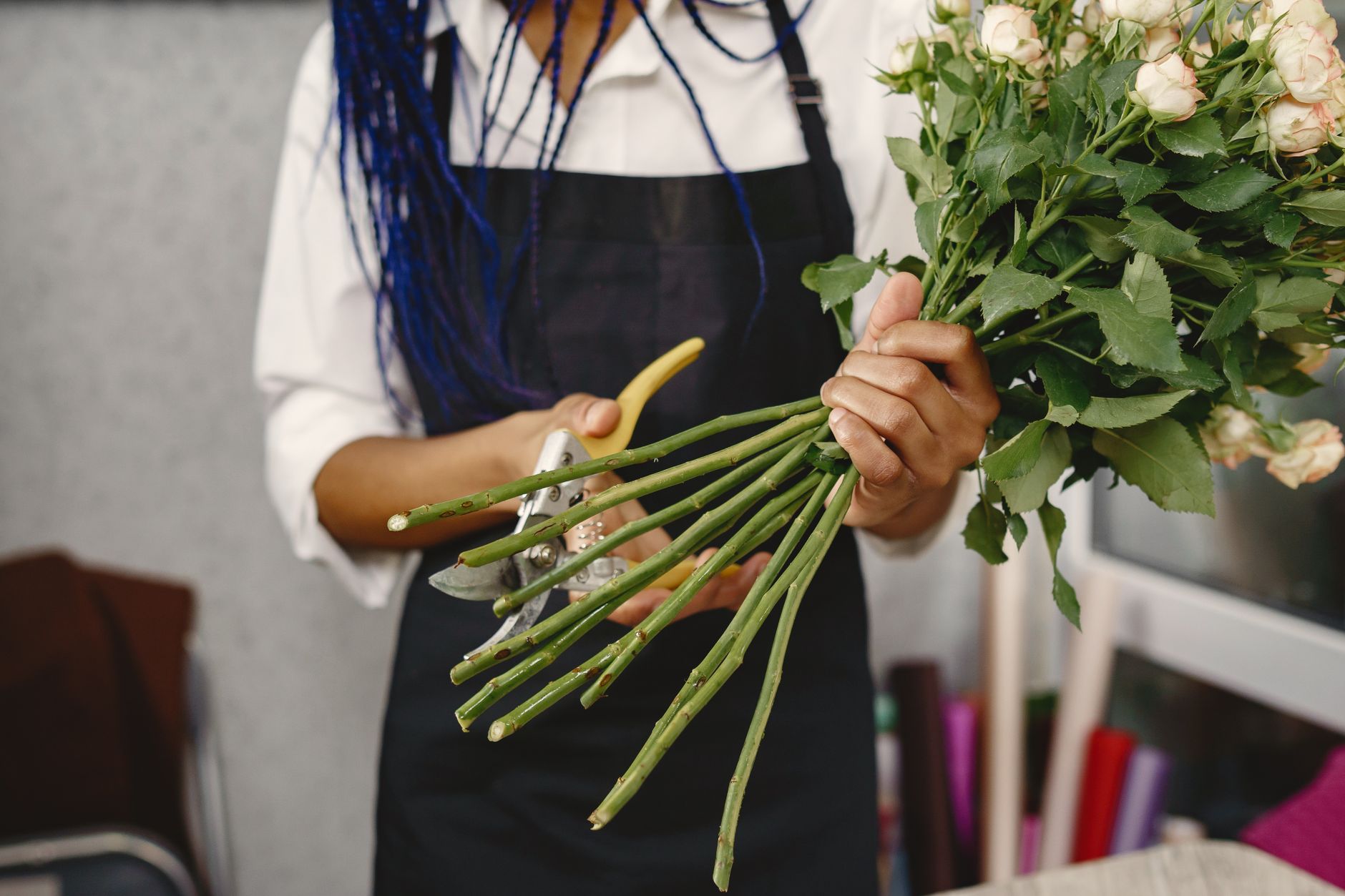
Vietnam Flower Workshop by Hoa Lang Thang runs hand tied bouquet classes in Hanoi where you learn the foundational spiral hand-tie technique over 90 minutes, working with real imported and local seasonal flowers that you take home. Classes suit first-time learners and travelers; we teach in English and adapt for solo, couple, or small group bookings. Each session covers stem conditioning (removing thorns, cutting at 45°, hydrating), hand positioning for the spiral, color balance fundamentals, and wrapping finish. No prior experience needed. We source premium flowers from verified suppliers; they're packed for transit and survive Hanoi's heat when you follow our aftercare steps. Ask us for a quote on WhatsApp for exact dates and group pricing. Sessions run most days; we reschedule free if rain blocks outdoor demo areas. Ask for workshop dates on WhatsApp
What Makes a Spiral Hand-Tie Different from Other Bouquet Styles?
A spiral hand-tie places each stem at a consistent 45° angle so stems wrap around a central axis, creating a domed, balanced shape that stands alone in a vase without a holder. Linear arrangements stack stems vertically; spirals rotate, so the bouquet's weight distributes evenly and water uptake improves.
Our beginner classes focus on spiral because it teaches hand position, stem angles, and spacing in one gesture. You'll feel how pressure changes as you add stems. Most students struggle with consistency—they nail the first five stems, then loosen their grip on stem seven. We slow this down: grip is thumb-and-first-two-fingers only; other three fingers remain loose, cradling the forming bundle. By minute 45 of class, muscle memory kicks in. The spiral also hides flaws: if one stem is slightly off-angle, the curve absorbs it.
This method underpins seasonal designs like Tet arrangements and Christmas wreaths, so mastering it here opens doors to more complex work later.

How Does Hanoi's Heat Affect Fresh Flowers During and After Class?
Hanoi averages 28–35°C during peak months; flowers transpire (lose water through leaves) 3–5× faster than in cool climates. Hydration before class is non-negotiable.
We condition every stem in ice water 2–3 hours before your session. This fills the stem's vascular system with moisture, buying you a safety margin. During class (90 minutes indoors, air-conditioned), no stems wilt noticeably. After you leave, the bouquet faces real heat if it's not misted and kept cool.
We provide a care card: mist daily, trim 1cm from the base every two days, keep away from direct sun and fruit bowls (ethylene gas speeds decay). Flowers last 7–10 days with this routine, even in summer. Without misting, they drop by day 4.
A beginner mistake: wrapping the bouquet too tightly during class traps moisture and encourages mold. Wrapping should be snug but allow air flow between the paper and stems. We teach this in real-time—you'll see our wrapping leaves small gaps so humidity doesn't build.
Who Should Book a Hand-Tied Bouquet Class, and Who Might Prefer a Different Workshop?
| Who They Are | Best Fit | Why | Next Step |
|---|---|---|---|
| Solo traveler (1–2 weeks in Hanoi) | Hand-tied bouquet class | One session, take-home gift, English taught | Book a single date |
| Couple on holiday | Private & couple sessions | 90–120 min, personalized pacing, photo ops | Combine with dinner plan |
| Corporate team (8–15 people) | Team building workshop | Larger numbers, team dynamics, flexible timing | Email dates/headcount |
| Kids (ages 6–12) | Kids & family workshop | Shorter (60 min), softer stems, group energy | Parent attends for free |
| Hen party or birthday | Hen & birthday parties | Socializing first, flowers second, flexible duration | Customize with snacks/music |
| Learning floral design seriously | Floral design course | Multi-week, advanced techniques, color theory | 4–8 week commitment |
Choose hand-tied bouquet class if you want one standalone session, quick skill gain, and a personal keepsake. Choose team building if you need 10+ people, flexible scheduling, and a group memory. Choose our floral design course if you're testing a career shift or want to lead workshops yourself.
What Techniques Will You Actually Master, and What Takes Years?
In 90 minutes, you'll master:
- Stem conditioning: removing lower leaves (bacteria zone), cutting at 45°, hydrating in room-temp water while working. This one action keeps your take-home bouquet fresh 3–5 days longer.
- Spiral grip and rotation: thumb and two fingers hold the base; the other hand spirals new stems inward, rotating the bundle 30° per stem. Muscle memory builds fast; by the end of class, you'll do it without thinking.
- Color balance: distributing 3–4 colors so no side of the bouquet is monochrome. We teach you to step back every 10 stems and check symmetry.
- Wrapping finish: paper or ribbon applied so the bouquet front-face is clear, sides are braced, and the grip stays clean for holding.
You will not master in one session:
- Proportion matching (knowing which flower size and stem length suit your hand span)
- Advanced color theory (analogous vs. complementary palettes, mood creation)
- Structural problem-solving (fixing a bouquet that's tilting mid-build)
These come in our multi-week floral design course. But you will leave class with a fully functioning, gift-worthy bouquet—and the confident knowledge that you built it yourself.
The honest truth: most students take 3–4 solo sessions to feel confident without guidance. Our private & couple sessions offer repeat booking at a per-session rate; many travelers return the next morning to build two or three bouquets once they've seen the method work.
How Do We Teach Different Group Sizes—Couple, Solo, or Team?
Solo learner (1 person): We teach 1-on-1 in 90 minutes. You get full attention; we correct grip instantly and adjust flower choices to your taste. Most solo students are travelers staying 1–2 weeks; they book, learn, leave with a bouquet, and feel proud. Pacing is entirely yours—no rush, no waiting for others.
Couple: Our private & couple sessions run 90–120 minutes. You sit side-by-side or across a shared table. Many couples enjoy light competition ("whose bouquet opens first?") or teaching each other. We encourage you to use different color palettes so the bouquets reflect each person's taste. Photos are common—we clear table space and step back.
Small group (3–5 people): We run these as semi-private: same 90-minute format, but we teach all at once and you feed off each other's energy. No one feels rushed because we bring enough flowers for demo and mistakes. Friends and families often book this way.
Large group (8–20 people, team building): Team building workshop runs 2–3 hours. We split into two stations if needed: half learn spiral while half learn flower box and basket techniques, then swap. This keeps energy high and avoids a bottleneck of people waiting for flowers. We brief the team on goals at the start—some want pure skill-building, others want a group photo moment. We adapt.
Kids and families: Kids & family workshop runs 60 minutes with modified stems (shorter, pre-cut). Kids work on mini bouquets (5–7 stems) while parents do full-size. We use softer flowers (celosia, carnations, seasonal branches) that kids can handle without thorns. Energy is playful; we celebrate every bouquet loudly.

What Should You Check Before Booking a Hand-Tied Bouquet Class?
Dates and times: We run sessions most days, but rainy days may shift timing. Confirm on WhatsApp. Group size fit: Solo, couple, or 2–5 person group? Each has different vibes; tell us your preference. Allergies or flower sensitivities: Some people react to pollen or certain species. Let us know so we swap in hypoallergenic options (roses, tulips, carnations vs. lilies or hypericum). Language: We teach in English; we can arrange Mandarin, French, or Japanese with 48 hours' notice. What you'll take home: Your finished bouquet, care sheet, and a photo of the moment (optional). The bouquet fits a standard vase; we provide a water-filled box for transport. Rain plan: If outdoor demo areas flood, we reschedule or do a full indoor session with pot demos instead. Accessibility: Our studio is street-level with a step at entry; wheelchairs fit in the working area.
Ask us for a quote on WhatsApp—include group size, preferred date, and any dietary or ability needs.
Ask for workshop dates on WhatsApp
Where Does Our Studio Fit in Hanoi, and How Do We Compare to Other Flower Workshops?
We run two locations: one in the central Hanoi area near the Old Quarter, and one in Ho Chi Minh City. Both are indoor studios with climate control, running water, and flower prep space visible to students—you see conditioning happen in real-time.
We specialize in flower arranging classes, seasonal workshops, and multi-week floral design training. Our bouquet class is hands-on: you touch, cut, and wrap every stem. We don't demo-only or use pre-made stems. You take your bouquet home, not a photo.
Competitors in Hanoi range from hotel-based activities (group focus, less personal) to side-room classes (limited water access, plastic flowers). We're studio-based so water and disposal are built in, flowers are fresh daily, and class sizes stay small (max 8 per session so everyone gets air and table space).
For travelers, we offer flower workshop for tourists that includes a short Vietnamese flower culture market tour—you see where we source and learn seasonal growing cycles. Hand-tied bouquet class alone is skill-focused; the tourist package adds cultural context.
How Do You Choose Flowers for Your Own Bouquet at Home, and When Should You Replace Them?
Choosing flowers:
- Focal flowers (biggest, 5–7 blooms): roses, peonies, dahlias, sunflowers. These anchor the design and are usually the most expensive per stem.
- Secondary flowers (medium, 8–12 stems): spray roses, celosia, snapdragons, stock. These add height and fill space.
- Filler and greenery (thin, 15–20 stems): eucalyptus, ruscus, dusty miller, waxflower. These bridge colors and soften edges.
The ratio rough rule: 1 focal : 1.5 secondary : 2 filler. So 5 roses + 8 celosia + 10 eucalyptus = a balanced bouquet.
Pick flowers all the same age when you buy. A mix of half-open and fully open blooms means some drop in 3 days, others in 10. Ask the florist: "Are these packed today?" or "When did these arrive?"
Replace when:
- Petals feel papery (dehydration, no misting aftercare)
- Leaves turn brown or smell musty (bacterial rot, water too warm)
- More than 30% of the blooms have wilted despite fresh water and misting (age—time to compost)
- Stem ends feel mushy or slimy (stem rot; this happens if you didn't cut 1cm off every two days)
Most bouquets last 7–10 days if misted daily and stems refreshed every other day. A bouquet lasting 14 days is exceptional and usually means it was very fresh at purchase and kept in cool conditions (under 18°C overnight).
️ See how a class runs
At-Home Practice: One Technique You Can Try Tomorrow
Try this spiral hold with grocery-store flowers (tulips, carnations, supermarket roses):
- Gather 7–10 stems, all the same length (or cut them to 25cm for practice).
- Remove all lower leaves so none touch water when you place the bouquet in a vase.
- Hold stems in your left hand (if right-handed): thumb on one side, index + middle finger on the other, forming a shallow V-shape at the base.
- Take one stem and place it upright in the V—this is your first "anchor" stem.
- Rotate the bundle 30° toward you (counterclockwise if you're right-handed). Place the next stem at a 45° angle to the anchor, leaning slightly outward. Gently press it into the bundle with your right hand's thumb.
- Rotate the bundle another 30°. Add the third stem at 45°.
- Keep rotating and adding. Don't tighten; just let the stems sit snugly in the hand.
- By stem 7, you should feel the bundle's weight settle and the spiral form emerge.
The "aha" moment: You'll feel how pressure builds. This is why we teach 90 minutes in person—you need a teacher to catch your grip loosening at stem 5 and remind you to stay consistent. At home, you'll feel the difference between "tight and choking" (flowers die from crushed vascular tissues) and "firm and stable" (the grip this technique requires).
Take a photo of your practice bouquet. Most students' homemade spirals are 70% there after one try—the stems are at odd angles but the bundle stands. After two or three tries, you'll nail it.
We're Ready to Teach You
Hand-tied bouquet classes in Hanoi are one of the most direct ways to build flower skills and confidence in a single afternoon. You'll leave with a gift-ready bouquet, knowledge you can use at home, and the quiet satisfaction of making something beautiful by hand.
We invite solo travelers, couples, families, and teams. Each session is personalized to your experience level and what you want to learn next.
Ask for workshop dates on WhatsApp
FAQ
Do I need any experience to join a hand-tied bouquet class?
No. Beginners are our standard student. You'll learn stem conditioning, spiral grip, and wrapping from scratch. We adjust pacing for mixed groups so everyone finishes a full bouquet.
Can I book a private session just for two people?
Yes. Our private & couple sessions are 90–120 minutes, 1-on-1 or couple-focused. Pacing and flower choices are entirely yours. Ask for pricing on WhatsApp.
How long do flowers last after class if I follow the care steps?
7–10 days with daily misting, fresh water, and stem refreshes every two days. Hanoi's heat speeds decay; without misting, expect 4–5 days. We provide a care card at class end.
What if it rains on the day of my class?
We reschedule free or move to a full indoor session (we adapt demos). Confirm the new date on WhatsApp. Rain rarely cancels; it just changes the schedule.
Do you offer classes in languages other than English?
English is our default. Mandarin, French, and Japanese are available with 48 hours' notice. Let us know your language when you book.
Ask for dates
Tell us the city, the date and how many people. We reply on WhatsApp in English with workshop options and a quote.
FAQ
Do I need any experience to join a hand-tied bouquet class?
No. Beginners are our standard student. You'll learn stem conditioning, spiral grip, and wrapping from scratch. We adjust pacing for mixed groups so everyone finishes a full bouquet.
Can I book a private session just for two people?
Yes. Our [private & couple sessions](/private-and-couples) are 90–120 minutes, 1-on-1 or couple-focused. Pacing and flower choices are entirely yours. Ask for pricing on WhatsApp.
How long do flowers last after class if I follow the care steps?
7–10 days with daily misting, fresh water, and stem refreshes every two days. Hanoi's heat speeds decay; without misting, expect 4–5 days. We provide a care card at class end.
What if it rains on the day of my class?
We reschedule free or move to a full indoor session (we adapt demos). Confirm the new date on WhatsApp. Rain rarely cancels; it just changes the schedule.
Do you offer classes in languages other than English?
English is our default. Mandarin, French, and Japanese are available with 48 hours' notice. Let us know your language when you book.
More like this
Bouquet workshop
Bridal Bouquet Workshop: What to Wear & How to Prepare
A bridal bouquet workshop demands clothes that won't stain easily and let your arms move freely. We'll show you exactly what to wear and how to prep for a hands-on session.
Bouquet workshop
Bridal Bouquet Workshop in Ho Chi Minh City
A bridal bouquet workshop teaches you to design and wrap your own wedding flowers using professional spiral hand-tie and color-balance techniques. We run hands-on sessions in Ho Chi Minh City and Hanoi where you take home a real, finished bouquet.
Bouquet workshop
Bridal Bouquet Workshop in Hanoi – Hand-Tie & Design Class
A bridal bouquet workshop teaches you to design and hand-tie a wedding-ready arrangement using real imported and local flowers. You leave with your finished bouquet, ready to carry or giftwrap for your big day.