
Home › Blog › Workshops for travelers
Flower workshop for tourists & beginners in Hanoi & HCMC
By the Vietnam Flower Workshop team · 2026-11-06
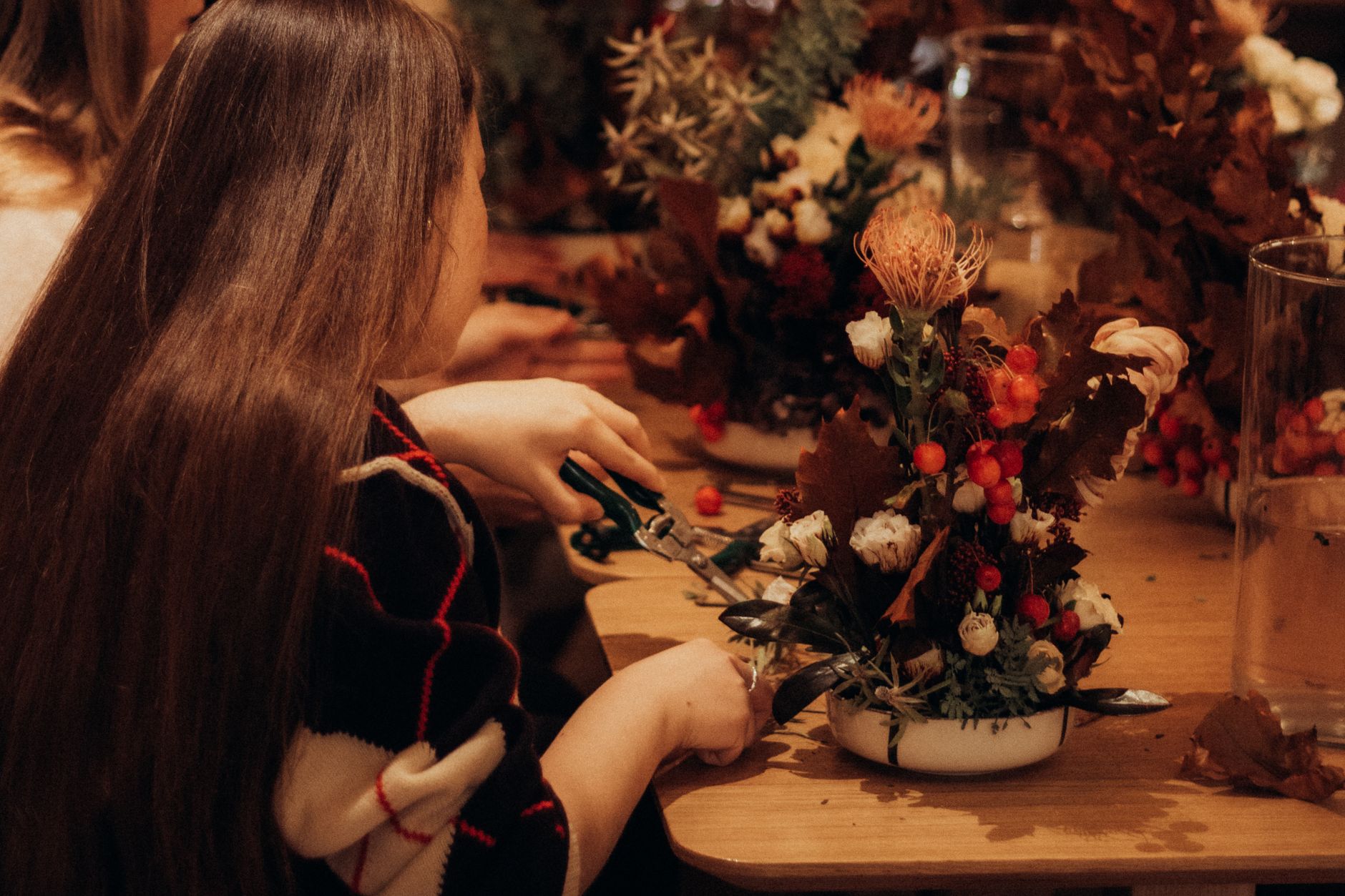
A flower workshop for tourists and beginners is a guided two-to-three-hour hands-on session where you learn to condition stems, build spiral hand-ties, balance color, and wrap finished bouquets using real imported and local flowers in a structured class environment. Vietnam Flower Workshop by Hoa Lang Thang runs daily sessions in Hanoi and Ho Chi Minh City, taught in English for travelers, expats, couples, and solo visitors with no prior floral knowledge required. You'll take home your completed arrangement the same day. Sessions adapt to group size: private pairs, small groups, or family bookings. The workshop covers conditioning (stripping leaves, cutting stems at 45 degrees to absorb water), the spiral technique (rotating stems in your hand to create a domed shape), color pairing (warm tones with cool, or monochrome), and professional wrapping. Ask us for a quote on WhatsApp—pricing varies by design type and group size. Most beginners struggle initially with hand pressure during the spiral (too tight = crushed stems; too loose = floppy heads) and misjudging stem lengths; we show you how to measure against your palm and adjust mid-build. Flowers survive the Hanoi and Ho Chi Minh City heat when misted hourly and kept in shade; we condition water with floral food. Ask for workshop dates on WhatsApp
What exactly happens minute-by-minute in a session?
When you arrive, we greet you in English and explain the day's design—often a hand-tied bouquet, seasonal arrangement, or flower box—based on your booking. First 10 minutes: we show you the flower types (roses, chrysanthemums, eucalyptus, local blooms), explain their water needs, and demonstrate stem conditioning at our prep station. Next 20 minutes: you practice under guidance—removing thorns and lower leaves, cutting each stem at a 45-degree angle, testing water uptake. Then 30–40 minutes: the build itself. We guide your hand into the spiral position, show you how to add flowers in a rotating rhythm, and coach color placement. Final 15 minutes: wrapping (kraft paper, twine, or clear sleeves) and finishing touches. You photograph your work, and we brief you on aftercare—mist daily, recut stems every two days, keep out of direct sun.

Why do beginners struggle with the spiral hand-tie technique?
The spiral hand-tie creates a domed, professional-looking bouquet by rotating all stems in one direction as you add flowers layer by layer. Beginners struggle most with grip strength and stem angle: holding too tight crushes delicate blooms and bends woody stems; holding too loose means flowers slip and your spiral collapses mid-build. The second common mistake is adding stems vertically instead of at a slight outward angle (15–20 degrees from your hand), which flattens the dome. We start by having you hold an empty hand position, then add mock stems (Practice with carnations or greenery first—they're forgiving.) and only progress to premium flowers once the motion feels rhythmic. You'll learn to let your wrist do the rotation, not your arm. Most people master basic control in their second session.
How do flowers survive the Hanoi and Ho Chi Minh City climate during a workshop?
Both cities are hot and humid, especially April through October. Flowers wilt fast without proper conditioning. We condition stems immediately upon unpacking: 45-degree cuts expose maximum stem surface area for water absorption; removing lower leaves prevents bacterial growth in the vase; and adding floral food (sugar + biocide) extends vase life by 5–7 days. During your session, we mist arrangements hourly with a spray bottle and keep them in our shaded workspace, away from direct sun and air-conditioning vents. After you leave, we brief you on aftercare: mist daily, keep the vase indoors in shade, recut stems every two days, and change the water if it becomes cloudy. Tourists often ask if their arrangement will survive a flight home—sealed in a clear sleeve with moist paper towels, most bouquets stay fresh for 24–48 hours.
Which workshop types suit different tourists?
| Workshop type | Who it's for | Duration | What you make | Why it works |
|---|---|---|---|---|
| Hand-tied bouquet | Solo travelers, couples | 2–2.5 hours | One spiral bouquet to take home | Classic, portable, photo-worthy |
| Seasonal arrangement | Holiday visitors | 2–3 hours | Tet wreath, Christmas arrangement, or lotus piece | Captures local traditions; built for your visit dates |
| Flower box & basket class | Small groups, friends | 2.5–3 hours | Low arrangement in a wooden box or basket | No vase needed; gifts for colleagues or hotels |
| Private & couple sessions | Honeymoon pairs, anniversaries | 2–3 hours | Custom design for two people | Intimate pacing; you choose the design |
| Kids & family workshop | Families with ages 6+ | 1.5–2 hours | Simple hand-tie or vase arrangement | Age-adapted techniques; shorter focus time |
We teach all levels identically: no beginner vs. advanced tracks. The design complexity (size, flower count, color combinations) adjusts to your pace and interest.
How do we adapt workshops for groups, kids, and rainy days?
Groups (6+ people): We split into pairs or trios, each working at one station with one instructor circulating. Larger groups (10+) join a demonstration-first format: we build a sample bouquet while narrating every step, then everyone replicates it at their own station. This keeps energy high and prevents bottlenecks. We use the same flowers for all participants on group days, which streamlines prep and ensures consistent results.
Kids (ages 6–10): We swap delicate premium roses for sturdier flowers like sunflowers, carnations, and daisies. Gripping and cutting are taught with child-safe scissors (blunt tips), and we focus on color mixing over perfect spirals. Kids often make a loose hand-tie or a vase arrangement (stems placed randomly but thoughtfully) rather than the technical spiral. Parents often join and learn the full technique while kids explore texture and color. Sessions run 1.5 hours to respect shorter attention spans.
Rainy days: Both our Hanoi and Ho Chi Minh City studios are fully indoors with climate control, so rain doesn't affect the workshop. However, we brief you on transporting your finished arrangement home—we wrap it in kraft paper and plastic sleeves so water droplets don't damage the blooms. We also recommend taking a photo immediately after wrapping so you have a backup memory if the journey home is wet.
What should you check before booking your first session?
Before booking on WhatsApp, confirm these details:
- Your dates and preferred times. We run sessions daily, but availability varies. Confirm exact times on WhatsApp, as slots fill quickly during peak tourist seasons (November–February in both cities).
- Workshop type you want. Choose hand-tied bouquet, seasonal, flower box, or private session based on the table above. If unsure, ask us for a recommendation.
- Group size. Confirm whether you're coming solo, as a pair, or with a larger group. We adapt pacing and flower quantities accordingly.
- Flower preferences or allergies. Let us know if you dislike certain colors or have fragrance sensitivities; we'll adjust your blooms.
- Language needs. We teach in English; mention if a co-participant needs translation or visual-only guidance.
- Aftercare supplies. We provide written aftercare instructions in English, but ask whether you'd like us to pack spare floral food for your hotel vase.
Do not assume pricing, timing, or availability—always confirm on WhatsApp.
Ask for workshop dates on WhatsApp
One technique you can try at home: the 45-degree stem cut
Even without attending a workshop, you can extend the life of store-bought flowers by mastering this simple cut. Use a sharp knife (scissors bruise stems and block water uptake). Hold the stem at a 45-degree angle to the blade and slice in one smooth motion, aiming for a 1-inch-long cut. The angled surface exposes roughly 50% more interior tissue than a straight cut, allowing faster water absorption and nutrient uptake. Cut stems every two days before placing in fresh water. A straight horizontal cut (what most home arrangers use) seals quickly against a vase bottom and starves blooms. The 45-degree angle keeps the cut surface exposed to water. Try it on a bouquet you've bought—you'll see noticeably longer vase life.
Learn floral design step-by-step with our longer floral design course or start with bouquet making workshop for travelers staying 1–2 weeks in Hanoi or Ho Chi Minh City.
How your session connects to local flower culture
Visiting our studio also exposes you to Vietnamese floristry traditions. We use both imported blooms (roses, tulips, peonies in cooler months) and local favorites (chrysanthemums, lilies, locally grown greenery). If you're curious about where these flowers come from, we offer a Vietnamese flower culture & market tour that pairs a studio session with a visit to local wholesale markets—you'll see how flowers move from grower to workshop. This adds context to your hands-on learning and supports your understanding of seasonal availability in Vietnam.
️ See how a class runs

FAQ
Do I need any prior flower or art experience to join a beginner workshop?
No. We teach all techniques from zero. Most participants have never held a stem in their hands before. We guide hand position, cutting angle, and spiral motion step-by-step. Your arrangement will be finished and beautiful regardless of experience.
Can I book a private session for just two people, or only groups?
We offer private & couple sessions for two people on dedicated dates. Confirm availability on WhatsApp. Pricing and timing vary, so ask for a quote.
What flowers are used, and can I choose colors?
We use imported (roses, peonies, tulips, eucalyptus) and local blooms (chrysanthemums, lilies, greenery). You don't pre-select individual flowers, but we show you the day's palette when you arrive and work with your color preferences during the build. If you have dislikes, mention them when booking.
How long will my finished bouquet last after I take it home?
With daily misting, fresh water, and stem recuts every two days, most arrangements last 7–10 days indoors away from direct sun. The exact lifespan depends on flower type—roses and spray roses last longer than dahlias or certain greenery.
Can children join, and what age is best?
We welcome children ages 6 and up. Under 6 is difficult because of focus span and cutting safety. Kids work with sturdier flowers and simpler designs (loose arrangements instead of spirals). Parents often join and learn the full technique while kids explore color and texture.
I'm traveling to Hanoi/Ho Chi Minh City for only one day—can I still take a workshop?
Yes. We run daily sessions in both cities. Sessions are 2–3 hours, so they fit into most itineraries. Confirm availability and exact timing on WhatsApp before your travel dates. Same-day booking is sometimes possible if slots remain.
What if I want to go deeper into floral design beyond a beginner session?
We offer a floral design course for travelers and expats staying 2+ weeks. This covers multiple design styles, wedding work, seasonal pieces, and business fundamentals. Start with a beginner workshop, then ask us about progression options. --- Ask for workshop dates on WhatsApp
Ask for dates
Tell us the city, the date and how many people. We reply on WhatsApp in English with workshop options and a quote.
FAQ
Do I need any prior flower or art experience to join a beginner workshop?
No. We teach all techniques from zero. Most participants have never held a stem in their hands before. We guide hand position, cutting angle, and spiral motion step-by-step. Your arrangement will be finished and beautiful regardless of experience.
Can I book a private session for just two people, or only groups?
We offer [private & couple sessions](/private-and-couples) for two people on dedicated dates. Confirm availability on WhatsApp. Pricing and timing vary, so ask for a quote.
What flowers are used, and can I choose colors?
We use imported (roses, peonies, tulips, eucalyptus) and local blooms (chrysanthemums, lilies, greenery). You don't pre-select individual flowers, but we show you the day's palette when you arrive and work with your color preferences during the build. If you have dislikes, mention them when booking.
How long will my finished bouquet last after I take it home?
With daily misting, fresh water, and stem recuts every two days, most arrangements last 7–10 days indoors away from direct sun. The exact lifespan depends on flower type—roses and spray roses last longer than dahlias or certain greenery.
Can children join, and what age is best?
We welcome children ages 6 and up. Under 6 is difficult because of focus span and cutting safety. Kids work with sturdier flowers and simpler designs (loose arrangements instead of spirals). Parents often join and learn the full technique while kids explore color and texture.
I'm traveling to Hanoi/Ho Chi Minh City for only one day—can I still take a workshop?
Yes. We run daily sessions in both cities. Sessions are 2–3 hours, so they fit into most itineraries. Confirm availability and exact timing on WhatsApp before your travel dates. Same-day booking is sometimes possible if slots remain.
What if I want to go deeper into floral design beyond a beginner session?
We offer a [floral design course](/floral-design-course) for travelers and expats staying 2+ weeks. This covers multiple design styles, wedding work, seasonal pieces, and business fundamentals. Start with a beginner workshop, then ask us about progression options. --- [🌸 Ask for workshop dates on WhatsApp](https://wa.me/84969293894)
More like this
Workshops for travelers
Things to Do with Flowers in Vietnam: Workshops, Markets & Gifts
Vietnam's flower culture runs deep—from morning market vendors to Tet arrangements to modern floral design. We guide travelers through workshops, tours, and gift options.
Workshops for travelers
Things to Do with Flowers in Vietnam in English
Travelers and expats in Vietnam can book English-language flower workshops where you design, arrange and wrap bouquets or seasonal pieces in real time. We teach conditioning, color balance, and hand-tie spirals—no experience needed.
Workshops for travelers
Things to Do with Flowers in Vietnam: What to Expect
Vietnam's flower culture runs deep, from temple offerings to wedding centerpieces. The most authentic way to experience it isn't watching—it's arranging.