
Home › Blog › Flower arranging class
Flower arranging class ideas: hands-on workshops in Hanoi & HCMC
By the Vietnam Flower Workshop team · 2026-11-06
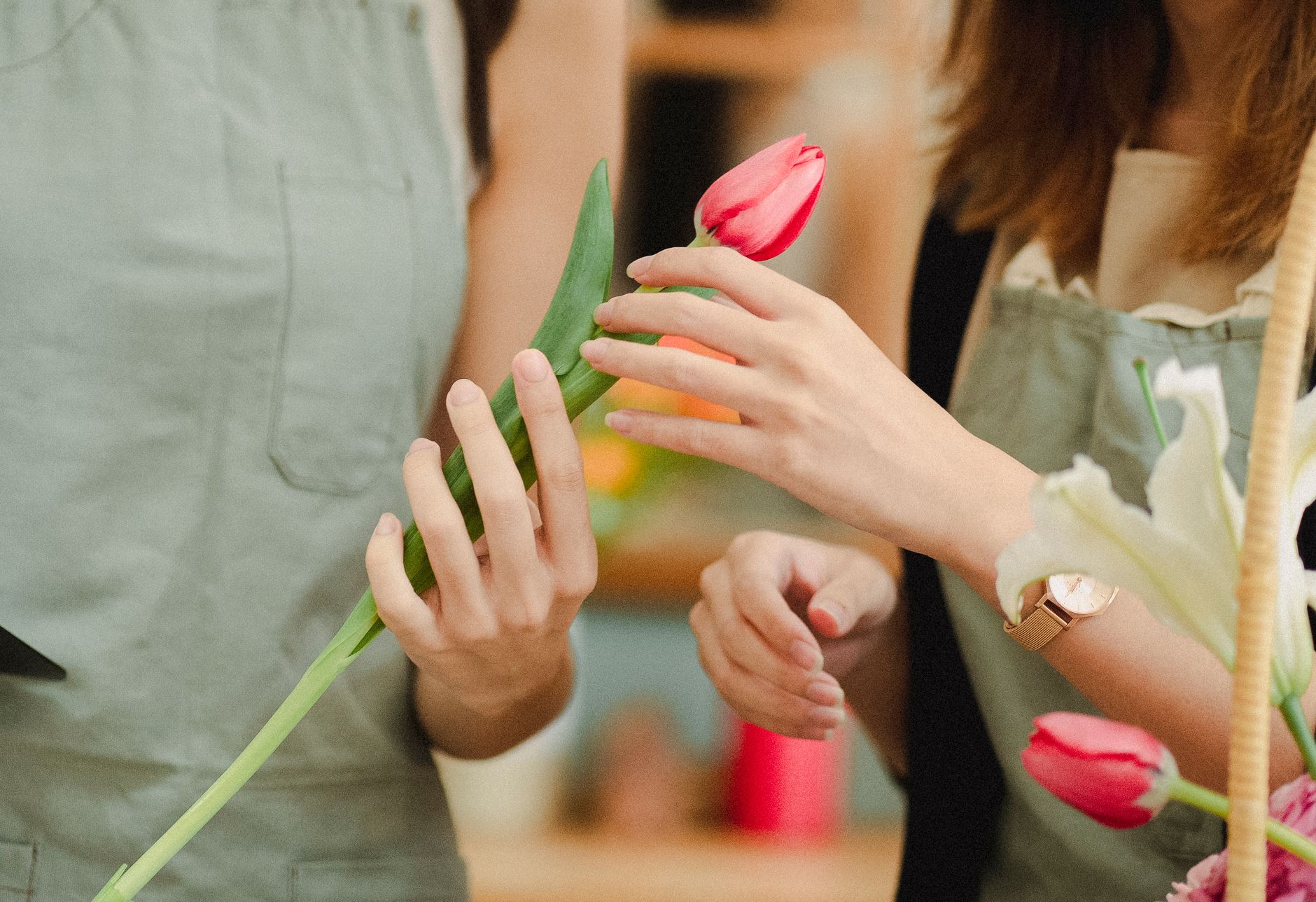
A flower arranging class is a hands-on session where you learn to build a bouquet or arrangement from scratch using real imported and local flowers. Vietnam Flower Workshop by Hoa Lang Thang runs classes in Hanoi and Ho Chi Minh City lasting 1.5 to 2 hours. You condition stems, practice spiral hand-tie technique, balance color and texture, wrap your piece, and take it home the same day. No experience needed. Classes suit solo learners, couples, birthday groups, hen parties, families with kids, and corporate teams. Availability is confirmed on WhatsApp; ask us for a quote. We adapt format and flowers based on season, group size, and the Hanoi or Ho Chi Minh City heat and humidity. ️ See how a class runs
What type of arranging class is right for your group?
The right class depends on your goal, time, and group size. Solo travelers often join traveler-focused workshops where you learn technique and leave with a finished piece. Couples book private sessions to focus on one design together. Families choose kids and family workshops where children work on smaller or simplified pieces at their own pace. Birthday hosts, hen parties, and corporate teams often prefer group party or team-building sessions with a fun, informal vibe and decorations. For serious learners, a multi-week floral design course teaches seasonal design, client work, and business skills. Each format adapts the flowers, techniques, and pacing to suit the group.

How do we teach beginners who've never held a stem knife?
Most beginners worry about making mistakes—there aren't any. You start by conditioning stems: we show you how to hold the knife, strip leaves 2 inches from the base at a 45-degree angle, and split woody stems so water moves up faster. This takes 5 minutes. Next, you learn spiral hand-tie: holding the bundle at a slight angle, you rotate and add stems in a spiraling pattern so they cross and lock. Beginners struggle most with releasing the spiral too early or tightening it unevenly; we guide your hands until the motion feels natural. Within 20 minutes, you're building your first bouquet. We stay beside you, adjust your grip, and celebrate every win. No judgment, only discovery.
What happens during a typical session, minute by minute?
We welcome you, explain the day's design (loose hand-tied bouquet, structured box, or seasonal piece), and show the flower palette. Next 10 minutes: you select stems, condition them, and arrange them dry on the table to plan your color flow. Then 25–30 minutes: you begin the spiral, adding focal flowers first (roses, peonies), then secondary flowers (hypericum, waxflower), then filler (ruscus, eucalyptus, baby's breath). We check balance and density every few steps. You trim the spiral base flat, add floral foam or wet it if boxed, and secure stems. Final 15 minutes: wrapping—kraft paper, ribbon, twine—and technique notes so your piece lasts at home. You photograph it, ask questions, and take it with you. Rainy days don't disrupt classes; we work indoors, adjust humidity by misting, and use flowers that handle moisture well (roses, carnations, hypericum).
Why do flowers wilt so fast in Hanoi and Ho Chi Minh City heat?
Tropical heat and humidity in both cities accelerate water loss from petals and shorten vase life if stems aren't prepped correctly. At workshop, we teach you the conditioning that slows this: remove all foliage below the waterline (bacteria thrive on leaves and clog stems), cut at 45 degrees, split woody stems, and use room-temperature water with flower food. We choose heat-tolerant varieties—roses, chrysanthemums, hypericum, solidago—over fragile ranunculus or tulips. After class, tell guests to keep arrangements away from direct sun, air conditioning vents, and ripening fruit (ethylene gas kills blooms). Change water every 2 days and re-cut stems if they sit for more than a day. Pieces made with this care last 5–7 days even in peak heat; without it, 2–3 days is typical.
How do kids and families work together in a single class?
We adapt by pairing each child with a parent or older sibling and scaling down the design. A child builds a small hand-tied posy (6–8 stems instead of 15–20) using the same techniques but with simpler color palettes—three colors instead of six. A parent builds a full bouquet beside them. Both spiral, wrap, and learn together. Kids aged 6+ manage the knife with supervision and gain confidence handling real flowers. Younger children (4–5) focus on arranging pre-cut stems in a short vase with foam, so no cutting needed. We supply small, lightweight stems and tie down the spiral tighter so it's stable. Families often do this on weekends; siblings cheer each other on, and parents say they love seeing their kids' focus and pride when they walk out holding their own piece.
| Class type | Who it suits | Duration focus | Why choose it |
|---|---|---|---|
| Solo traveler workshop | Individuals visiting Hanoi or HCMC | 1.5–2 hours | Learn one design, take home proof of skill |
| Private couple session | Partners, fiancés, anniversaries | 2 hours | Relaxed pace, one-on-one guidance, shared focus |
| Family workshop | Parents + kids (4+) | 1.5 hours | Kids build posy, parent builds full bouquet, shared joy |
| Birthday or hen party | Groups of 6–12, celebration vibe | 2–2.5 hours | Fun, group energy, each guest takes home a piece |
| Team-building session | Corporate groups, 8–15 people | 2 hours | Collaborative challenge, non-work creativity, morale boost |
| Seasonal workshop | Any group, specific occasion | 1.5–2 hours | Tet, Christmas wreaths, lunar New Year lotus designs |
| Multi-week course | Serious learners, aspiring florists | 4–8 weeks, flexible | Business skills, client work, professional portfolio |
What beginners struggle with and how we fix it in real time
Spiral too tight. Beginners clench the bundle, cutting off water flow. Fix: loosen your grip, let stems flex and breathe inside the spiral. Watch the angle—at 45 degrees, stems lock without force.
Adding filler too early. You cover gaps before the focal shape is set. Result: a dense, shapeless blob. Fix: build the frame first (roses, peonies), then fill around. We guide your hand placement and step back so you see the structure grow.
Uneven height. Stems poke out at random lengths, no sense of flow. Fix: trim after the spiral is locked. Hold the bunch upright, eye level, and cut the base so the tallest stem is 1.5× the vase height. This rule works for any design.
Leaves underwater. They rot and clog stems. Fix: strip foliage 2 inches from the base before you spiral. We demo this on the first stem; then you repeat it for every batch.
Wrapping too loose. Paper slips off or looks crumpled. Fix: fold kraft paper at a 45-degree angle under the spiral base, crease hard, then wrap in a spiral yourself. Practice the crease three times and you'll nail it.
How we adapt classes for rainy days, groups, and different skill levels
Rainy Hanoi or Ho Chi Minh City. We move everything indoors (no outdoor garden elements). We use flowers that tolerate moisture—roses, carnations, hypericum, solidago. We keep the studio humidity stable by opening windows gently and misting arrangements lightly only if they sit for longer than 15 minutes between sections. We don't rush; participants take the same time to learn, just in a sheltered space.
Large groups (10+). We either run two parallel classes with one florist each, or one larger class with an assistant. Each participant still gets hands-on time and a finished piece; we just pace rotations so while some spiral, others condition stems or plan their color flow. Energy is high; guests cheer each other on.
Mixed experience levels. Beginners and near-beginners work in one group; we pair anyone with prior flower experience as a buddy to a beginner. The buddy doesn't build for them—they whisper tips and show their own technique. Everyone still finishes one piece. We've found peer teaching builds confidence and holds the group's pace.
Kids aged 4–5. No knife work. We pre-cut stems to safe lengths, use short vases with floral foam, and let them arrange freely. They discover color balance by trial and error; we ask "which flower should go next?" instead of telling them.
Corporate team-building. We set a group challenge: can the team build a centerpiece table arrangement together, taking turns and without a leader? It sparks playful competition, communication, and laughter. Each person still takes home a smaller individual wrap or posy.
What to confirm before you book
- Tell us your group size and any age range (kids, all adults, mixed) so we prep the right flowers and stem lengths.
- Mention if anyone has mobility limits or knife anxiety—we adapt grip, add a chair, or let them focus on arrangement only.
- Ask which flowers are in season (ask us on WhatsApp) so we quote fresh, locally available stems.
- Confirm whether you want to take your piece home same-day or leave it for pickup; heat and humidity affect transport time.
- Mind the time difference if booking from abroad; we reply as soon as we can on WhatsApp.
Ask for workshop dates on WhatsApp
One technique you can try at home right now
The spiral base (dry practice). Grab 15 stems from any plant or even pencils of similar length. Hold one stem in your left hand (if right-handed) at a 45-degree angle, pointing slightly away from your body. Add a second stem across it, rotate the bunch slightly clockwise, add a third stem, rotate again. Keep rotating and adding, spiraling inward. After 10 spirals, you'll feel the stems lock; they support each other without being squeezed. This is the foundation of every hand-tied bouquet. Once it feels natural, move to real flowers and slow the spiral down—you have more time and less force than you think.
️ See how a class runs
Ready to book a hands-on session?
We run classes for individuals, couples, families, groups, and corporate teams in Hanoi and Ho Chi Minh City. Browse our workshop types, pick what calls to you, and reach out.
Ask for workshop dates on WhatsApp

FAQ
Do I need any experience to join a flower arranging class?
No. We teach conditioning, spiral technique, and color balance from scratch. Beginners make a finished bouquet or box on their first visit and take it home the same day.
How long does a typical class take?
Most sessions run 1.5 to 2 hours from welcome to wrapping and takeaway. We adapt pacing based on group size and skill level, so no one feels rushed.
What flowers do you use in classes?
We use real imported and local flowers in season—roses, peonies, hypericum, carnations, solidago, eucalyptus, and filler varieties. Heat-tolerant choices dominate in Hanoi and Ho Chi Minh City summer months.
Can kids join a flower arranging class?
Yes. Kids aged 4+ build smaller posies with parent supervision; no knife work for under-6s. Families often do side-by-side arranging, each taking home a piece.
What happens if my bouquet doesn't look perfect?
There's no "wrong" bouquet. We guide technique, not taste. You learn by making; every arrangement teaches balance, density, and flow. Most guests are amazed by what they've built.
How do I keep my finished piece fresh after class?
Condition stems (strip leaves, cut at 45 degrees, use flower food and room-temperature water). Keep away from sun, heat, and ethylene (fruit, ripening vegetables). Change water every 2 days. Pieces last 5–7 days in typical Hanoi and Ho Chi Minh City conditions.
Ask for dates
Tell us the city, the date and how many people. We reply on WhatsApp in English with workshop options and a quote.
FAQ
Do I need any experience to join a flower arranging class?
No. We teach conditioning, spiral technique, and color balance from scratch. Beginners make a finished bouquet or box on their first visit and take it home the same day.
How long does a typical class take?
Most sessions run 1.5 to 2 hours from welcome to wrapping and takeaway. We adapt pacing based on group size and skill level, so no one feels rushed.
What flowers do you use in classes?
We use real imported and local flowers in season—roses, peonies, hypericum, carnations, solidago, eucalyptus, and filler varieties. Heat-tolerant choices dominate in Hanoi and Ho Chi Minh City summer months.
Can kids join a flower arranging class?
Yes. Kids aged 4+ build smaller posies with parent supervision; no knife work for under-6s. Families often do side-by-side arranging, each taking home a piece.
What happens if my bouquet doesn't look perfect?
There's no "wrong" bouquet. We guide technique, not taste. You learn by making; every arrangement teaches balance, density, and flow. Most guests are amazed by what they've built.
How do I keep my finished piece fresh after class?
Condition stems (strip leaves, cut at 45 degrees, use flower food and room-temperature water). Keep away from sun, heat, and ethylene (fruit, ripening vegetables). Change water every 2 days. Pieces last 5–7 days in typical Hanoi and Ho Chi Minh City conditions.
More like this
Flower arranging class
Flower Arranging Workshop Tay Ho for Beginners: Step-by-Step Guide
Vietnam Flower Workshop by Hoa Lang Thang runs hands-on flower arranging sessions in Tay Ho, Hanoi's lakeside district, where beginners learn stem conditioning, spiral wrapping, and color theory in 2–3 hours with real flowers to take home.
Flower arranging class
Flower Arranging Workshop Tay Ho in English: Book Now
We run hands-on flower arranging workshops in English across Hoa Lang Thang's Hanoi and Ho Chi Minh City studios. Tay Ho participants learn conditioning, spiral techniques, and color balance in 2–3 hour sessions with real flowers to take home.
Flower arranging class
Flower Arranging Workshop Saigon for Beginners
A flower arranging workshop in Saigon teaches beginners the core skills—stem prep, spiral technique, wrapping—in a single 2–3 hour session with guidance from working florists.